1
Marathon-ReadyTM cDNA User Manual
I. Introduction & Protocol Overview
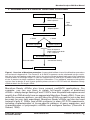
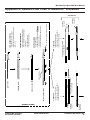
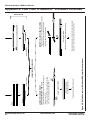
Marathon-ReadyTM cDNAs are premade “libraries” of adaptor-ligated ds cDNA
ready for use as templates in Marathon® cDNA amplification—a method for
performing both 5'- and 3'-RACE from the same template (Chenchik et al., 1995;
1996; Figure 1). Marathon technology has been cited in more than 140 research
articles. (For a complete list of citations, please visit www.clontech.com.) The
method is made possible by Clontech’s patented suppression PCR technology
(Siebert et al., 1995) and other innovations in the design of the Marathon Adaptor
(see Appendix B). When compared to conventional kits used for 5'-RACE,
Marathon RACE reactions are more efficient and reproducible with considerably
less smearing and fewer false bands. Because the protocol uses enzyme mixes
designed for long-distance PCR (LD PCR; Barnes, 1994; Cheng et al., 1994),
Marathon RACE reactions are capable of amplifying much larger templates than
can be amplified with conventional RACE methods. Furthermore, given the lower
rate of misincorporation observed with LD PCR, Marathon RACE products should
have higher fidelity to the sequence of the original RNA.
Marathon cDNA amplification is a flexible tool. Many researchers use this
method—and Marathon-Ready cDNAs—in place of conventional RACE kits to
amplify just the 5' or 3' end of a particular cDNA. Others perform both 5'- and 3'-RACE, and many then go on to clone full-length cDNAs using one of the two
methods described in the latter part of the protocol. In many cases, researchers
obtain full-length cDNAs without ever constructing or screening a cDNA library.
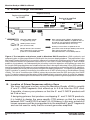
Examples of 5'- and 3'-RACE using the Control G3PDH Primers with different
Marathon-Ready cDNAs are given in Figure 2A. G3PDH Primers are provided with
each Marathon-Ready cDNA and are an important positive control in Marathon
RACE experiments. Figure 2B gives 5' and 3' Marathon RACE results for human
actin and human transferrin receptor (TFR) genes, while Figure 4 gives several
examples of large (5–9 kb), full-length cDNAs generated by Marathon cDNA
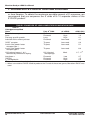
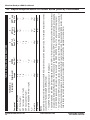
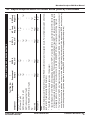
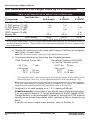
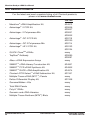
amplification. Table I at the end of this introduction gives several other examples
of Marathon-amplified cDNAs.
The only requirement for Marathon cDNA amplification is that you use an LD
PCR-compatible polymerase mix and know at least 23–28 nucleotides (nt) of
sequence information in order to design gene-specific primers (GSPs) for the
5'- and 3'-RACE reactions. (Additional sequence information will facilitate analysis
of your RACE products.) This minimal requirement for sequence information
means that Marathon cDNA amplification is well suited for characterizing RNAs
identified as expressed sequence tags (ESTs; Sikela & Auffray, 1993) or by
methods such as differential display (Liang & Pardee, 1992) or RNA fingerprinting
(Welsh et al., 1992; Welsh et al., 1994). In particular, Marathon cDNA amplification
is an excellent tool for cloning full-length cDNAs corresponding to differentially
expressed mRNAs identified with the Clontech PCR-SelectTM cDNA Subtraction
Kit (Cat. No. 637401) or the Delta® Differential Display Kit (Cat. No. 937405).
Marathon-Ready cDNAs can also be used to obtain full-length clones of partial
cDNAs obtained through library screening.
Clontech Laboratories, Inc.
www.clontech.com
Protocol No. PT1156-1
Version No. PR15736