1
Introduction
1
www.ti.com
Introduction
SYS/BIOS is a real-time operating system (RTOS) kernel created by Texas Instruments (TI) that is
intended to be used in embedded applications on a variety of the TI microprocessors and microcontrollers
including the Stellaris Cortex-M3 family of devices. Several key benefits of the SYS/BIOS RTOS include:
• Scheduling
• Pre-emptive, deterministic multi-tasking
• Configuration tools
• Memory management
• Hardware abstraction for cross-platform applications
SYS/BIOS is included in the installation of Code Composer Studio (CCS), so creating a new project is
fairly straightforward. The configuration of the kernel is abstracted from the hardware by the SYS/BIOS
configuration tool called XGConf, which is based on the open-source XDCTools. This tool is a graphical
user interface (GUI) that allows for quick and easy manipulation of the RTOS components such as tasks,
interrupts, and semaphores. This GUI is incorporated into CCS and automatically generates the required
initialization code for configuring the SYS/BIOS kernel.
The remainder of this document describes the SYS/BIOS kernel in detail and the process of implementing
a SYS/BIOS-based project on a Stellaris ARM Cortex-M3 microcontroller. More detailed information about
the SYS/BIOS RTOS can be found in documents listed in Section 7, References.
2
Overview of SYS/BIOS
SYS/BIOS is an RTOS kernel designed by Texas Instruments to run on a variety of TI microcontrollers.
SYS/BIOS provides the following features:
• Preemptive, priority-based scheduler
• Memory allocation and stack management
• I/O services
The preemptive, priority-based scheduler ensures that the highest priority thread that is ready to run is
executed by the system. This configuration ensures that time-sensitive computations are handled with a
minimum amount of latency. The SYS/BIOS kernel can be optimized for custom projects in order to
improve the code size of the final application. Detailed timing and size benchmark information can be
found on the SYS/BIOS Wiki page located on the Texas Instruments Embedded Processor Wiki.
An advantage of using SYS/BIOS is the application portability between TI digital signal processors
(DSPs), ARM-based microcontrollers, and MSP430 microcontrollers. The abstraction accomplished by the
RTOS allows for code to be ported between the various product families with little to no modification
required.
This overview is based on SYS/BIOS version 6.32.02.39. Different versions of SYS/BIOS may contain
slightly different features.
2.1
Configuration Tools
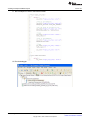
The configuration of the SYS/BIOS kernel is saved in the *.cfg file in the project. This file defines the basic
parameters for modules used in the system as well as any statically-defined instances of modules.
The configuration file can be modified using one of two methods:
• Graphically (using the XGCONF configuration utility)
• Textually (using the XDCScript editor or other text editor)
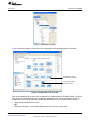
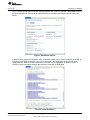
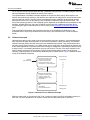
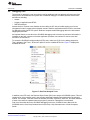
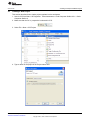
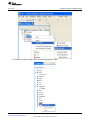
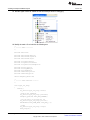
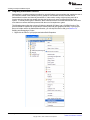
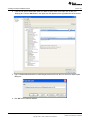
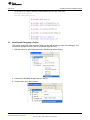
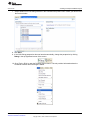
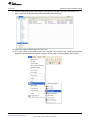
After a project is loaded into CCS, open the *.cfg file by right-clicking the file in the project and selecting
Open with > XGCONF as shown in Figure 1. For instructions on opening a SYS/BIOS project in CCS, see
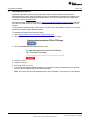
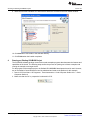
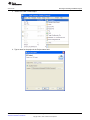
Section 4, Running an Existing SYS/BIOS Project.
2
Using SYS/BIOS With Stellaris® ARM® Cortex™-M3 Microcontrollers
SPMA040A – January 2012 – Revised November 2012
Submit Documentation Feedback
Copyright © 2012, Texas Instruments Incorporated