1
1
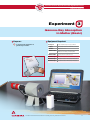
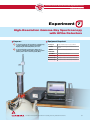
Experiment 1
Gamma-Ray Detection with
Scintillator Detectors
Theoretical Overview:
How gamma rays are produced
NaI(Tl) detectors
Radioactive nuclei decay by emitting beta or alpha
particles. Often the decay is to an excited state in the
daughter nucleus, which usually decays by emission of
a gamma ray. The energy level sequence and therefore
the gamma-ray energy spectrum for every nucleus is
unique and can be used to identify the nucleus. The
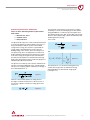
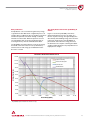
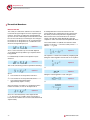
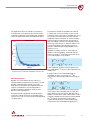
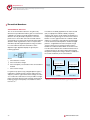
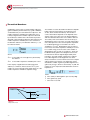
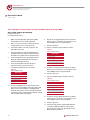
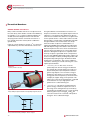
energy levels and decay process of 22Na, 60Co and
137Cs are given in Figure 1-1. The term beta decay
means β- (electron), β+ (positron) emission or electron
capture by the nucleus.
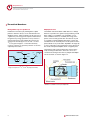
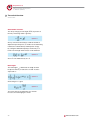
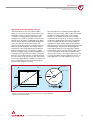
The thallium-activated sodium iodide detector, or NaI(Tl)
detector, responds to the gamma ray by producing a small
flash of light, or a scintillation. The scintillation occurs
when scintillator electrons, excited by the energy of the
photon, return to their ground state. The detector crystal
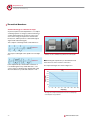
is mounted on a photomultiplier tube which converts the
scintillation into an electrical pulse. The first pulse from the
photocathode is very small and is amplified in 10 stages by
a series of dynodes to get a large pulse. This is taken from
the anode of the photomultiplier, and is a negative pulse.
60 Co
137Cs
β-
β-
2.506
1.173
1.333
0.662
137Ba
0
β+
EC
22Na
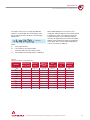
The NaI(Tl) crystal is protected from the moisture in the
air by encasing it in aluminum, which also serves as a
convenient mounting for the entire crystal/photomultiplier
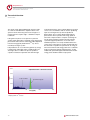
unit. A schematic is shown in Figure 1-2.
1.275
1.333
60 Ni
0
22Ne
0
Figure 1-1:
Energy level sequences for 137Cs, 60Co and 22Na (energy levels in MeV)
Figure 1-2:
lllustration of a scintillation event in a photomultiplier tube
8
www.canberra.com