1
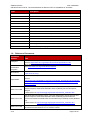
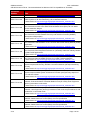
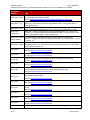
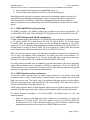
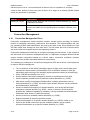
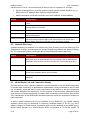
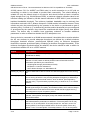
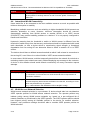
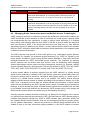
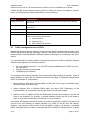
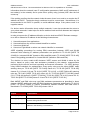
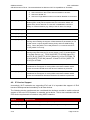
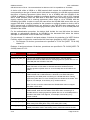
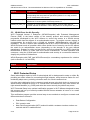
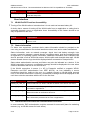
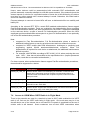
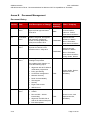
GSM Association Non-confidential Official Document TS.22 - Recommendations for Minimum Wi-Fi ® Capabilities of Terminals Access to information on an active session using a specific network identifier (e.g. a SSID) such as IP address, Mac Address, Subnet Address Modify information on WLAN connection such as IP address, Subnet Address Req ID Requirement TSG22_R2_CM_05 A device SHALL have at least one pre-installed connection management client. TSG22_R2_CM_06 A device SHOULD have programming interfaces/APIs to control and/or manage WLAN connections. TSG22_R2_CM_07 VOID TSG22_R2_CM_08 A device SHOULD offer an API compliant with the OMA [OpenCMAPI] for WLAN management. TSG22_R3_CM_46 The connection manager SHALL provide an API to turn on and turn off the WLAN (including support of flight mode, where flight mode means that a device SHALL have the functionality to turn off wireless modules 4.2 Network Discovery Constant scanning for detection of a hotspot may place a heavy toll on the battery life of a Smartphone. A device should implement periodic scanning algorithms that preserve battery life. The scanning algorithm should take into account Passpoint network discovery. Req ID Requirement TSG22_R2_CM_10 A device SHALL be able to provide detailed information per network identifier discovered (such as signal strength, security methods, type of authentication credentials used, known or unknown network) to the user and/or application. TSG22_R2_CM_11 A device SHALL support a WLAN access network discovery mechanism. TSG22_R2_CM_12 A device SHOULD be able to listen & report events to an upper layer (e.g. UI) such as new available network, loss of network. TSG22_R3_CM_47 A device’s WLAN access network discovery mechanism SHALL preserve battery life. 4.3 WLAN Radio Link and Connection Quality On most devices, once a WLAN is detected, a device defaults to use the WLAN connection to provide data connectivity to applications. Unfortunately, being connected to the AP does not necessarily mean that there is data connectivity to the Internet or that the connectivity will provide adequate user experience. For the purpose of WLAN access network selection (See Section 4.5) and management of multiple radio connections on the device (See Section 4.6), consideration of the WLAN radio link and connection quality are important to avoid poor user experience. A device should consider over the air utilization of the WLAN AP (e.g. WLAN channel utilization which may be advertised in beacons), backhaul status of an AP (e.g. Wi-Fi Alliance Hotspot 2.0 WAN metrics information which may be obtained via an ANQP query), WLAN signal strength (e.g. WLAN Beacon RSSI as specified in TS 36.304 [3GPP TS V4.0 Page 16 of 38