1
Firebird 2.0 Release Notes
Helen Borrie (Collator/Editor)
1 November 2006 - Document v. 0200_101 - for Firebird 2.0 Release
Firebird 2.0 Release Notes
1 November 2006 - Document v. 0200_101 - for Firebird 2.0 Release
Helen Borrie (Collator/Editor)
Table of Contents
1. General Notes ................................................................................................................. 1
Back Up! ........................................................................................................... 1
Compatibility Issues ........................................................................................... 1
Incomplete Implementations ................................................................................ 1
Bug Reporting and Support ................................................................................. 2
Documentation ................................................................................................... 3
The Firebird Docs Project ................................................................................... 3
Your Main Documentation .................................................................................. 3
2. New in Firebird 2.0 ......................................................................................................... 4
Derived Tables ................................................................................................... 4
PSQL Now Supports Named Cursors ................................................................... 4
Reimplemented Protocols on Windows ................................................................ 4
Local Protocol--XNET ........................................................................................ 4
Change to WNET (NetBEUI) Protocol ................................................................. 5
Reworking of Garbage Collection ........................................................................ 5
Porting of the Services API to Classic is Complete ............................................... 6
Lock Timeout for WAIT Transactions ................................................................. 6
New Implementation of String Search Operators .................................................. 7
Reworking of Updatable Views ........................................................................... 7
Additional Database Shutdown Modes Introduced ................................................ 7
UDFs Improved re NULL Handling ..................................................................... 8
Signalling SQL NULL ........................................................................................ 8
Run-time Checking for Concatenation Overflow ................................................... 8
Changes to Synchronisation Logic ....................................................................... 8
Support for 64-bit Platforms ................................................................................ 9
Record Enumeration Limits Increased .................................................................. 9
Debugging Improvements ................................................................................... 9
Improved Reporting from Bugchecks ................................................................... 9
Updated Internal Structure Reporting ................................................................... 9
New Debug Logging Facilities ............................................................................ 9
Diagnostic Enhancement ..................................................................................... 9
Improved Connection Handling on POSIX Superserver ........................................ 9
PSQL Invariant Tracking Reworked .................................................................. 10
ROLLBACK RETAIN Syntax Support .............................................................. 10
No More Registry Search on Win32 Servers ....................................................... 10
More Optimizer Improvements .......................................................................... 10
ODS Changes ................................................................................................... 11
3. Changes to the Firebird API and ODS ............................................................................ 12
API (Application Programming Interface) .......................................................... 12
Cleanup of ibase.h ............................................................................................ 12
Lock Timeout for WAIT Transactions ............................................................... 12
isc_dsql_sql_info() Now Includes Relation Aliases ............................................. 12
Enhancement to isc_blob_lookup_desc() ............................................................ 12
API Identifies Client Version ............................................................................. 13
Additions to the isc_database_info() Structure .................................................... 13
Additions to the isc_transaction_info() Structure ................................................ 13
Improved Services API ..................................................................................... 14
ODS (On-Disk Structure) Changes .................................................................... 15
4. Data Definition Language (DDL) ................................................................................... 17
New and Enhanced Syntaxes ............................................................................. 17
CREATE SEQUENCE ..................................................................................... 17
REVOKE ADMIN OPTION FROM .................................................................. 18
iv
Firebird 2.0 Release Notes
SET/DROP DEFAULT Clauses for ALTER TABLE .......................................... 18
New Syntaxes for Changing Exceptions ............................................................. 18
ALTER EXTERNAL FUNCTION .................................................................... 19
COMMENT Statement Implemented ................................................................. 19
Extensions to CREATE VIEW Specification ...................................................... 20
RECREATE TRIGGER Statement Implemented ................................................ 20
Usage Enhancements ........................................................................................ 20
5. Data Manipulation Language (DML) ............................................................................. 22
New and Extended DSQL Syntaxes ................................................................... 22
EXECUTE BLOCK Statement .......................................................................... 22
Derived Tables ................................................................................................. 23
ROLLBACK RETAIN Syntax .......................................................................... 25
ROWS Syntax .................................................................................................. 25
Enhancements to UNION Handling ................................................................... 26
IIF Expression Syntax Added ............................................................................ 27
CAST() Behaviour Improved ............................................................................ 27
Built-in Function SUBSTRING() Enhanced ....................................................... 28
Enhancements to NULL Logic .......................................................................... 28
CROSS JOIN is Now Supported ........................................................................ 30
Subqueries and INSERT Statements Can Now Accept UNION Sets .................... 31
New Extensions to UPDATE and DELETE Syntaxes ......................................... 31
New Context Variables ..................................................................................... 31
Improvements in Handling User-specified Query Plans ....................................... 35
Improvements in Sorting ................................................................................... 37
NEXT VALUE FOR Expression Syntax ............................................................ 38
RETURNING Clause for Insert Statements ........................................................ 39
DSQL parsing of table aliases is stricter ............................................................. 40
SELECT Statement & Expression Syntax .......................................................... 42
6. New Reserved Words and Changes ................................................................................ 44
Newly Reserved Words ..................................................................................... 44
Changed from Non-reserved to Reserved ........................................................... 44
Keywords Added as Non-reserved ..................................................................... 44
Keywords No Longer Reserved ......................................................................... 45
No Longer Reserved as Keywords ..................................................................... 45
7. Stored Procedure Language (PSQL) ............................................................................... 46
PSQL Enhancements ........................................................................................ 46
Context Variable ROW_COUNT Enhanced ....................................................... 46
Explicit Cursors ................................................................................................ 46
Defaults for Stored Procedure Arguments .......................................................... 48
LEAVE <label> Syntax Support ........................................................................ 50
OLD Context Variables Now Read-only ............................................................ 51
PSQL Stack Trace ............................................................................................ 51
Call a UDF as a Void Function (Procedure) ........................................................ 53
8. Enhancements to Indexing ............................................................................................. 54
252-byte index length limit is gone .................................................................... 54
Expression Indexes ........................................................................................... 54
Changes to Null keys handling .......................................................................... 55
Improved Index Compression ............................................................................ 55
Selectivity Maintenance per Segment ................................................................. 55
Firebird Index Structure from ODS11 Onward ................................................... 56
New flag for the new index structure .................................................................. 57
Duplicate nodes ................................................................................................ 57
Jump nodes ...................................................................................................... 58
NULL state ...................................................................................................... 59
9. Optimizations ............................................................................................................... 61
Improved PLAN Clause .................................................................................... 61
Optimizer Improvements ................................................................................... 61
v
Firebird 2.0 Release Notes
For All Databases ............................................................................................. 61
For ODS 11 Databases only .............................................................................. 63
10. New Features for Text Data ......................................................................................... 64
New String Functions ....................................................................................... 64
LOWER() ........................................................................................................ 64
TRIM() ............................................................................................................ 64
New String Size Functions ................................................................................ 65
New INTL Interface for Non-ASCII Character Sets ............................................ 66
Architecture ..................................................................................................... 66
Enhancements .................................................................................................. 66
New Character Sets and Collations Implemented ................................................ 70
Character Set Bug Fixes .................................................................................... 71
11. Security in Firebird 2 ................................................................................................... 73
Summary of Changes ........................................................................................ 73
New security database ....................................................................................... 73
Better password encryption ............................................................................... 73
Users can modify their own passwords ............................................................... 73
Non-server access to security database is rejected ............................................... 73
Active protection from brute-force attack ........................................................... 74
Vulnerabilities have been closed ........................................................................ 74
Details of the Security Changes in Firebird 2.0 ................................................... 74
Authentication .................................................................................................. 75
gsec in Firebird 2 .............................................................................................. 76
Protection from Brute-force Hacking ................................................................. 76
Classic Server on POSIX .................................................................................. 76
Dealing with the New Security Database ............................................................ 77
Doing the Security Database Upgrade ................................................................ 77
12. Command-line Utilities ............................................................................................... 79
Backup Tools ................................................................................................... 79
New On-line Incremental Backup ...................................................................... 79
gbak Backup/Porting/Restore Utility .................................................................. 81
ISQL Query Utility ........................................................................................... 82
New Switches ................................................................................................... 82
New Commands ............................................................................................... 84
ISQL Bugs Fixed .............................................................................................. 87
gsec Authentication Manager ............................................................................ 87
gsec return code ................................................................................................ 88
GFix Server Utility ........................................................................................... 88
New Shutdown States (Modes) .......................................................................... 88
13. External Functions (UDFs) .......................................................................................... 90
Ability to Signal SQL NULL via a Null Pointer .................................................. 90
UDF library diagnostic messages improved ........................................................ 91
UDFs Added and Changed ................................................................................ 91
IB_UDF_rand() vs IB_UDF_srand() .................................................................. 91
IB_UDF_lower ................................................................................................. 92
General UDF Changes ...................................................................................... 92
Build Changes .................................................................................................. 92
14. New Configuration Parameters and Changes ................................................................. 93
ExternalFileAccess ........................................................................................... 93
LegacyHash ..................................................................................................... 93
Redirection ...................................................................................................... 93
About Multi-hop ............................................................................................... 93
GCPolicy ......................................................................................................... 94
New parameter OldColumnNaming ................................................................... 94
UsePriorityScheduler ........................................................................................ 94
TCPNoNagle has changed ................................................................................. 94
Removed or Deprecated Parameters ................................................................... 94
vi
Firebird 2.0 Release Notes
CreateInternalWindow ...................................................................................... 94
DeadThreadsCollection is no longer used ........................................................... 95
15. Known Compatibility Issues ........................................................................................ 96
The FIREBIRD Variable ................................................................................... 96
Security in Firebird 2 (All Platforms) ................................................................. 96
SQL Migration Issues ....................................................................................... 97
DDL ................................................................................................................ 97
DML ............................................................................................................... 98
PSQL ............................................................................................................. 100
Configuration Parameters ................................................................................ 101
Command-line Tools ...................................................................................... 102
Change to gbak -R Semantics .......................................................................... 102
Performance ................................................................................................... 102
Firebird API ................................................................................................... 103
Windows-Specific Issues ................................................................................ 103
Windows Local Connection Protocol with XNet ............................................... 103
Client Impersonation No Longer Works ........................................................... 103
Interactive Option Added to instsvc.exe ........................................................... 104
16. INSTALLATION NOTES ......................................................................................... 105
Windows 32-bit Installs .................................................................................. 105
READ THIS FIRST! ...................................................................................... 105
Other Pre-installation Issues ............................................................................ 107
Using the Win32 Firebird Installer ................................................................... 109
Installing Superserver from a zip kit ................................................................. 111
Other Win32 Issues ........................................................................................ 112
Updated Notes for Windows Embedded ........................................................... 113
POSIX Platforms ............................................................................................ 115
READ THIS FIRST ........................................................................................ 115
Installing on Linux ......................................................................................... 117
Testing your Linux installation ........................................................................ 118
Utility Scripts ................................................................................................. 120
Linux Server Tips ........................................................................................... 120
Uninstalling on Linux ..................................................................................... 121
Solaris ........................................................................................................... 121
MacOS X ....................................................................................................... 121
FreeBSD ........................................................................................................ 121
Debian ........................................................................................................... 121
17. Bugs Fixed ............................................................................................................... 122
General Engine Bugs ...................................................................................... 122
Services Manager ........................................................................................... 130
GFix Bugs ...................................................................................................... 130
DSQL Bugs .................................................................................................... 130
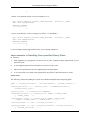
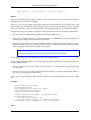
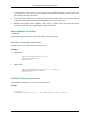
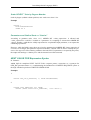
PSQL Bugs .................................................................................................... 133
Crash Conditions ............................................................................................ 134
Remote Interface Bugs .................................................................................... 136
Indexing & Optimization ................................................................................. 138
Vulnerabilities ................................................................................................ 139
ISQL Bugs ..................................................................................................... 139
International Character Set Bugs ...................................................................... 140
SQL Privileges ............................................................................................... 141
UDF Bugs ...................................................................................................... 142
gbak .............................................................................................................. 142
gpre ............................................................................................................... 144
gstat ............................................................................................................... 144
fb_lock_print .................................................................................................. 145
Linux Installs ................................................................................................. 145
Code Clean-up ............................................................................................... 145
vii
Firebird 2.0 Release Notes
Platform-specific ............................................................................................ 145
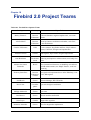
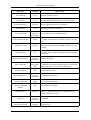
18. Firebird 2.0 Project Teams ......................................................................................... 147
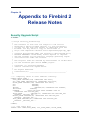
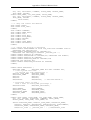
19. Appendix to Firebird 2 Release Notes ......................................................................... 150
Security Upgrade Script .................................................................................. 150
viii
List of Figures
8.1. Existing structure (ODS10 and lower) ......................................................................... 56
8.2. New ODS11 structure ................................................................................................. 57
8.3. Example data ((x) = size in x bytes) ............................................................................. 58
8.4. Examples ................................................................................................................... 59
ix
List of Tables
18.1. Firebird Development Teams .................................................................................. 147
x
Chapter 1
General Notes
The v.2.0 release cycle of Firebird brings with it a large collection of long-awaited enhancements under the hood that significantly improve performance, security and support for international languages.
Several annoying limitations, along with a huge pile of old bugs inherited from the legacy code, have
gone. Many of the command-line tools have been refurbished and this release introduces the all-new
incremental backup tools NBak and NBackup.
The old “252 bytes or less” limit on index size is gone for good, replaced by much-extended limits
that depend on page size. Calculation of index statistics has been revamped to improve the choices the
optimizer has available, especially for complex outer join distributions and DISTINCT queries.
Many new additions have been made to the SQL language, including support for derived tables
(SELECT ... FROM ( SELECT ... FROM), PSQL blocks in dynamic SQL through the new EXECUTE BLOCK syntax and some handy new extensions in PSQL itself.
Before you read on to find out about all of these new features, please take a moment to note some
points about approaching this new release.
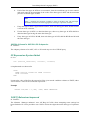
Back Up!
The on-disk structure (ODS) of the databases created under Firebird has changed. Although Firebird
2.0 will connect to databases having older ODS versions, most of the new features will not be available to them.
Make transportable gbak backups of your existing databases--including your old security.fdb or (even
older) isc4.gdb security databases--before you uninstall the older Firebird server and set out to install
Firebird 2.0. Before you proceed, restore these backups in a temporary location, using the old gbak,
and verify that the backups are good.
Compatibility Issues
Naturally, with so much bug-removal and closing of holes, there are sure to be things that worked before and now no longer work. A collection of Known Compatibility Issues is provided to assist you to
work out what needs to be done in your existing system to make it compatible with Firebird 2.0.
Give special attention to the changes required in the area of user authentication.
Incomplete Implementations
In a couple of areas, planned implementations could not be completed for the v.2.0 release and will be
deferred to later sub-releases:
64-bit Support
1
General Notes
64-bit builds for both Superserver and Classic are ready and available for installing on Linux.
Note that the 64-bit ports have been done and tested for AMD64 only. These builds should also
work on Intel EM64T. The Intel IA-64 platform is not supported in this release. A FreeBSD port
of the 64-bit builds has also been done.
Win64 hosts are running without problems and the MS VC8 final release seems to work satisfactorily, so we are able to say we are no longer hampered by problems with the Microsoft compiler.
The Win64 port is complete and into testing, but is still considered experimental. It will become
publicly available in a subsequent v.2.x release.
Installer Support for Multiple Server Installations
Although the capability to run multiple Firebird servers simultaneously on a single host has been
present since Firebird 1.5, we still do not provide the ability to set them up through our installer
programs and scripts.
Support for Databases on Raw Devices
During Firebird 2 development, a capability to create and access databases on raw devices on
POSIX systems was enabled to assist an obscure platform port. To date it is undocumented, has
not been subjected to rigorous QA or field testing and is known to present problems for calculating disk usage statistics. A Readme text will be made available in the CVS tree for those who wish
to give it a try and would like to make a case for its becoming a feature in a future release.
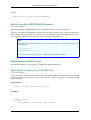
Bug Reporting and Support
If you think you have discovered a bug in this release, please make a point of reading the instructions
for bug reporting in the article How to Report Bugs Effectively, at the Firebird Project website.
Follow these guidelines as you attempt to analyse your bug:
1.
Write detailed bug reports, supplying the exact server model and build number of your Firebird
kit. Also provide details of the OS platform. Include reproducible test data in your report and
post it to our Tracker.
2.
If you want to start a discussion thread about a bug or an implementation, do so by subscribing to
the firebird-devel list and posting the best possible bug description you can.
3.
Firebird-devel is not for discussing bugs in your software! If you are a novice with Firebird and
need help with any issue, you can subscribe to the firebird-support list and email your questions
to firebird-support@yahoogroups. com.
Tip
You can subscribe to this and numerous other Firebird-related support forums from the Lists
and Newsgroups page at the Firebird website.
2
General Notes
Documentation
A full, integrated manual for Firebird 2.0 and preceding releases is well on the way, but it's not quite
with us yet. Meanwhile, there is plenty of documentation around for Firebird if you know where to
look. Study the Novices Guide and Knowledgebase pages at the Firebird website for links to papers
and other documents to read on-line and/or download.
Don't overlook the materials in the /bin directory of your Firebird installation. In particular, make use
of the Firebird 2.0 Quick Start Guide to help you get started.
The “Firebird Docs” Project
The Firebird Project has an integral user documentation project, a team of volunteers who are writing,
editing and adapting user manuals, white papers and HowTos. At the time of this release, the hardworking coordinator of the Docs project is Paul Vinkenoog.
An index of available documents can be found on the project's web page, along with news about progress. Published docs currently include the essential Quick Start Guides for Firebird versions 1.5 and
2.0 in English and several other languages.
For the official documentation we use a Docbook XML format for sources and build PDF and HTML
output using a suite of Java utilities customised for our purposes. These notes were developed and
built under this system.
Paul Vinkenoog has written comprehensive, easy-to-follow manuals for writing Firebird documentation and for using our tools. You can find links to these manuals in the aforementioned index. New
team members who want to do some writing or translating are always more than welcome. We have a
lab forum for documenters and translators, firebird-docs, which you can join by visiting the Lists and
Newsgroups page at the Firebird web site.
Your Main Documentation
These release notes are your main documentation for Firebird 2. However, if you are unfamiliar with
previous Firebird versions, you will also need the release notes for Firebird 1.5.3. For convenience,
copies of both sets of release notes are included in the binary kits. They will be installed in the /doc
directory beneath the Firebird root directory. Several other useful README documents are also installed there.
For future reference, if you ever need to get a copy of the latest release notes before beginning installation, you can download them from the Firebird web site. The link can be found on the same page that
linked you to the binary kits, towards the bottom of the page.
If you do not own a copy of The Firebird Book, by Helen Borrie, then you will also need to find the
beta documentation for InterBase® 6.0. It consists of several volumes in PDF format, of which the
most useful will be the Language Reference (LangRef.pdf) and the Data Definition Guide
(DataDef.pdf). The Firebird Project is not allowed to distribute these documents but they are easily
found at several download sites on the Web using Google and the search key "LangRef.pdf". When
you find one, you usually find them all!
--The Firebird Project
3
Chapter 2
New in Firebird 2.0
Derived Tables
A. Brinkman
Implemented support for derived tables in DSQL (subqueries in FROM clause) as defined by
SQL200X. A derived table is a set, derived from a dynamic SELECT statement. Derived tables can be
nested, if required, to build complex queries and they can be involved in joins as though they were
normal tables or views.
More details under Derived Tables in the DML chapter.
PSQL Now Supports Named Cursors
D. Yemanov
Multiple named (i.e. explicit) cursors are now supported in PSQL and in DSQL EXECUTE BLOCK
statements. More information in the chapter Explicit Cursors.
Reimplemented Protocols on Windows
D. Yemanov
Two significant changes have been made to the Windows-only protocols.-
Local Protocol--XNET
Firebird 2.0 has replaced the former implementation of the local transport protocol (often referred to
as IPC or IPServer) with a new one, named XNET.
It serves exactly the same goal, to provide an efficient way to connect to server located on the same
machine as the connecting client without a remote node name in the connection string. The new implementation is different and addresses the known issues with the old protocol.
Like the old IPServer implementation, the XNET implementation uses shared memory for interprocess communication. However, XNET eliminates the use of window messages to deliver attachment requests and it also implements a different synchronization logic.
Benefits of the XNET Protocol over IPServer
Besides providing a more robust protocol for local clients, the XNET protocol brings some notable
benefits:
4
New in Firebird 2.0
• it works with Classic Server
• it works for non-interactive services and terminal sessions
• it eliminates lockups when a number of simultaneous connections are attempted
Performance
The XNET implementation should be similar to the old IPServer implementation, although XNET is
expected to be slightly faster.
Disadvantages
The one disadvantage is that the XNET and IPServer implementations are not compatible with each
other. This makes it essential that your fbclient.dll version should match the version of the server binaries you are using (fbserver.exe or fb_inet_server.exe) exactly. It will not be possible to to establish a
local connection if this detail is overlooked. (A TCP localhost loopback connection via an ill-matched
client will still do the trick, of course).
Change to WNET (“NetBEUI”) Protocol
WNET (a.k.a. NetBEUI) protocol no longer performs client impersonation.
In all previous Firebird versions, remote requests via WNET are performed in the context of the client
security token. Since the server serves every connection according to its client security credentials,
this means that, if the client machine is running some OS user from an NT domain, that user should
have appropriate permissions to access the physical database file, UDF libraries, etc., on the server
filesystem. This situation is contrary to what is generally regarded as proper for a client-server setup
with a protected database.
Such impersonation has been removed in Firebird 2.0. WNET connections are now truly client-server
and behave the same way as TCP ones, i.e., with no presumptions with regard to the rights of OS
users.
Reworking of Garbage Collection
V. Horsun
Since Firebird 1.0 and earlier, the Superserver engine has performed background garbage collection,
maintaining information about each new record version produced by an UPDATE or DELETE statement. As soon as the old versions are no longer “interesting”, i.e. when they become older than the
Oldest Snapshot transaction (seen in the gstat -header output) the engine signals for them to be removed by the garbage collector.
Background GC eliminates the need to re-read the pages containing these versions via a SELECT
COUNT(*) FROM aTable or other table-scanning query from a user, as occurs in Classic and in
versions of InterBase prior to v.6.0. This earlier GC mechanism is known as cooperative garbage collection.
Background GC also averts the possibility that those pages will be missed because they are seldom
read. (A sweep, of course, would find those unused record versions and clear them, but the next sweep
is not necessarily going to happen soon.) A further benefit is the reduction in I/O, because of the high5
New in Firebird 2.0
er probability that subsequently requested pages still reside in the buffer cache.
Between the point where the engine notifies the garbage collector about a page containing unused versions and the point when the garbage collector gets around to reading that page, a new transaction
could update a record on it. The garbage collector cannot clean up this record if this later transaction
number is higher than the Oldest Snapshot or is still active. The engine again notifies the garbage collector about this page number, overriding the earlier notification about it and the garbage will be
cleaned at some later time.
In Firebird 2.0 Superserver, both cooperative and background garbage collection are now possible. To
manage it, the new configuration parameter GCPolicy was introduced. It can be set to:
• cooperative - garbage collection will be performed only in cooperative mode (like Classic) and the
engine will not track old record versions. This reverts GC behaviour to that of IB 5.6 and earlier. It
is the only option for Classic.
• background - garbage collection will be performed only by background threads, as is the case for
Firebird 1.5 and earlier. User table-scan requests will not remove unused record versions but will
cause the GC thread to be notified about any page where an unused record version is detected. The
engine will also remember those page numbers where UPDATE and DELETE statements created
back versions.
• combined (the installation default for Superserver) - both background and cooperative garbage collection are performed.
Note
The Classic server ignores this parameter and always works in “cooperative” mode.
Porting of the Services API to Classic is Complete
N. Samofatov
Porting of the Services API to Classic architecture is now complete. All Services API functions are
now available on both Linux and Windows Classic servers, with no limitations. Known issues with
gsec error reporting in previous versions of Firebird are eliminated.
Lock Timeout for WAIT Transactions
A. Karyakin, D. Yemanov
All Firebird versions provide two transaction wait modes: NO WAIT and WAIT. NO WAIT mode
means that lock conflicts and deadlocks are reported immediately, while WAIT performs a blocking
wait which times out only when the conflicting concurrent transaction ends by being committed or
rolled back.
The new feature extends the WAIT mode by making provision to set a finite time interval to wait for
the concurrent transactions. If the timeout has passed, an error (isc_lock_timeout) is reported.
Timeout intervals are specified per transaction, using the new TPB constant isc_tpb_lock_timeout in
the API or, in DSQL, the LOCK TIMEOUT <value> clause of the SET TRANSACTION statement.
6
New in Firebird 2.0
New Implementation of String Search Operators
N. Samofatov
1.
The operators now work correctly with BLOBs of any size. Issues with only the first segment being searched and with searches missing matches that straddle segment boundaries are now gone.
2.
Pattern matching now uses a single-pass Knuth-Morris-Pratt algorithm, improving performance
when complex patterns are used.
3.
The engine no longer crashes when NULL is used as ESCAPE character for LIKE
Reworking of Updatable Views
D. Yemanov
A reworking has been done to resolve problems with views that are implicitly updatable, but still have
update triggers. This is an important change that will affect systems written to take advantage of the
undocumented [mis]behaviour in previous versions.
For details, see the notes in DDL Migration Issues in the Compatibility chapter of these notes.
Additional Database Shutdown Modes Introduced
N. Samofatov
Single-user and full shutdown modes are implemented using new [state] parameters for the gfix shut and gfix -online commands.
Syntax Pattern
gfix <command> [<state>] [<options>]
<command>> ::= {-shut | -online}
<state> ::= {normal | multi | single | full}
<options> ::= {-force <timeout> | -tran | -attach}
• normal state = online database
• multi state = multi-user shutdown mode (the legacy one, unlimited attachments of SYSDBA/owner
are allowed)
• single state = single-user shutdown (only one attachment is allowed, used by the restore process)
• full state = full/exclusive shutdown (no attachments are allowed)
For more details, refer to the section on Gfix New Shutdown Modes, in the Utilities chapter.
7
New in Firebird 2.0
UDFs Improved re NULL Handling
C. Valderrama
Signalling SQL NULL
• Ability to signal SQL NULL via a NULL pointer (see Signal SQL NULL in UDFs).
• External function library ib_udf upgraded to allow the string functions ASCII_CHAR, LOWER,
LPAD, LTRIM, RPAD, RTIM, SUBSTR and SUBSTRLEN to return NULL and have it interpreted correctly.
The script ib_udf_upgrade.sql can be applied to pre-v.2 databases that have these functions
declared, to upgrade them to work with the upgraded library. This script should be used only when
you are using the new ib_udf library with Firebird v2 and operation requests are modified to anticipate nulls.
Run-time Checking for Concatenation Overflow
D. Yemanov
Compile-time checking for concatenation overflow has been replaced by run-time checking.
From Firebird 1.0 onward, concatenation operations have been checked for the possibility that the resulting string might exceed the string length limit of 32,000 bytes, i.e. overflow. This check was performed during the statement prepare, using the declared operand sizes and would throw an error for an
expressions such as:
CAST('qwe' AS VARCHAR(30000)) || CAST('rty' AS VARCHAR(30000))
From Firebird 2.0 onward, this expression throws only a warning at prepare time and the overflow
check is repeated at runtime, using the sizes of the actual operands. The result is that our example will
be executed without errors being thrown. The isc_concat_overflow exception is now thrown only for
actual overflows, thus bringing the behaviour of overflow detection for concatenation into line with
that for arithmetic operations.
Changes to Synchronisation Logic
N. Samofatov
1.
Lock contention in the lock manager and in the SuperServer thread pool manager has been reduced significantly
2.
A rare race condition was detected and fixed, that could cause Superserver to hang during request processing until the arrival of the next request
3.
Lock manager memory dumps have been made more informative and OWN_hung is detected
correctly
4.
Decoupling of lock manager synchronization objects for different engine instances was imple8
New in Firebird 2.0
mented
Support for 64-bit Platforms
A. Peshkov, N. Samofatov
Firebird 2.0 will support 64-bit platforms.
Record Enumeration Limits Increased
N. Samofatov
40-bit (64-bit internally) record enumerators have been introduced to overcome the ~30GB table size
limit imposed by 32-bit record enumeration.
Debugging Improvements
Various Contributors
Improved Reporting from Bugchecks
BUGCHECK log messages now include file name and line number. (A. Brinkman)
Updated Internal Structure Reporting
Routines that print out various internal structures (DSQL node tree, BLR, DYN, etc) have been updated. (N. Samofatov)
New Debug Logging Facilities
Thread-safe and signal-safe debug logging facilities have been implemented. (N. Samofatov)
Diagnostic Enhancement
Syslog messages will be copied to the user's tty if a process is attached to it. (A. Peshkov)
Improved Connection Handling on POSIX Superserver
A. Peshkov
Posix SS builds now handle SIGTERM and SIGINT to shutdown all connections gracefully. (A.
Peshkov)
9
New in Firebird 2.0
PSQL Invariant Tracking Reworked
N. Samofatov
Invariant tracking in PSQL and request cloning logic were reworked to fix a number of issues with recursive procedures, for example SF bug #627057.
Invariant tracking is the process performed by the BLR compiler and the optimizer to decide whether
an "invariant" (an expression, which might be a nested subquery) is independent from the parent context. It is used to perform one-time evaluations of such expressions and then cache the result.
If some invariant is not determined, we lose in performance. If some variant is wrongly treated as invariant, we see wrong results.
Example
select * from rdb$relations
where rdb$relation_id <
( select rdb$relation_id from rdb$database )
This query performs only one fetch from rdb$database instead of evaluating the subquery for every
row of rdb$relations.
ROLLBACK RETAIN Syntax Support
D. Yemanov
Firebird 2.0 adds an optional RETAIN clause to the DSQL ROLLBACK statement to make it consistent
with COMMIT [RETAIN].
See ROLLBACK RETAIN Syntax in the chapter about DML.
No More Registry Search on Win32 Servers
D. Yemanov
The root directory lookup path has changed so that server processes on Windows no longer use the
Registry.
Important
The command-line utilities still check the Registry.
More Optimizer Improvements
A. Brinkman
Better cost-based calculation has been included in the optimizer routines.
10
New in Firebird 2.0
ODS Changes
Various Contributors
The new On-Disk Structure (ODS) is ODS11.
For more information, see the chapter ODS Changes.
11
Chapter 3
Changes to the Firebird API
and ODS
API (Application Programming Interface)
Some needed changes have been performed in the Firebird API. They include.-
Cleanup of ibase.h
D. Yemanov, A. Peshkov
The API header file, ibase.h has been subjected to a cleanup. with the result that public headers no
longer contain private declarations.
Lock Timeout for WAIT Transactions
A. Karyakin, D. Yemanov
The new feature extends the WAIT mode by making provision to set a finite time interval to wait for
the concurrent transactions. If the timeout has passed, an error (isc_lock_timeout) is reported.
Timeout intervals can now be specified per transaction, using the new TPB constant
isc_tpb_lock_timeout in the API.
Note
The DSQL equivalent is implemented via the LOCK TIMEOUT <value> clause of the SET
TRANSACTION statement.
isc_dsql_sql_info() Now Includes Relation Aliases
D. Yemanov
The function call isc_dsql_sql_info() has been extended to enable relation aliases to be retrieved, if required.
Enhancement to isc_blob_lookup_desc()
A. dos Santos Fernandes
isc_blob_lookup_desc() now also describes blobs that are outputs of stored procedures
12
Changes to the Firebird API and ODS
API Identifies Client Version
N. Samofatov
The macro definition FB_API_VER is added to ibase.h to indicate the current API version. The number corresponds to the appropriate Firebird version.
The current value of FB_API_VER is 20 (two-digit equivalent of 2.0). This macro can be used by client applications to check the version of ibase.h its being compiled with.
Additions to the isc_database_info() Structure
V. Horsun
The following items have been added to the isc_database_info() function call structure:
isc_info_active_tran_count
Returns the number of currently active transactions.
isc_info_creation_date
Returns the date and time when the database was [re]created.
To decode the returned value, call isc_vax_integer twice to extract (first) the date and (second)
the time portions of the ISC_TIMESTAMP. Then, use isc_decode_timestamp() as usual.
Additions to the isc_transaction_info() Structure
V. Horsun
The following items have been added to the isc_transaction_info() function call structure:
isc_info_tra_oldest_interesting
Returns the number of the oldest [interesting] transaction when the current transaction started. For
snapshot transactions, this is also the number of the oldest transaction in the private copy of the transaction inventory page (TIP).
isc_info_tra_oldest_active
• For a read-committed transaction, returns the number of the current transaction.
• For all other transactions, returns the number of the oldest active transaction when the current
transaction started.
isc_info_tra_oldest_snapshot
Returns the number of the lowest tra_oldest_active of all transactions that were active when
the current transaction started.
13
Changes to the Firebird API and ODS
Note
This value is used as the threshold ("high-water mark") for garbage collection.
isc_info_tra_isolation
Returns the isolation level of the current transaction. The format of the returned clumplets is:
isc_info_tra_isolation,
1, isc_info_tra_consistency | isc_info_tra_concurrency |
2, isc_info_tra_read_committed,
isc_info_tra_no_rec_version | isc_info_tra_rec_version
That is, for Read Committed transactions, two items are returned (isolation level and record versioning policy) while, for other transactions, one item is returned (isolation level).
isc_info_tra_access
Returns the access mode (read-only or read-write) of the current transaction. The format of the returned clumplets is:
isc_info_tra_access, 1, isc_info_tra_readonly | isc_info_tra_readwrite
isc_info_tra_lock_timeout
Returns the lock timeout set for the current transaction.
Improved Services API
The following improvements have been added to the Services API:
Task Execution Optimized
D. Yemanov
Services are now executed as threads rather than processes on some threadable CS builds (currently
32- bit Windows and Solaris).
New Function for Delivering Error Text
C. Valderrama
The new function fb_interpret() replaces the former isc_interprete() for extracting the text
for a Firebird error message from the error status vector to a client buffer.
14
Changes to the Firebird API and ODS
Important
isc_interprete() is vulnerable to overruns and is deprecated as unsafe. The new function should be
used instead.
ODS (On-Disk Structure) Changes
On-disk structure (ODS) changes include the following:
New ODS Number
Firebird 2.0 creates databases with an ODS (On-Disk Structure) version of 11.
Size limit for exception messages increased
V. Horsun
Maximum size of exception messages raised from 78 to 1021 bytes.
New Description Field for Generators
C. Valderrama
Added RDB$DESCRIPTION to RDB$GENERATORS, so now you can include description text
when creating generators.
New Description Field for SQL Roles
C. Valderrama
Added RDB$DESCRIPTION and RDB$SYSTEM_FLAG to RDB$ROLES to allow description text
and to flag user-defined roles, respectively.
“ODS Type” Recognition
N. Samofatov
Introduced a concept of ODS type to distinguish between InterBase and Firebird databases.
Smarter DSQL Error Reporting
C. Valderrama
The DSQL parser will now try to report the line and column number of an incomplete statement.
New Column in RDB$Index_Segments
D. Yemanov, A. Brinkman
A new column RDB$STATISTICS has been added to the system table RDB$INDEX_SEGMENTS
to store the per-segment selectivity values for multi-key indexes.
15
Changes to the Firebird API and ODS
Note
The column of the same name in RDB$INDICES is kept for compatibility and still represents the
total index selectivity, that is used for a full index match.
16
Chapter 4
Data Definition Language
(DDL)
New and Enhanced Syntaxes
The following statement syntaxes and structures have been added to Firebird 2:
CREATE SEQUENCE
D. Yemanov
SEQUENCE has been introduced as a synonym for GENERATOR, in accordance with SQL-99. SEQUENCE is a syntax term described in the SQL specification, whereas GENERATOR is a legacy InterBase syntax term. Use of the standard SEQUENCE syntax in your applications is recommended.
A sequence generator is a mechanism for generating successive exact numeric values, one at a time. A
sequence generator is a named schema object. In dialect 3 it is a BIGINT, in dialect 1 it is an INTEGER.
Syntax patterns
CREATE { SEQUENCE | GENERATOR } <name>
DROP { SEQUENCE | GENERATOR } <name>
SET GENERATOR <name> TO <start_value>
ALTER SEQUENCE <name> RESTART WITH <start_value>
GEN_ID (<name>, <increment_value>)
NEXT VALUE FOR <name>
Examples
1.
CREATE SEQUENCE S_EMPLOYEE;
2.
ALTER SEQUENCE S_EMPLOYEE RESTART WITH 0;
See also the notes about NEXT VALUE FOR.
17
Data Definition Language (DDL)
Warning
ALTER SEQUENCE, like SET GENERATOR, is a good way to screw up the generation of key
values!
REVOKE ADMIN OPTION FROM
D. Yemanov
SYSDBA, the database creator or the owner of an object can grant rights on that object to other users.
However, those rights can be made inheritable, too. By using WITH GRANT OPTION, the grantor
gives the grantee the right to become a grantor of the same rights in turn. This ability can be removed
by the original grantor with REVOKE GRANT OPTION FROM user.
However, there's a second form that involves roles. Instead of specifying the same rights for many
users (soon it becomes a maintenance nightmare) you can create a role, assign a package of rights to
that role and then grant the role to one or more users. Any change to the role's rights affect all those
users.
By using WITH ADMIN OPTION, the grantor (typically the role creator) gives the grantee the right
to become a grantor of the same role in turn. Until FB v2, this ability couldn't be removed unless the
original grantor fiddled with system tables directly. Now, the ability to grant the role can be removed
by the original grantor with REVOKE ADMIN OPTION FROM user.
SET/DROP DEFAULT Clauses for ALTER TABLE
C. Valderrama
Domains allow their defaults to be changed or dropped. It seems natural that table fields can be manipulated the same way without going directly to the system tables.
Syntax Pattern
ALTER TABLE t ALTER [COLUMN] c SET DEFAULT default_value;
ALTER TABLE t ALTER [COLUMN] c DROP DEFAULT;
Note
• Array fields cannot have a default value.
• If you change the type of a field, the default may remain in place. This is because a field can be
given the type of a domain with a default but the field itself can override such domain. On the
other hand, the field can be given a type directly in whose case the default belongs logically to
the field (albeit the information is kept on an implicit domain created behind scenes).
New Syntaxes for Changing Exceptions
D. Yemanov
The DDL statements RECREATE EXCEPTION and CREATE OR ALTER EXCEPTION (feature request SF #1167973) have been implemented, allowing either creating, recreating or altering an exception, depending on whether it already exists.
18
Data Definition Language (DDL)
RECREATE EXCEPTION
RECREATE EXCEPTION is exactly like CREATE EXCEPTION if the exception does not already
exist. If it does exist, its definition will be completely replaced, if there are no dependencies on it.
CREATE OR ALTER EXCEPTION
CREATE OR ALTER EXCEPTION will create the exception if it does not already exist, or will alter
the definition if it does, without affecting dependencies.
ALTER EXTERNAL FUNCTION
C. Valderrama
ALTER EXTERNAL FUNCTION has been implemented, to enable the entry_point or the module_name to be changed when the UDF declaration cannot be dropped due to existing dependencies.
COMMENT Statement Implemented
C. Valderrama
The COMMENT statement has been implemented for setting metadata descriptions.
Syntax Pattern
COMMENT
COMMENT
COMMENT
COMMENT
ON
ON
ON
ON
DATABASE IS {'txt'|NULL};
<basic_type> name IS {'txt'|NULL};
COLUMN tblviewname.fieldname IS {'txt'|NULL};
PARAMETER procname.parname IS {'txt'|NULL};
An empty literal string '' will act as NULL since the internal code (DYN in this case) works this way
with blobs.
<basic_type>:
DOMAIN
TABLE
VIEW
PROCEDURE
TRIGGER
EXTERNAL FUNCTION
FILTER
EXCEPTION
GENERATOR
SEQUENCE
INDEX
ROLE
CHARACTER SET
COLLATION
SECURITY CLASS1
1
not implemented, because this type is hidden.
19
Data Definition Language (DDL)
Extensions to CREATE VIEW Specification
D. Yemanov
FIRST/SKIP and ROWS syntaxes and PLAN and ORDER BY clauses can now be used in view specifications.
From Firebird 2.0 onward, views are treated as fully-featured SELECT expressions. Consequently,
the clauses FIRST/SKIP, ROWS, UNION, ORDER BY and PLAN are now allowed in views and
work as expected.
Syntax
For syntax details, refer to Select Statement & Expression Syntax in the chapter about DML.
RECREATE TRIGGER Statement Implemented
D. Yemanov
The DDL statement RECREATE TRIGGER statement is now available in DDL. Semantics are the
same as for other RECREATE statements.
Usage Enhancements
The following changes will affect usage or existing, pre-Firebird 2 workarounds in existing applications or databases to some degree.
Creating Foreign Key Constraints No Longer Requires Exclusive Access
V. Horsun
Now it is possible to create foreign key constraints without needing to get an exclusive lock on the
whole database.
Changed Logic for View Updates
Apply NOT NULL constraints to base tables only, ignoring the ones inherited by view columns from
domain definitions.
Declare BLOB Subtypes by Known Descriptive Identifiers
A. Peshkov, C. Valderrama
Previously, the only allowed syntax for declaring a blob filter was:
declare filter <name> input_type <number> output_type <number>
entry_point <function_in_library> module_name <library_name>;
The alternative new syntax is:
declare filter <name> input_type <mnemonic> output_type <mnemonic>
20
Data Definition Language (DDL)
entry_point <function_in_library> module_name <library_name>;
where <mnemonic> refers to a subtype identifier known to the engine.
Initially they are binary, text and others mostly for internal usage, but an adventurous user could write
a new mnemonic in rdb$types and use it, since it is parsed only at declaration time. The engine keeps
the numerical value. Remember, only negative subtype values are meant to be defined by users.
To get the predefined types, do
select RDB$TYPE, RDB$TYPE_NAME, RDB$SYSTEM_FLAG
from rdb$types
where rdb$field_name = 'RDB$FIELD_SUB_TYPE';
RDB$TYPE
RDB$TYPE_NAME
RDB$SYSTEM_FLAG
========= ============================ =================
0
1
2
3
4
5
6
7
8
BINARY
TEXT
BLR
ACL
RANGES
SUMMARY
FORMAT
TRANSACTION_DESCRIPTION
EXTERNAL_FILE_DESCRIPTION
1
1
1
1
1
1
1
1
1
Examples
Original declaration:
declare filter pesh input_type 0 output_type 3
entry_point 'f' module_name 'p';
Alternative declaration:
declare filter pesh input_type binary output_type acl
entry_point 'f' module_name 'p';
Declaring a name for a user defined blob subtype (remember to commit after the insertion):
SQL>
CON>
SQL>
SQL>
CON>
SQL>
BLOB
insert into rdb$types
values('RDB$FIELD_SUB_TYPE', -100, 'XDR', 'test type', 0);
commit;
declare filter pesh2 input_type xdr output_type text
entry_point 'p2' module_name 'p';
show filter pesh2;
Filter: PESH2
Input subtype: -100 Output subtype: 1
Filter library is p
Entry point is p2
21
Chapter 5
Data Manipulation Language
(DML)
New and Extended DSQL Syntaxes
In this section are details of DML language statements or constructs that have been added to the
DSQL language set in Firebird 2.0.
EXECUTE BLOCK Statement
V. Horsun
The SQL language extension EXECUTE BLOCK makes "dynamic PSQL" available to SELECT specifications. It has the effect of allowing a self-contained block of PSQL code to be executed in dynamic SQL as if it were a stored procedure.
Syntax pattern
EXECUTE BLOCK [ (param datatype = ?, param datatype = ?, ...) ]
[ RETURNS (param datatype, param datatype, ...) ]
AS
[DECLARE VARIABLE var datatype; ...]
BEGIN
...
END
For the client, the call isc_dsql_sql_info with the parameter isc_info_sql_stmt_type returns
• isc_info_sql_stmt_select if the block has output parameters. The semantics of a call is
similar to a SELECT query: the client has a cursor open, can fetch data from it, and must close it
after use.
• isc_info_sql_stmt_exec_procedure if the block has no output parameters. The semantics
of a call is similar to an EXECUTE query: the client has no cursor and execution continues until it
reaches the end of the block or is terminated by a SUSPEND.
The client should preprocess only the head of the SQL statement or use '?' instead of ':' as the parameter indicator because, in the body of the block, there may be references to local variables or arguments
with a colon prefixed.
Example
The user SQL is
22
Data Manipulation Language (DML)
EXECUTE BLOCK (X INTEGER = :X)
RETURNS (Y VARCHAR)
AS
DECLARE V INTEGER;
BEGIN
INSERT INTO T(...) VALUES (... :X ...);
SELECT ... FROM T INTO :Y;
SUSPEND;
END
The preprocessed SQL is
EXECUTE BLOCK (X INTEGER = ?)
RETURNS (Y VARCHAR)
AS
DECLARE V INTEGER;
BEGIN
INSERT INTO T(...) VALUES (... :X ...);
SELECT ... FROM T INTO :Y;
SUSPEND;
END
Derived Tables
A. Brinkman
Implemented support for derived tables in DSQL (subqueries in FROM clause) as defined by
SQL200X. A derived table is a set, derived from a dynamic SELECT statement. Derived tables can be
nested, if required, to build complex queries and they can be involved in joins as though they were
normal tables or views.
Syntax Pattern
SELECT
<select list>
FROM
<table reference list>
<table reference list> ::= <table reference> [{<comma> <table reference>}...]
<table reference> ::=
<table primary>
| <joined table>
<table primary> ::=
<table> [[AS] <correlation name>]
| <derived table>
<derived table> ::=
<query expression> [[AS] <correlation name>]
[<left paren> <derived column list> <right paren>]
<derived column list> ::= <column name> [{<comma> <column name>}...]
Examples
a) Simple derived table:
23
Data Manipulation Language (DML)
SELECT
*
FROM
(SELECT
RDB$RELATION_NAME, RDB$RELATION_ID
FROM
RDB$RELATIONS) AS R (RELATION_NAME, RELATION_ID)
b) Aggregate on a derived table which also contains an aggregate
SELECT
DT.FIELDS,
Count(*)
FROM
(SELECT
R.RDB$RELATION_NAME,
Count(*)
FROM
RDB$RELATIONS R
JOIN RDB$RELATION_FIELDS RF ON (RF.RDB$RELATION_NAME = R.RDB$RELATION_NAME)
GROUP BY
R.RDB$RELATION_NAME) AS DT (RELATION_NAME, FIELDS)
GROUP BY
DT.FIELDS
c) UNION and ORDER BY example:
SELECT
DT.*
FROM
(SELECT
R.RDB$RELATION_NAME,
R.RDB$RELATION_ID
FROM
RDB$RELATIONS R
UNION ALL
SELECT
R.RDB$OWNER_NAME,
R.RDB$RELATION_ID
FROM
RDB$RELATIONS R
ORDER BY
2) AS DT
WHERE
DT.RDB$RELATION_ID <= 4
Points to Note
• Every column in the derived table must have a name. Unnamed expressions like constants should
be added with an alias or the column list should be used.
• The number of columns in the column list should be the same as the number of columns from the
query expression.
• The optimizer can handle a derived table very efficiently. However, if the derived table is involved
in an inner join and contains a subquery, then no join order can be made.
24
Data Manipulation Language (DML)
ROLLBACK RETAIN Syntax
D. Yemanov
The ROLLBACK RETAIN statement is now supported in DSQL.
A “rollback retaining” feature was introduced in InterBase 6.0, but this rollback mode could be used
only via an API call to isc_rollback_retaining(). By contrast, “commit retaining” could be used either
via an API call to isc_commit_retaining() or by using a DSQL COMMIT RETAIN statement.
Firebird 2.0 adds an optional RETAIN clause to the DSQL ROLLBACK statement to make it consistent
with COMMIT [RETAIN].
Syntax pattern: follows that of COMMIT RETAIN.
ROWS Syntax
D. Yemanov
ROWS syntax is used to limit the number of rows retrieved from a select expression. For an uppermost-level select statement, it would specify the number of rows to be returned to the host program. A
more understandable alternative to the FIRST/SKIP clauses, the ROWS syntax accords with the latest
SQL standard and brings some extra benefits. It can be used in unions, any kind of subquery and in
UPDATE or DELETE statements.
It is available in both DSQL and PSQL.
Syntax Pattern
SELECT ...
[ORDER BY <expr_list>]
ROWS <expr1> [TO <expr2>]
Examples
1.
SELECT * FROM T1
UNION ALL
SELECT * FROM T2
ORDER BY COL
ROWS 10 TO 100
2.
SELECT COL1, COL2,
( SELECT COL3 FROM T3 ORDER BY COL4 DESC ROWS 1 )
FROM T4
3.
DELETE FROM T5
ORDER BY COL5
25
Data Manipulation Language (DML)
ROWS 1
Points to Note
1.
When <expr2> is omitted, then ROWS <expr1> is semantically equivalent to FIRST <expr1>.
When both <expr1> and <expr2> are used, then ROWS <expr1> TO <expr2> means the same
as FIRST (<expr2> - <expr1> + 1) SKIP (<expr1> - 1)
2.
There is nothing that is semantically equivalent to a SKIP clause used without a FIRST clause.
Enhancements to UNION Handling
The rules for UNION queries have been improved as follows:
UNION DISTINCT Keyword Implementation
D. Yemanov
UNION DISTINCT is now allowed as a synonym for simple UNION, in accordance with the SQL-99
specification. It is a minor change: DISTINCT is the default mode, according to the standard.
Formerly, Firebird did not support the explicit inclusion of the optional keyword DISTINCT.
Syntax Pattern
UNION [{DISTINCT | ALL}]
Improved Type Coercion in UNIONs
A. Brinkman
Automatic type coercion logic between subsets of a union is now more intelligent. Resolution of the
data type of the result of an aggregation over values of compatible data types, such as case expressions and columns at the same position in a union query expression, now uses smarter rules.
Syntax Rules
Let DTS be the set of data types over which we must determine the final result data type.
1.
All of the data types in DTS shall be comparable.
2.
Case:
a.
If any of the data types in DTS is character string, then:
i.
If any of the data types in DTS is variable-length character string, then the result data
type is variable-length character string with maximum length in characters equal to the
largest maximum amongst the data types in DTS.
ii.
Otherwise, the result data type is fixed-length character string with length in characters
equal to the maximum of the lengths in characters of the data types in DTS.
iii. The characterset/collation is used from the first character string data type in DTS.
26
Data Manipulation Language (DML)
b.
If all of the data types in DTS are exact numeric, then the result data type is exact numeric
with scale equal to the maximum of the scales of the data types in DTS and the maximum
precision of all data types in DTS.
Note
NOTE :: Checking for precision overflows is done at run-time only. The developer
should take measures to avoid the aggregation resolving to a precision overflow.
c.
If any data type in DTS is approximate numeric, then each data type in DTS shall be numeric else an error is thrown.
d.
If some data type in DTS is a date/time data type, then every data type in DTS shall be a
date/time data type having the same date/time type.
e.
If any data type in DTS is BLOB, then each data type in DTS shall be BLOB and all with
the same sub-type.
UNIONs Allowed in ANY/ALL/IN Subqueries
D. Yemanov
The subquery element of an ANY, ALL or IN search may now be a UNION query.
IIF Expression Syntax Added
O. Loa
IIF (<search_condition>, <value1>, <value2>)
is implemented as a shortcut for
CASE
WHEN <search_condition> THEN <value1>
ELSE <value2>
END
It returns the value of the first sub-expression if the given search condition evaluates to TRUE, otherwise it returns a value of the second sub-expression.
Example
SELECT IIF(VAL > 0, VAL, -VAL) FROM OPERATION
CAST() Behaviour Improved
D. Yemanov
The infamous “Datatype unknown” error (SF Bug #1371274) when attempting some castings has
been eliminated. It is now possible to use CAST to advise the engine about the data type of a parameter.
27
Data Manipulation Language (DML)
Example
SELECT CAST(? AS INT) FROM RDB$DATABASE
Built-in Function SUBSTRING() Enhanced
O. Loa, D. Yemanov
The built-in function SUBSTRING() can now take arbitrary expressions in its parameters.
Formerly, the inbuilt SUBSTRING() function accepted only constants as its second and third arguments (start position and length, respectively). Now, the arguments can be anything that resolves to a
value, including host parameters, function results, expressions, subqueries, etc.
Note
The length of the resulting column is the same as the length of the first argument. This means that,
in the following
x = varchar(50);
substring(x from 1 for 1);
the new column has a length of 50, not 1. (Thank the SQL standards committee!)
Enhancements to NULL Logic
The following features involving NULL in DSQL have been implemented:
(NULL=NULL) Can Return True for DISTINCT Test
O. Loa, D. Yemanov
A new equivalence predicate behaves exactly like the equality/inequality predicates, but tests whether
one value is distinct from the other. Thus, it treats (NULL = NULL) as TRUE. It is available in both
DSQL and PSQL.
Syntax Pattern
<value> IS [NOT] DISTINCT FROM <value>
Examples
1.
SELECT * FROM T1
JOIN T2
ON T1.NAME IS NOT DISTINCT FROM T2.NAME;
2.
28
Data Manipulation Language (DML)
SELECT * FROM T
WHERE T.MARK IS DISTINCT FROM 'test';
Note
Points to note
1.
Because the DISTINCT predicate considers that two NULL values are not distinct, it never
evaluates to the truth value UNKNOWN. Like the IS [NOT] NULL predicate, it can only be
True or False.
2.
The NOT DISTINCT predicate can be optimized using an index, if one is available.
NULL Comparison Rule Relaxed
D. Yemanov
A NULL literal can now be treated as a value in all expressions without returning a syntax error. You
may now specify expressions such as
A
B
A
B
= NULL
> NULL
+ NULL
|| NULL
Note
All such expressions evaluate to NULL. The change does not alter nullability-aware semantics of
the engine, it simply relaxes the syntax restrictions a little.
NULLs Ordering Changed to Comply with Standard
N. Samofatov
Placement of nulls in an ordered set has been changed to accord with the SQL standard that null ordering be consistent, i.e. if ASC[ENDING] order puts them at the bottom, then DESC[ENDING] puts
them at the top; or vice-versa. This applies only to databases created under the new on-disk structure,
since it needs to use the index changes in order to work.
Examples
Database: proc.fdb
SQL> create table gnull(a int);
SQL> insert into gnull values(null);
SQL> insert into gnull values(1);
SQL> select a from gnull order by a;
A
============
<null>
1
SQL> select a from gnull order by a asc;
A
============
29
Data Manipulation Language (DML)
<null>
1
SQL> select a from gnull order by a desc;
A
============
1
<null>
SQL> select a from gnull order by a asc nulls first;
A
============
<null>
1
SQL> select a from gnull order by a asc nulls last;
A
============
1
<null>
SQL> select a from gnull order by a desc nulls last;
A
============
1
<null>
SQL> select a from gnull order by a desc nulls first;
A
============
<null>
1
CROSS JOIN is Now Supported
D. Yemanov
CROSS JOIN is now supported. Logically, this syntax pattern:
A CROSS JOIN B
is equivalent to either of the following:
A INNER JOIN B ON 1 = 1
or, simply:
FROM A, B
30
Data Manipulation Language (DML)
Subqueries and INSERT Statements Can Now Accept UNION Sets
D. Yemanov
SELECT specifications used in subqueries and in INSERT INTO <insert-specification> SELECT..
statements can now specify a UNION set.
New Extensions to UPDATE and DELETE Syntaxes
O. Loa
ROWS specifications and PLAN and ORDER BY clauses can now be used in UPDATE and DELETE statements.
Users can now specify explicit plans for UPDATE/DELETE statements in order to optimize them
manually. It is also possible to limit the number of affected rows with a ROWS clause, optionally
used in combination with an ORDER BY clause to have a sorted recordset.
Syntax Pattern
UPDATE ... SET ... WHERE ...
[PLAN <plan items>]
[ORDER BY <value list>]
[ROWS <value> [TO <value>]]
or
DELETE ... FROM ...
[PLAN <plan items>]
[ORDER BY <value list>]
[ROWS <value> [TO <value>]]
New Context Variables
A number of new facilities have been added to extend the context information that can be retrieved:
Sub-second Values Enabled for Time and DateTime Variables
D. Yemanov
CURRENT_TIMESTAMP, 'NOW' Now Return Milliseconds
The context variable CURRENT_TIMESTAMP and the date/time literal 'NOW' will now return the
sub-second time part in milliseconds.
Seconds Precision Enabled for CURRENT_TIME and CURRENT_TIMESTAMP
CURRENT_TIME and CURRENT_TIMESTAMP now optionally allow seconds precision
The feature is available in both DSQL and PSQL.
31
Data Manipulation Language (DML)
Syntax Pattern
CURRENT_TIME [(<seconds precision>)]
CURRENT_TIMESTAMP [(<seconds precision>)]
Examples
1. SELECT CURRENT_TIME FROM RDB$DATABASE;
2. SELECT CURRENT_TIME(3) FROM RDB$DATABASE;
3. SELECT CURRENT_TIMESTAMP(3) FROM RDB$DATABASE;
Note
1.
The maximum possible precision is 3 which means accuracy of 1/1000 second (one millisecond). This accuracy may be improved in the future versions.
2.
If no seconds precision is specified, the following values are implicit:
• 0 for CURRENT_TIME
• 3 for CURRENT_TIMESTAMP
New System Functions to Retrieve Context Variables
N. Samofatov
Values of context variables can now be obtained using the system functions RDB$GET_CONTEXT
and RDB$SET_CONTEXT. These new built-in functions give access through SQL to some information about the current connection and current transaction. They also provide a mechanism to retrieve
user context data and associate it with the transaction or connection.
Syntax Pattern
RDB$SET_CONTEXT( <namespace>, <variable>, <value> )
RDB$GET_CONTEXT( <namespace>, <variable> )
These functions are really a form of external function that exists inside the database intead of being
called from a dynamically loaded library. The following declarations are made automatically by the
engine at database creation time:
Declaration
DECLARE EXTERNAL FUNCTION RDB$GET_CONTEXT
VARCHAR(80),
VARCHAR(80)
RETURNS VARCHAR(255) FREE_IT;
DECLARE EXTERNAL FUNCTION RDB$SET_CONTEXT
VARCHAR(80),
VARCHAR(80),
VARCHAR(255)
RETURNS INTEGER BY VALUE;
32
Data Manipulation Language (DML)
Usage
RDB$SET_CONTEXT and RDB$GET_CONTEXT set and retrieve the current value of a context
variable. Groups of context variables with similar properties are identified by Namespace identifiers.
The namespace determines the usage rules, such as whether the variables may be read and written to,
and by whom.
Note
Namespace and variable names are case-sensitive.
• RDB$GET_CONTEXT retrieves current value of a variable. If the variable does not exist in
namespace, the function returns NULL.
• RDB$SET_CONTEXT sets a value for specific variable, if it is writable. The function returns a
value of 1 if the variable existed before the call and 0 otherwise.
• To delete a variable from a context, set its value to NULL.
Pre-defined Namespaces
A fixed number of pre-defined namespaces is available:
USER_SESSION
Offers access to session-specific user-defined variables. You can define and set values for variables
with any name in this context.
USER_TRANSACTION
Offers similar possibilities for individual transactions.
SYSTEM
Provides read-only access to the following variables:
• NETWORK_PROTOCOL :: The network protocol used by client to connect. Currently used values: “TCPv4”, “WNET”, “XNET” and NULL.
• CLIENT_ADDRESS :: The wire protocol address of the remote client, represented as a string. The
value is an IP address in form "xxx.xxx.xxx.xxx" for TCPv4 protocol; the local process ID for
XNET protocol; and NULL for any other protocol.
• DB_NAME :: Canonical name of the current database. It is either the alias name (if connection via
file names is disallowed DatabaseAccess = NONE) or, otherwise, the fully expanded database file
name.
• ISOLATION_LEVEL :: The isolation level of the current transaction. The returned value will be
one of "READ COMMITTED", "SNAPSHOT", "CONSISTENCY".
• TRANSACTION_ID :: The numeric ID of the current transaction. The returned value is the same
as would be returned by the CURRENT_TRANSACTION pseudo-variable.
• SESSION_ID :: The numeric ID of the current session. The returned value is the same as would be
returned by the CURRENT_CONNECTION pseudo-variable.
33
Data Manipulation Language (DML)
• CURRENT_USER :: The current user. The returned value is the same as would be returned by the
CURRENT_USER pseudo-variable or the predefined variable USER.
• CURRENT_ROLE :: Current role for the connection. Returns the same value as the CURRENT_ROLE pseudo-variable.
Notes
To avoid DoS attacks against the Firebird Server, the number of variables stored for each transaction
or session context is limited to 1000.
Example of Use
set term ^;
create procedure set_context(User_ID varchar(40), Trn_ID integer) as
begin
RDB$SET_CONTEXT('USER_TRANSACTION', 'Trn_ID', Trn_ID);
RDB$SET_CONTEXT('USER_TRANSACTION', 'User_ID', User_ID);
end ^
create table journal (
jrn_id integer not null primary key,
jrn_lastuser varchar(40),
jrn_lastaddr varchar(255),
jrn_lasttransaction integer
)^
CREATE TRIGGER UI_JOURNAL FOR JOURNAL AFTER INSERT OR UPDATE
as
begin
new.jrn_lastuser = rdb$get_context('USER_TRANSACTION', 'User_ID');
new.jrn_lastaddr = rdb$get_context('SYSTEM', 'CLIENT_ADDRESS');
new.jrn_lasttransaction = rdb$get_context('USER_TRANSACTION', 'Trn_ID');
end ^
commit ^
execute procedure set_context('skidder', 1) ^
insert into journal(jrn_id) values(0) ^
set term ;^
Since rdb$set_context returns 1 or zero, it can be made to work with a simple SELECT statement.
Example
SQL> select rdb$set_context('USER_SESSION', 'Nickolay', 'ru')
CNT> from rdb$database;
RDB$SET_CONTEXT
===============
0
0 means not defined already; we have set it to 'ru'
SQL> select rdb$set_context('USER_SESSION', 'Nickolay', 'ca')
CNT> from rdb$database;
RDB$SET_CONTEXT
===============
34
Data Manipulation Language (DML)
1
1 means it was defined already; we have changed it to 'ca'
SQL> select rdb$set_context('USER_SESSION', 'Nickolay', NULL)
CNT> from rdb$database;
RDB$SET_CONTEXT
===============
1
1 says it existed before; we have changed it to NULL, i.e. undefined it.
SQL> select rdb$set_context('USER_SESSION', 'Nickolay', NULL)
CNT> from rdb$database;
RDB$SET_CONTEXT
===============
0
0, since nothing actually happened this time: it was already undefined .
Improvements in Handling User-specified Query Plans
D. Yemanov
1.
Plan fragments are propagated to nested levels of joins, enabling manual optimization of complex outer joins
2.
A user-supplied plan will be checked for correctness in outer joins
3.
Short-circuit optimization for user-supplied plans has been added
4.
A user-specified access path can be supplied for any SELECT-based statement or clause
Syntax rules
The following schema describing the syntax rules should be helpful when composing plans.
PLAN ( { <stream_retrieval> | <sorted_streams> | <joined_streams> } )
<stream_retrieval> ::= { <natural_scan> | <indexed_retrieval> |
<navigational_scan> }
<natural_scan> ::= <stream_alias> NATURAL
<indexed_retrieval> ::= <stream_alias> INDEX ( <index_name>
[, <index_name> ...] )
<navigational_scan> ::= <stream_alias> ORDER <index_name>
[ INDEX ( <index_name> [, <index_name> ...] ) ]
<sorted_streams> ::= SORT ( <stream_retrieval> )
<joined_streams> ::= JOIN ( <stream_retrieval>, <stream_retrieval>
[, <stream_retrieval> ...] )
35
Data Manipulation Language (DML)
| [SORT] MERGE ( <sorted_streams>, <sorted_streams> )
Details
Natural scan means that all rows are fetched in their natural storage order. Thus, all pages must be
read before search criteria are validated.
Indexed retrieval uses an index range scan to find row ids that match the given search criteria. The
found matches are combined in a sparse bitmap which is sorted by page numbers, so every data page
will be read only once. After that the table pages are read and required rows are fetched from them.
Navigational scan uses an index to return rows in the given order, if such an operation is appropriate.• The index b-tree is walked from the leftmost node to the rightmost one.
• If any search criterion is used on a column specified in an ORDER BY clause, the navigation is
limited to some subtree path, depending on a predicate.
• If any search criterion is used on other columns which are indexed, then a range index scan is performed in advance and every fetched key has its row id validated against the resulting bitmap.
Then a data page is read and the required row is fetched.
Note
Note that a navigational scan incurs random page I/O, as reads are not optimized.
A sort operation performs an external sort of the given stream retrieval.
A join can be performed either via the nested loops algorithm (JOIN plan) or via the sort merge algorithm (MERGE plan).• An inner nested loop join may contain as many streams as are required to be joined. All of them
are equivalent.
• An outer nested loops join always operates with two streams, so you'll see nested JOIN clauses in
the case of 3 or more outer streams joined.
A sort merge operates with two input streams which are sorted beforehand, then merged in a single
run.
Examples
SELECT RDB$RELATION_NAME
FROM RDB$RELATIONS
WHERE RDB$RELATION_NAME LIKE 'RDB$%'
PLAN (RDB$RELATIONS NATURAL)
ORDER BY RDB$RELATION_NAME
SELECT R.RDB$RELATION_NAME, RF.RDB$FIELD_NAME
FROM RDB$RELATIONS R
JOIN RDB$RELATION_FIELDS RF
ON R.RDB$RELATION_NAME = RF.RDB$RELATION_NAME
PLAN MERGE (SORT (R NATURAL), SORT (RF NATURAL))
Notes
36
Data Manipulation Language (DML)
1.
A PLAN clause may be used in all select expressions, including subqueries, derived tables and
view definitions. It can be also used in UPDATE and DELETE statements, because they're implicitly based on select expressions.
2.
If a PLAN clause contains some invalid retrieval description, then either an error will be returned
or this bad clause will be silently ignored, depending on severity of the issue.
3.
ORDER <navigational_index> INDEX ( <filter_indices> ) kind of plan is reported by the engine
and can be used in the user-supplied plans starting with FB 2.0.
Improvements in Sorting
A. Brinkman
Some useful improvements have been made to SQL sorting operations:
Order By or Group By <alias-name>
Column aliases are now allowed in both these clauses.
Examples:
1.
ORDER BY
SELECT RDB$RELATION_ID AS ID
FROM RDB$RELATIONS
ORDER BY ID
2.
GROUP BY
SELECT RDB$RELATION_NAME AS ID, COUNT(*)
FROM RDB$RELATION_FIELDS
GROUP BY ID
GROUP BY Arbitrary Expressions
A GROUP BY condition can now be any valid expression.
Example
...
GROUP BY
SUBSTRING(CAST((A * B) / 2 AS VARCHAR(15)) FROM 1 FOR 2)
37
Data Manipulation Language (DML)
Order SELECT * Sets by Degree Number
Order by degree (ordinal column position) now works on a select * list.
Example
SELECT *
FROM RDB$RELATIONS
ORDER BY 9
Parameters and Ordinal Sorts--a “Gotcha”
According to grammar rules, since v.1.5, ORDER BY <value_expression> is allowed and
<value_expression> could be a variable or a parameter. It is tempting to assume that ORDER BY
<degree_number> could thus be validly represented as a replaceable input parameter, or an expression
containing a parameter.
However, while the DSQL parser does not reject the parameterised ORDER BY clause expression if
it resolves to an integer, the optimizer requires an absolute, constant value in order to identify the position in the output list of the ordering column or derived field. If a parameter is accepted by the parser,
the output will undergo a “dummy sort” and the returned set will be unsorted.
NEXT VALUE FOR Expression Syntax
D. Yemanov
Added SQL-99 compliant NEXT VALUE FOR <sequence_name> expression as a synonym for
GEN_ID(<generator-name>, 1), complementing the introduction of CREATE SEQUENCE syntax as
the SQL standard equivalent of CREATE GENERATOR.
Examples
1.
SELECT GEN_ID(S_EMPLOYEE, 1) FROM RDB$DATABASE;
2.
INSERT INTO EMPLOYEE (ID, NAME)
VALUES (NEXT VALUE FOR S_EMPLOYEE, 'John Smith');
38
Data Manipulation Language (DML)
Note
1.
Currently, increment ("step") values not equal to 1 (one) can be used only by calling the
GEN_ID function. Future versions are expected to provide full support for SQL-99 sequence
generators, which allows the required increment values to be specified at the DDL level. Unless there is a vital need to use a step value that is not 1, use of a NEXT VALUE FOR value
expression instead of the GEN_ID function is recommended.
2.
GEN_ID(<name>, 0) allows you to retrieve the current sequence value, but it should never be
used in insert/update statements, as it produces a high risk of uniqueness violations in a concurrent environment.
RETURNING Clause for Insert Statements
D. Yemanov
The RETURNING clause syntax has been implemented for the INSERT statement, enabling the return of a result set from the INSERT statement. The set contains the column values actually stored.
Most common usage would be for retrieving the value of the primary key generated inside a BEFORE-trigger.
Available in DSQL and PSQL.
Syntax Pattern
INSERT INTO ... VALUES (...) [RETURNING <column_list> [INTO <variable_list>]]
Example(s)
1.
INSERT INTO T1 (F1, F2)
VALUES (:F1, :F2)
RETURNING F1, F2 INTO :V1, :V2;
2.
INSERT INTO T2 (F1, F2)
VALUES (1, 2)
RETURNING ID INTO :PK;
39
Data Manipulation Language (DML)
Note
1.
The INTO part (i.e. the variable list) is allowed in PSQL only (to assign local variables) and rejected in DSQL.
2.
In DSQL, values are being returned within the same protocol roundtrip as the INSERT itself is
executed.
3.
If the RETURNING clause is present, then the statement is described as
isc_info_sql_stmt_exec_procedure by the API (instead of isc_info_sql_stmt_insert), so the existing connectivity drivers should support this feature automagically.
4.
Any explicit record change (update or delete) performed by AFTER-triggers is ignored by the
RETURNING clause.
5.
Cursor based inserts (INSERT INTO ... SELECT ... RETURNING ...) are not supported.
6.
This clause can return table column values or arbitrary expressions.
DSQL parsing of table aliases is stricter
A. Brinkman
Alias handling and ambiguous field detecting have been improved. In summary:
1.
When a table alias is provided for a table, either that alias, or no alias, must be used. It is no
longer valid to supply only the table name.
2.
Ambiguity checking now checks first for ambiguity at the current level of scope, making it valid
in some conditions for columns to be used without qualifiers at a higher scope level.
Examples
1.
When an alias is present it must be used; or no alias at all is allowed.
a.
This query was allowed in FB1.5 and earlier versions:
SELECT
RDB$RELATIONS.RDB$RELATION_NAME
FROM
RDB$RELATIONS R
but
will
now
correctly
report
an
error
that
"RDB$RELATIONS.RDB$RELATION_NAME" could not be found.
Use this (preferred):
SELECT
R.RDB$RELATION_NAME
FROM
RDB$RELATIONS R
or this statement:
SELECT
40
the
field
Data Manipulation Language (DML)
RDB$RELATION_NAME
FROM
RDB$RELATIONS R
b.
The statement below will now correctly use the FieldID from the subquery and from the updating table:
UPDATE
TableA
SET
FieldA = (SELECT SUM(A.FieldB) FROM TableA A
WHERE A.FieldID = TableA.FieldID)
Note
In Firebird it is possible to provide an alias in an update statement, but many other database vendors do not support it. These SQL statements will improve the interchangeability of Firebird's SQL with other SQL database products.
c.
This example did not run correctly in Firebird 1.5 and earlier:
SELECT
RDB$RELATIONS.RDB$RELATION_NAME,
R2.RDB$RELATION_NAME
FROM
RDB$RELATIONS
JOIN RDB$RELATIONS R2 ON
(R2.RDB$RELATION_NAME = RDB$RELATIONS.RDB$RELATION_NAME)
If RDB$RELATIONS contained 90 records, it would return 90 * 90 = 8100 records, but in
Firebird 2 it will correctly return 90 records.
2.
a.
This failed in Firebird 1.5, but is possible in Firebird 2:
SELECT
(SELECT RDB$RELATION_NAME FROM RDB$DATABASE)
FROM
RDB$RELATIONS
b.
Ambiguity checking in subqueries: the query below would run in Firebird 1.5 without reporting an ambiguity, but will report it in Firebird 2:
SELECT
(SELECT
FIRST 1 RDB$RELATION_NAME
FROM
RDB$RELATIONS R1
JOIN RDB$RELATIONS R2 ON
(R2.RDB$RELATION_NAME = R1.RDB$RELATION_NAME))
FROM
RDB$DATABASE
41
Data Manipulation Language (DML)
SELECT Statement & Expression Syntax
Dmitry Yemanov
About the semantics
• A select statement is used to return data to the caller (PSQL module or the client program)
• Select expressions retrieve parts of data that construct columns that can be in either the final result
set or in any of the intermediate sets. Select expressions are also known as subqueries.
Syntax rules
<select statement> ::=
<select expression> [FOR UPDATE] [WITH LOCK]
<select expression> ::=
<query specification> [UNION [{ALL | DISTINCT}] <query specification>]
<query specification> ::=
SELECT [FIRST <value>] [SKIP <value>] <select list>
FROM <table expression list>
WHERE <search condition>
GROUP BY <group value list>
HAVING <group condition>
PLAN <plan item list>
ORDER BY <sort value list>
ROWS <value> [TO <value>]
<table expression> ::=
<table name> | <joined table> | <derived table>
<joined table> ::=
{<cross join> | <qualified join>}
<cross join> ::=
<table expression> CROSS JOIN <table expression>
<qualified join> ::=
<table expression> [{INNER | {LEFT | RIGHT | FULL} [OUTER]}] JOIN <table express
ON <join condition>
<derived table> ::=
'(' <select expression> ')'
Conclusions
• FOR UPDATE mode and row locking can only be performed for a final dataset, they cannot be applied to a subquery
• Unions are allowed inside any subquery
• Clauses FIRST, SKIP, PLAN, ORDER BY, ROWS are allowed for any subquery
Notes
• Either FIRST/SKIP or ROWS is allowed, but a syntax error is thrown if you try to mix the syntaxes
• An INSERT statement accepts a select expression to define a set to be inserted into a table. Its SE42
Data Manipulation Language (DML)
LECT part supports all the features defined for select statments/expressions
• UPDATE and DELETE statements are always based on an implicit cursor iterating through its target table and limited with the WHERE clause. You may also specify the final parts of the select expression syntax to limit the number of affected rows or optimize the statement.
Clauses allowed at the end of UPDATE/DELETE statements are PLAN, ORDER BY and ROWS.
43
Chapter 6
New Reserved Words and
Changes
The following keywords have been added, or have changed status, since Firebird 1.5. Those marked
with an asterisk (*) are not present in the SQL standard.
Newly Reserved Words
BIT_LENGTH
BOTH
CHAR_LENGTH
CHARACTER_LENGTH
CLOSE
CROSS
FETCH
LEADING
LOWER
OCTET_LENGTH
OPEN
ROWS
TRAILING
TRIM
Changed from Non-reserved to Reserved
USING
Keywords Added as Non-reserved
BACKUP *
BLOCK *
COLLATION
COMMENT *
DIFFERENCE *
IIF *
NEXT
SCALAR_ARRAY *
SEQUENCE
RESTART
RETURNING *
44
New Reserved Words and Changes
Keywords No Longer Reserved
ACTION
RESTRICT
WEEKDAY *
CASCADE
ROLE
YEARDAY *
FREE_IT *
TYPE
No Longer Reserved as Keywords
BASENAME *
GROUP_COMMIT_WAIT *
NUM_LOG_BUFS *
CACHE *
LOGFILE *
RAW_PARTITIONS *
CHECK_POINT_LEN *
LOG_BUF_SIZE *
45
Chapter 7
Stored Procedure Language
(PSQL)
PSQL Enhancements
The following enhancements have been made to the PSQL language extensions for stored procedures
and triggers:
Context Variable ROW_COUNT Enhanced
D. Yemanov
ROW_COUNT has been enhanced so that it can now return the number of rows returned by a SELECT statement.
For example, it can be used to check whether a singleton SELECT INTO statement has performed an
assignment:
..
BEGIN
SELECT COL FROM TAB INTO :VAR;
IF (ROW_COUNT = 0) THEN
EXCEPTION NO_DATA_FOUND;
END
..
See also its usage in the examples below for explicit PSQL cursors.
Explicit Cursors
D. Yemanov
It is now possible to declare and use multiple cursors in PSQL. Explicit cursors are available in a
DSQL EXECUTE BLOCK structure as well as in stored procedures and triggers.
Syntax pattern
DECLARE [VARIABLE] <cursor_name> CURSOR FOR ( <select_statement> );
OPEN <cursor_name>;
FETCH <cursor_name> INTO <var_name> [, <var_name> ...];
CLOSE <cursor_name>;
Examples
46
Stored Procedure Language (PSQL)
1.
DECLARE RNAME CHAR(31);
DECLARE C CURSOR FOR ( SELECT RDB$RELATION_NAME
FROM RDB$RELATIONS );
BEGIN
OPEN C;
WHILE (1 = 1) DO
BEGIN
FETCH C INTO :RNAME;
IF (ROW_COUNT = 0) THEN
LEAVE;
SUSPEND;
END
CLOSE C;
END
2.
DECLARE RNAME CHAR(31);
DECLARE FNAME CHAR(31);
DECLARE C CURSOR FOR ( SELECT RDB$FIELD_NAME
FROM RDB$RELATION_FIELDS
WHERE RDB$RELATION_NAME = :RNAME
ORDER BY RDB$FIELD_POSITION );
BEGIN
FOR
SELECT RDB$RELATION_NAME
FROM RDB$RELATIONS
INTO :RNAME
DO
BEGIN
OPEN C;
FETCH C INTO :FNAME;
CLOSE C;
SUSPEND;
END
END
47
Stored Procedure Language (PSQL)
Note
• Cursor declaration is allowed only in the declaration section of a PSQL block/procedure/trigger,
as with any regular local variable declaration.
• Cursor names are required to be unique in the given context. They must not conflict with the
name of another cursor that is "announced", via the AS CURSOR clause, by a FOR SELECT
cursor. However, a cursor can share its name with any other type of variable within the same
context, since the operations available to each are different.
• Positioned updates and deletes with cursors using the WHERE CURRENT OF clause are allowed.
• Attempts to fetch from or close a FOR SELECT cursor are prohibited.
• Attempts to open a cursor that is already open, or to fetch from or close a cursor that is already
closed, will fail.
• All cursors which were not explicitly closed will be closed automatically on exit from the current
PSQL block/procedure/trigger.
• The ROW_COUNT system variable can be used after each FETCH statement to check whether
any row was returned.
Defaults for Stored Procedure Arguments
V. Horsun
Defaults can now be declared for stored procedure arguments.
The syntax is the same as a default value definition for a column or domain, except that you can use
'=' in place of 'DEFAULT' keyword.
Arguments with default values must be last in the argument list; that is, you cannot declare an argument that has no default value after any arguments that have been declared with default values. The
caller must supply the values for all of the arguments preceding any that are to use their defaults.
For example, it is illegal to do something like this: supply arg1, arg2, miss arg3, set
arg4...
Substitution of default values occurs at run-time. If you define a procedure with defaults (say P1), call
it from another procedure (say P2) and skip some final, defaulted arguments, then the default values
for P1 will be substituted by the engine at time execution P1 starts. This means that, if you change the
default values for P1, it is not necessary to recompile P2.
However, it is still necessary to disconnect all client connections, as discussed in the Borland InterBase 6 beta "Data Definition Guide" (DataDef.pdf), in the section "Altering and dropping procedures
in use".
Examples
CONNECT ... ;
SET TERM ^;
CREATE PROCEDURE P1 (X INTEGER = 123)
RETURNS (Y INTEGER)
AS
BEGIN
Y = X;
48
Stored Procedure Language (PSQL)
SUSPEND;
END ^
COMMIT ^
SET TERM ;^
SELECT * FROM P1;
Y
============
123
EXECUTE PROCEDURE P1;
Y
============
123
SET TERM ^;
CREATE PROCEDURE P2
RETURNS (Y INTEGER)
AS
BEGIN
FOR SELECT Y FROM P1 INTO :Y
DO SUSPEND;
END ^
COMMIT ^
SET TERM ;^
SELECT * FROM P2;
Y
============
123
SET TERM ^;
ALTER PROCEDURE P1 (X INTEGER = CURRENT_TRANSACTION)
RETURNS (Y INTEGER)
AS
BEGIN
Y = X;
SUSPEND;
END; ^
COMMIT ^
SET TERM ;^
SELECT * FROM P1;
Y
============
5875
SELECT * FROM P2;
Y
============
123
COMMIT;
CONNECT
... ;
SELECT * FROM P2;
49
Stored Procedure Language (PSQL)
Y
============
5880
Note
The source and BLR for the argument defaults are stored in RDB$FIELDS.
LEAVE <label> Syntax Support
D. Yemanov
New LEAVE <label> syntax now allows PSQL loops to be marked with labels and terminated in
Java style. The purpose is to stop execution of the current block and unwind back to the specified label. After that execution resumes at the statement following the terminated loop.
Syntax pattern
<label_name>: <loop_statement>
...
LEAVE [<label_name>]
where <loop_statement> is one of: WHILE, FOR SELECT, FOR EXECUTE STATEMENT.
Examples
1.
FOR
SELECT COALESCE(RDB$SYSTEM_FLAG, 0), RDB$RELATION_NAME
FROM RDB$RELATIONS
ORDER BY 1
INTO :RTYPE, :RNAME
DO
BEGIN
IF (RTYPE = 0) THEN
SUSPEND;
ELSE
LEAVE; -- exits current loop
END
2.
CNT = 100;
L1:
WHILE (CNT >= 0) DO
BEGIN
IF (CNT < 50) THEN
LEAVE L1; -- exists WHILE loop
CNT = CNT - l;
END
50
Stored Procedure Language (PSQL)
3.
STMT1 = 'SELECT RDB$RELATION_NAME FROM RDB$RELATIONS';
L1:
FOR
EXECUTE STATEMENT :STMT1 INTO :RNAME
DO
BEGIN
STMT2 = 'SELECT RDB$FIELD_NAME FROM RDB$RELATION_FIELDS
WHERE RDB$RELATION_NAME = ';
L2:
FOR
EXECUTE STATEMENT :STMT2 || :RNAME INTO :FNAME
DO
BEGIN
IF (RNAME = 'RDB$DATABASE') THEN
LEAVE L1; -- exits the outer loop
ELSE IF (RNAME = 'RDB$RELATIONS') THEN
LEAVE L2; -- exits the inner loop
ELSE
SUSPEND;
END
END
Note
Note that LEAVE without an explicit label means interrupting the current (most inner) loop.
OLD Context Variables Now Read-only
D. Yemanov
The set of OLD context variables available in trigger modules is now read-only. An attempt to assign
a value to OLD.something will be rejected.
Note
NEW context variables are now read-only in AFTER-triggers as well.
PSQL Stack Trace
V. Horsun
The API client can now extract a simple stack trace Error Status Vector when an exception occurs
during PSQL execution (stored procedures or triggers). A stack trace is represented by one string
(2048 bytes max.) and consists of all the stored procedure and trigger names, starting from the point
where the exception occurred, out to the outermost caller. If the actual trace is longer than 2Kb, it is
truncated.
Additional items are appended to the status vector as follows:
isc_stack_trace, isc_arg_string, <string length>, <string>
isc_stack_trace is a new error code with value of 335544842L.
51
Stored Procedure Language (PSQL)
Examples
Metadata creation
CREATE TABLE ERR (
ID INT NOT NULL PRIMARY KEY,
NAME VARCHAR(16));
CREATE EXCEPTION EX '!';
SET TERM ^;
CREATE OR ALTER PROCEDURE ERR_1 AS
BEGIN
EXCEPTION EX 'ID = 3';
END ^
CREATE OR ALTER TRIGGER ERR_BI FOR ERR
BEFORE INSERT AS
BEGIN
IF (NEW.ID = 2)
THEN EXCEPTION EX 'ID = 2';
IF (NEW.ID = 3)
THEN EXECUTE PROCEDURE ERR_1;
IF (NEW.ID = 4)
THEN NEW.ID = 1 / 0;
END ^
CREATE OR ALTER PROCEDURE ERR_2 AS
BEGIN
INSERT INTO ERR VALUES (3, '333');
END ^
1. User exception from a trigger:
SQL" INSERT INTO ERR VALUES (2, '2');
Statement failed, SQLCODE = -836
exception 3
-ID = 2
-At trigger 'ERR_BI'
2. User exception from a procedure called by a trigger:
SQL" INSERT INTO ERR VALUES (3, '3');
Statement failed, SQLCODE = -836
exception 3
-ID = 3
-At procedure 'ERR_1'
At trigger 'ERR_BI'
3. Run-time exception occurring in trigger (division by zero):
SQL" INSERT INTO ERR VALUES (4, '4');
Statement failed, SQLCODE = -802
arithmetic exception, numeric overflow, or string truncation
-At trigger 'ERR_BI'
52
Stored Procedure Language (PSQL)
4. User exception from procedure:
SQL" EXECUTE PROCEDURE ERR_1;
Statement failed, SQLCODE = -836
exception 3
-ID = 3
-At procedure 'ERR_1'
5. User exception from a procedure with a deeper call stack:
SQL" EXECUTE PROCEDURE ERR_2;
Statement failed, SQLCODE = -836
exception 3
-ID = 3
-At procedure 'ERR_1'
At trigger 'ERR_BI'
At procedure 'ERR_2'
Call a UDF as a Void Function (Procedure)
N. Samofatov
In PSQL, supported UDFs, e.g. RDB$SET_CONTEXT, can be called as though they were void functions (a.k.a “procedures” in Object Pascal). For example:
BEGIN
...
RDB$SET_CONTEXT('USER_TRANSACTION', 'MY_VAR', '123');
...
END
53
Chapter 8
Enhancements to Indexing
252-byte index length limit is gone
A. Brinkman
New and reworked index code is very fast and tolerant of large numbers of duplicates. The old aggregate key length limit of 252 bytes is removed. Now the limit depends on page size: the maximum
size of the key in bytes is 1/4 of the page size (512 on 2048, 1024 on 4096, etc.)
A 40-bit record number is included on “non leaf-level pages” and duplicates (key entries) are sorted
by this number.
Expression Indexes
O. Loa, D. Yemanov, A. Karyakin
Arbitrary expressions applied to values in a row in dynamic DDL can now be indexed, allowing indexed access paths to be available for search predicates that are based on expressions.
Syntax Pattern
CREATE [UNIQUE] [ASC[ENDING] | DESC[ENDING]] INDEX <index name>
ON <table name>
COMPUTED BY ( <value expression> )
Examples
1.
CREATE INDEX IDX1 ON T1
COMPUTED BY ( UPPER(COL1 COLLATE PXW_CYRL) );
COMMIT;
/**/
SELECT * FROM T1
WHERE UPPER(COL1 COLLATE PXW_CYRL) = 'ÔÛÂÀ'
-- PLAN (T1 INDEX (IDX1))
2.
CREATE INDEX IDX2 ON T2
COMPUTED BY ( EXTRACT(YEAR FROM COL2) || EXTRACT(MONTH FROM COL2) );
COMMIT;
/**/
SELECT * FROM T2
ORDER BY EXTRACT(YEAR FROM COL2) || EXTRACT(MONTH FROM COL2)
-- PLAN (T2 ORDER IDX2)
54
Enhancements to Indexing
Note
1.
The expression used in the predicate must match exactly the expression used in the index declaration, in order to allow the engine to choose an indexed access path. The given index will
not be available for any retrieval or sorting operation if the expressions do not match.
2.
Expression indices have exactly the same features and limitations as regular indices, except
that, by definition, they cannot be composite (multi-segment).
Changes to Null keys handling
V. Horsun, A. Brinkman
• Null keys are now bypassed for uniqueness checks. (V. Horsun)
If a new key is inserted into a unique index, the engine skips all NULL keys before starting to
check for key duplication. It means a performance benefit as, from v.1.5 on, NULLs have not been
considered as duplicates.
• NULLs are ignored during the index scan, when it makes sense to ignore them. (A. Brinkman).
Prevously, NULL keys were always scanned for all predicates. Starting with v.2.0, NULL keys are
usually skipped before the scan begins, thus allowing faster index scans.
Note
The predicates IS NULL and IS NOT DISTINCT FROM still require scanning of NULL keys
and they disable the aforementioned optimization.
Improved Index Compression
A. Brinkman
A full reworking of the index compression algorithm has made a manifold improvement in the performance of many queries.
Selectivity Maintenance per Segment
D. Yemanov, A. Brinkman
Index selectivities are now stored on a per-segment basis. This means that, for a compound index on
columns (A, B, C), three selectivity values will be calculated, reflecting a full index match as well as
all partial matches. That is to say, the selectivity of the multi-segment index involves those of segment
A alone (as it would be if it were a single-segment index), segments A and B combined (as it would
be if it were a double-segment index) and the full three-segment match (A, B, C), i.e., all the ways a
compound index can be used.
This opens more opportunities to the optimizer for clever access path decisions in cases involving partial index matches.
The per-segment selectivity values are stored in the column RDB$STATISTICS of table
55
Enhancements to Indexing
RDB$INDEX_SEGMENTS. The column of the same name in RDB$INDICES is kept for compatibility and still represents the total index selectivity, that is used for a full index match.
Firebird Index Structure from ODS11 Onward
© Abvisie 2005, Arno Brinkman
The aims achieved by the new structure were:
• better support for deleting an index-key out of many duplicates (caused slow garbage collection)
• support for bigger record numbers than 32-bits (40 bits)
• to increase index-key size (1/4 page-size)
Figure 8.1. Existing structure (ODS10 and lower)
header =
typedef struct btr {
struct pag btr_header;
SLONG btr_sibling;
SLONG btr_left_sibling;
SLONG btr_prefix_total;
USHORT btr_relation;
USHORT btr_length;
UCHAR btr_id;
UCHAR btr_level;
struct btn btr_nodes[1];
};
//
//
//
//
//
//
//
right sibling page
left sibling page
sum of all prefixes on page
relation id for consistency
length of data in bucket
index id for consistency
index level (0 = leaf)
node =
struct btn {
UCHAR btn_prefix;
// size of compressed prefix
UCHAR btn_length;
// length of data in node
UCHAR btn_number[4]; // page or record number
UCHAR btn_data[1];
};
end marker = END_BUCKET or END_LEVEL
These are in place of record-number for leaf nodes and in place of page-number for non-leaf nodes.
If the node is a END_BUCKET marker then it should contain the same data as the first node on the
next sibling page.
On an END_LEVEL marker prefix and length are zero, thus it contains no data. Also, every first node
56
Enhancements to Indexing
on a level (except leaf pages) contains a degeneration zero-length node.
Figure 8.2. New ODS11 structure
jump info =
struct IndexJumpInfo {
USHORT firstNodeOffset; // offset to first node in page [*]
USHORT jumpAreaSize;
// size area before a new jumpnode is made
UCHAR jumpers;
// nr of jump-nodes in page, with a maximum of 255
};
jump node =
struct IndexJumpNode {
UCHAR* nodePointer; //
USHORT prefix;
//
USHORT length;
//
//
USHORT offset;
//
UCHAR* data;
//
};
pointer to where this node can be read from the page
length of prefix against previous jump node
length of data in jump node (together with prefix this
is prefix for pointing node)
offset to node in page
Data can be read from here
New flag for the new index structure
New flags are added to the header->pag_flags.
The flag btr_large_keys (32) is for storing compressed length/prefix and record-number. This
meant also that length and prefix can be up to 1/4 of page-size (1024 for 4096 page-size) and is easy
extensible in the future without changing disk-structure again.
Also the record-number can be easy extended to for example 40 bits. Those numbers are stored per
7-bits with 1 bit (highest) as marker (variable length encoding). Every new byte that needs to be
stored is shifted by 7.
Examples
25 is stored as 1 byte 0x19, 130 = 2 bytes 0x82 0x01, 65535 = 3 bytes 0xFF 0xFF 0x03.
Duplicate nodes
A new flag is also added for storing record-number on every node (non-leaf pages). This speeds up index-retrieval on many duplicates. The flag is btr_all_recordnumber (16).
57
Enhancements to Indexing
With this added information, key-lookup on inserts/deletes with many duplicates (NULLs in foreign
keys, for example) becomes much faster (such as the garbage collection!).
Beside that duplicate nodes (length = 0) don't store their length information, 3 bits from the first
stored byte are used to determine if this nodes is a duplicate.
Beside the ZERO_LENGTH (4) there is also END_LEVEL (1), END_BUCKET (2),
ZERO_PREFIX_ZERO_LENGTH (3) and ONE_LENGTH (5) marker. Number 6 and 7 are reserved
for future use.
Jump nodes
A jump node is a reference to a node somewhere in the page.
It contains offset information about the specific node and the prefix data from the referenced node, but
prefix compression is also done on the jump-nodes themselves.
Ideally a new jump node is generated after the first node that is found after every jumpAreaSize,
but that's only the case on deactivate/active an index or inserting nodes in the same order as they will
be stored in the index.
If nodes are inserted between two jump node references only the offsets are updated, but only if the
offsets don't exceed a specific threshold (+/-10 %).
When a node is deleted only offsets are updated or a jump node is removed. This means a little hole
can exist between the last jump node and the first node, so we don't waste time on generating new
jump-nodes.
The prefix and length are also stored by variable length encoding.
Figure 8.3. Example data ((x) = size in x bytes)
Pointer after fixed header = 0x22
Pointer after jump info = 0x29
Pointer to first jump node = 0x29 + 6 (jump node 1) + 5 (jump node 2) = 0x34
Jump node 1 is referencing to the node that represents FIREBIRD as data, because this node has a
prefix of 2 the first 2 characters FI are stored also on the jump node.
58
Enhancements to Indexing
Our next jump node points to a node that represents FUEL with also a prefix of 2. Thus jump node 2
should contain FU, but our previous node already contained the F so, due to prefix compression, this
one is ignored and only U is stored.
NULL state
The data that needs to be stored is determined in the procedure compress() in btr.cpp.
For ASC (ascending) indexes no data will be stored (key is zero length). This will automatically put
them as first entry in the index and thus correct order (For single field index node length and prefix is
zero).
DESC (descending) indexes will store a single byte with the value 0xFF (255). To distinguish
between a value (empty string can be 255) and an NULL state we insert a byte of 0xFE (254) at the
front of the data. This is only done for values that begin with 0xFF (255) or 0xFE (254), so we keep
the right order.
Figure 8.4. Examples
59
Enhancements to Indexing
60
Chapter 9
Optimizations
Improved PLAN Clause
D. Yemanov
A PLAN clause optionally allows you to provide your own instructions to the engine and have it ignore the plan supplied by the optimizer. Firebird 2 enhancements allow you to specify more possible
paths for the engine. For example:
PLAN (A ORDER IDX1 INDEX (IDX2, IDX3))
For more details, please refer to the topic in the DML section, Query Plans, Improvements in Handling User-specified Query Plans.
Optimizer Improvements
This chapter represents a collection of changes done in Firebird 2.0 to optimize many aspects of performance.
For All Databases
The following changes affect all databases.
Some General Improvements
O. Loa, D. Yemanov
• Much faster algorithms to process the dirty pages tree
Firebird 2.0 offers a more efficient processing of the list of modified pages, a.k.a. the dirty pages
tree. It affects all kinds of batch data modifications performed in a single transaction and eliminates the known issues with performance getting slower when using a buffer cache of >10K pages.
This change also improves the overall performance of data modifications.
• Increased maximum page cache size to 128K pages (2GB for 16K page size)
Faster Evaluation of IN() and OR
O. Loa
Constant IN predicate or multiple OR booleans are now evaluated faster.
61
Optimizations
Sparse bitmap operations were optimized to handle multiple OR booleans or an IN (<constant list>)
predicate more efficiently, improving performance of these operations.
Improved UNIQUE Retrieval
A. Brinkman
The optimizer will now use a more realistic cost value for unique retrieval.
More Optimization of NOT Conditions
D. Yemanov
NOT conditions are simplified and optimized via an index when possible.
Example
(NOT NOT A = 0) -> (A = 0)
(NOT A > 0) -> (A <= 0)
Distribute HAVING Conjunctions to the WHERE Clause
If a HAVING clause or any outer-level select refers to a field being grouped by, this conjunct is distributed deeper in the execution path than the grouping, thus allowing an index scan to be used. In
other words, it allows the HAVING clause not only be treated as the WHERE clause in this case, but
also be optimized the same way.
Examples
select rdb$relation_id, count(*)
from rdb$relations
group by rdb$relation_id
having rdb$relation_id > 10
select * from (
rdb$relation_id, count(*)
from rdb$relations
group by rdb$relation_id
) as grp (id, cnt)
where grp.id > 10
In both cases, an index scan is performed instead of a full scan.
Distribute UNION Conjunctions to the Inner Streams
Distribute UNION conjunctions to the inner streams when possible.
Improved Handling of CROSS JOIN and Merge/SORT
Improved cross join and merge/sort handling
62
Optimizations
Better Choice of Join Order for Mixed Inner/Outer Joins
Let's choose a reasonable join order for intermixed inner and outer joins
Equality Comparison on Expressions
MERGE PLAN may now be generated for joins using equality comparsion on expressions
For ODS 11 Databases only
This group of optimizations affects databases that were created under Firebird 2.
Segment-level Selectivities are Used
See Selectivity Maintenance per Segment in the Indexing chapter.
Better Support for IS NULL and STARTING WITH
Previously, IS NULL and STARTING WITH predicates were optimized separately from others, thus
causing non-optimal plans in complex ANDed/ORed boolean expressions. From v2.0 and ODS11,
these predicates are optimized in a regular way and hence benefit from all possible optimization
strategies.
Matching of Both OR and AND Nodes to Indexes
Complex boolean expressions consisting of many AND/OR predicates are now entirely mapped to
available indices if at all possible. Previously, such complex expressions could be optimized badly.
Better JOIN Orders
Cost estimations have been improved in order to improve JOIN orders.
Indexed Order Enabled for Outer Joins
It is now possible for indexed order to be utilised for outer joins, i.e. navigational walk.
63
Chapter 10
New Features for Text Data
New String Functions
Two new string functions were added:
LOWER()
A. dos Santos Fernandes
LOWER() returns the input argument converted to all lower-case characters.
Example
isql -q -ch dos850
SQL> create database 'test.fdb';
SQL> create table t (c char(1) character set dos850);
SQL> insert into t values ('A');
SQL> insert into t values ('E');
SQL> insert into t values ('Á');;
SQL> insert into t values ('É');
SQL>
C
LOWER
====== ======
A
a
E
e
Á
á
É
é
TRIM()
A. dos Santos Fernandes
TRIM trims characters (default: blanks) from the left and/or right of a string.
Syntax Pattern
TRIM <left paren> [ [ <trim specification> ] [ <trim character> ]
FROM ] <value expression> <right paren>
<trim specification> ::=
LEADING
| TRAILING
<trim character> ::= <value expression>
Rules
64
| BOTH
New Features for Text Data
1.
If <trim specification> is not specified, BOTH is assumed.
2.
If <trim character> is not specified, ' ' is assumed.
3.
If <trim specification> and/or <trim character> is specified, FROM should be specified.
4.
If <trim specification> and <trim character> is not specified, FROM should not be specified.
Examples
A)
select
rdb$relation_name,
trim(leading 'RDB$' from rdb$relation_name)
from rdb$relations
where rdb$relation_name starting with 'RDB$';
B)
select
trim(rdb$relation_name) || ' is a system table'
from rdb$relations
where rdb$system_flag = 1;
New String Size Functions
A. dos Santos Fernandes
Three new functions will return information about the size of strings:
1.
BIT_LENGTH returns the length of a string in bits
2.
CHAR_LENGTH/CHARACTER_LENGTH returns the length of a string in characters
3.
OCTET_LENGTH returns the length of a string in bytes
Syntax Pattern
These three functions share a similar syntax pattern, as follows.<length function> ::=
{ BIT_LENGTH | CHAR_LENGTH | CHARACTER_LENGTH | OCTET_LENGTH } ( <value expression>
Example
select
rdb$relation_name,
char_length(rdb$relation_name),
char_length(trim(rdb$relation_name))
from rdb$relations;
65
New Features for Text Data
New INTL Interface for Non-ASCII Character Sets
A. dos Santos Fernandes
A feature of Firebird 2 is the introduction of a new interface for international character sets. Originally
described by N. Samofatov, the new interface features a number of enhancements that have been implemented by me.
Architecture
Firebird allows character sets and collations to be declared in any character field or variable declaration. The default character set can also be specified at database create time, to cause every CHAR/
VARCHAR declaration that doesn't specifically included a CHARACTER SET clause to use it.
At attachment time you can specify the character set that the client is to use to read strings. If no "client" (or "connection") character set is specified, character set NONE is assumed.
Two special character sets, NONE and OCTETS, can be used in declarations. However, OCTETS
cannot be used as a connection character set. The two sets are similar, except that the space character
of NONE is ASCII 0x20, whereas the space character OCTETS is 0x00. NONE and OCTETS are
"special" in the sense that they do not follow the rule that other charsets do regarding conversions.
• With other character sets, conversion is performed as CHARSET1->UNICODE->CHARSET2.
• With NONE/OCTETS the bytes are just copied: NONE/OCTETS->CHARSET2 and CHARSET1->NONE/OCTETS.
Enhancements
Enhancements include:
Well-formedness checks
Some character sets (especially multi-byte) do not accept just any string. Now, the engine verifies that
strings are well-formed when assigning from NONE/OCTETS and when strings sent by the client (the
statement string and parameters).
Uppercasing
In FB 1.5.X only ASCII characters are uppercased in a character set's default (binary) collation order,
which is used if no collation is specified.
For example,
isql
SQL>
SQL>
SQL>
SQL>
SQL>
SQL>
-q -ch
create
create
insert
insert
insert
insert
dos850
database 'test.fdb';
table t (c char(1) character set dos850);
into t values ('a');
into t values ('e');
into t values ('á');
into t values ('é');
66
New Features for Text Data
SQL>
SQL> select c, upper(c) from t;
C
UPPER
====== ======
a
A
e
E
á
á
é
é
In FB 2.0 the result is:
C
UPPER
====== ======
a
A
e
E
á
Á
é
É
Maximum String Length
In FB 1.5.X the engine does not verify the logical length of multi-byte character set (MBCS) strings.
Hence, a UNICODE_FSS field takes three times as many characters as the declared field size, three
being the maximum length of one UNICODE_FSS character).
This has been retained for compatibility for legacy character sets. However, new character sets
(UTF8, for example) do not inherit this limitation.
sqlsubtype and Attachment Character Set
When the character set of a CHAR or VARCHAR column is anything but NONE or OCTETS and the
attachment character set is not NONE, the sqlsubtype member of an XSQLVAR pertaining to that
column now contains the attachment (connection) character set number instead of the column's character set.
Enhancements for BLOBs
Several enhancements have been added for text BLOBs.
COLLATE clauses for BLOBs
A DML COLLATE clause is now allowed with BLOBs.
Example
select blob_column from table
where blob_column collate unicode = 'foo';
67
New Features for Text Data
Full equality comparisons between BLOBs
Comparison can be performed on the entire content of a text BLOB.
Character set conversion for BLOBs
Conversion between character sets is now possible when assigning to a BLOB from a string or another BLOB
INTL Plug-ins
Character sets and collations are installed using a manifest file.
The manifest file should be put in the $rootdir/intl with a .conf extension. It is used to locate character
sets and collations in the libraries. If a character set/collation is declared more than once, it is not
loaded and the error is reported in the log.
The symbol $(this) is used to indicate the same directory as the manifest file and the library extension
should be omitted.
Example of a Section from fbintl.conf
<intl_module fbintl>
filename
$(this)/fbintl
</intl_module>
<charset ISO8859_1>
intl_module
fbintl
collation
ISO8859_1
collation
DA_DA
collation
DE_DE
collation
EN_UK
collation
EN_US
collation
ES_ES
collation
PT_BR
collation
PT_PT
</charset>
<charset WIN1250>
intl_module
fbintl
collation
WIN1250
collation
PXW_CSY
collation
PXW_HUN
collation
PXW_HUNDC
</charset>
New Character Sets/Collations
UTF8 character set
The UNICODE_FSS character set has a number of problems: it's an old version of UTF8 that accepts
malformed strings and does not enforce correct maximum string length. In FB 1.5.X UTF8 is an alias
to UNICODE_FSS.
68
New Features for Text Data
Now, UTF8 is a new character set, without the inherent problems of UNICODE_FSS.
UNICODE collations (for UTF8)
UCS_BASIC works identically to UTF8 with no collation specified (sorts in UNICODE code-point
order). The UNICODE collation sorts using UCA (Unicode Collation Algorithm).
Sort order sample:
isql
SQL>
SQL>
SQL>
SQL>
SQL>
SQL>
SQL>
SQL>
-q -ch
create
create
insert
insert
insert
insert
insert
select
dos850
database 'test.fdb';
table t (c char(1) character set utf8);
into t values ('a');
into t values ('A');
into t values ('á');
into t values ('b');
into t values ('B');
* from t order by c collate ucs_basic;
C
======
A
B
a
b
á
SQL> select * from t order by c collate unicode;
C
======
a
A
á
b
B
Brazilian collations
Two case-insensitive/accent-insensitive collations were created for Brazil: WIN_PTBR (for
WIN1252) and PT_BR (for ISO8859_1).
Sort order and equality sample:
isql
SQL>
SQL>
SQL>
SQL>
SQL>
SQL>
SQL>
-q -ch
create
create
insert
insert
insert
insert
select
dos850
database 'test.fdb';
table t (c char(1) character set iso8859_1 collate pt_br);
into t values ('a');
into t values ('A');
into t values ('á');
into t values ('b');
* from t order by c;
C
======
A
a
á
b
69
New Features for Text Data
SQL> select * from t where c = 'â';
C
======
a
A
â
Drivers
New character sets and collations are implemented through dynamic libraries and installed in the server with a manifest file in the intl subdirectory. For an example, see fbintl.conf.
Not all implemented character sets and collations need to be listed in the manifest file. Only those listed are available and duplications are not loaded.
Adding More Character Sets to a Database
For installing additional character sets and collations into a database, the character sets and collations
should be registered in the database's system tables (rdb$character_sets and rdb$collations). The file
misc/intl.sql, in your Firebird 2 installation, is a script of stored procedures for registering and unregistering them.
New Character Sets and Collations Implemented
ES_ES_CI_AI for ISO8859_1 Character Set
A. dos Santos Fernandes
Spanish language case- and accent-insensitive collation for ISO8859_1 character set.
KOI8-R
O. Loa, A. Karyakin
Russian language character set and dictionary collation.
KOI8-U
O. Loa, A. Karyakin
Ukrainian language character set and dictionary collation.
WIN1257_LV
O. Loa, A. Karyakin
Latvian dictionary collation.
WIN1257_LT
70
New Features for Text Data
O. Loa, A. Karyakin
Lithuanian dictionary collation.
WIN1257_EE
O. Loa, A. Karyakin
Estonian dictionary collation.
UTF8
A. dos Santos Fernandes
Unicode 4.0 support with UTF8 character set and collations UCS_BASIC and UNICODE.
Brazilian collations
A. dos Santos Fernandes, P. H. Albanez
1.
Collation PT_BR for ISO8859_character set
2.
Collation WIN_PTBR for WIN1252 character set
Bosnian Collation
F. Hasovic
New Bosnian language collation BS_BA was added for WIN1250 character set.
Czech Collations
I. Prenosil, A. dos Santos Fernandes
• WIN_CZ: case-insensitive Czech language collation for WIN1250 character set
• WIN_CZ_CI_AI: case-insensitive, accent-insensitive Czech language collation for WIN1250 character set
Vietnamese Character Set
Nguyen The Phuong, A. dos Santos Fernandes
Charset WIN1258 for Vietnamese language.
Polish Collation
Jaroslaw Glowacki, A. dos Santos Fernandes
Added new collation ISO_PLK for ISO8859_2 charset (Polish language).
Character Set Bug Fixes
A. dos Santos Fernandes
The following bugs related to character sets and collations were fixed:
71
New Features for Text Data
SF #1073212 An Order By on a big column with a COLLATE clause would terminate the server.
SF #939844 A query in a UNICODE database would throw a GDS Exception if it was longer than
263 characters.
SF #977785 Wrong character lengths were being returned from some multi-byte character sets
(UTF-8, East-Asian charsets).
SF #536243 A correct result is now returned when the UPPER() function is applied to a UNICODE_FSS string.
SF #942726 UPPER did not convert aacute to Aacute for ISO8859_1
SF #544630 Some problems were reported when connecting using UNICODE.
SF #540547 Some problems involving concatenation, numeric fields and character set were fixed.
Unregistered bug A query could produce different results, depending on the presence of an index,
when the last character of the string was the first character of a compression pair.
Unregistered bug SUBSTRING did not work correctly with a BLOB in a character set.
Unregistered bug Pattern matching with multi-byte BLOBs was being performed in binary mode.
Unregistered bug Connecting with a multi-byte character set was unsafe if the database had columns
using a different character set.
72
Chapter 11
Security in Firebird 2
Summary of Changes
Improving security has had a lot of focus in Firebird 2.0 development. The following is a summary of
the major changes.
New security database
The new security database is renamed as security2.fdb. Inside, the user authentication table,
where user names and passwords are stored, is now called RDB$USERS. There is no longer a table
named “users” but a new view over RDB$USERS that is named “USERS”. Through this view, users
can change their passwords.
For details of the new database, see New Security Database in the section about authentication later in
this chapter.
For instructions on updating previous security databases, refer to the section Dealing with the New
Security Database at the end of this chapter.
Better password encryption
A. Peshkov
Password encryption/decryption now uses a more secure password hash calculation algorithm.
Users can modify their own passwords
A. Peshkov
The SYSDBA remains the keeper of the security database. However, users can now modify their own
passwords.
Non-server access to security database is rejected
A. Peshkov
gsec now uses the Services API. The server will refuse any access to security2.fdb except through the
Services Manager.
73
Security in Firebird 2
Active protection from brute-force attack
A. Peshkov
Attempts to get access to the server using brute-force techniques on accounts and passwords are now
detected and locked out.
• Login with password is required from any remote client
• Clients making too many wrong login attempts are blocked from further attempts for a period
Support for brute-force attack protection has been included in both the attachment functions of the
Firebird API and the Services API. For more details, see Protection from Brute-force Hacking
Vulnerabilities have been closed
A. Peshkov, C. Valderrama
Several known vulnerabilities in the API have been closed.
Caution
It must be noted that the restoration of the server redirection ("multi-hop") capability to Firebird
2 potentially throws up a new vulnerability. For that reason, it is controlled by a parameter (Redirection) in firebird.conf, which you should not enable unless you really understand its implications.
These days, the ability to redirect requests to other servers is dangerous. Suppose you have one carefully protected firebird server, access to which is possible from the Internet. In a situation where this
server has unrestricted access to your internal LAN, it will work as a gateway for incoming requests
like firebird.your.domain.com:internal_server:/private/database.fdb .
Knowing the name or IP address of some internal server on your LAN is enough for an intruder: he
does note even need login access to the external server. Such a gateway easily overrides a firewall
that is protecting your LAN from outside attack.
Details of the Security Changes in Firebird 2.0
Security focus was directed at some recognised weaknesses in Firebird's security from malicious attacks:
• the lack of brute-force resistant passwords encryption in the security database
• the ability for any remote user with a valid account to open the security database and read hashes
from it (especially interesting in combination with the first point)
• the inability for users to change their own passwords
• the lack of protection against remote brute-forcing of passwords on the server directly
74
Security in Firebird 2
Authentication
Firebird authentication checks a server-wide security database in order to decide whether a database
or server connection request is authorised. The security database stores the user names and passwords
of all authorised login identities.
Firebird 1.5 Authentication
In Firebird 1.5 the DES algorithm is used twice to hash the password: first by the client, then by the
server, before comparing it with the hash stored in security database. However, this sequence becomes
completely broken when the SYSDBA changes a password. The client performs the hash calculation
twice and stores the resulting hash directly in the security database. Therefore, hash management is
completely client-dependent (or, actually, client-defined).
Firebird 2: Server-side Hashing
To be able to use stronger hashes, another approach was called for. The hash to be stored on the server
should always be calculated on the server side. Such a schema already exists in Firebird -- in the Services API. This led to the decision to use the Services API for any client activity related to user management. Now, gsec and the isc_user_add(modify, delete) API functions all use services to access the
security database. (Embedded access to Classic server on POSIX is the exception --see below).
It became quite easy to make any changes to the way passwords are hashed - it is always performed
by the server. It is no longer gsec's problem to calculate the hash for the security database: it simply
asks services to do the work!
It is worth noting that the new gsec works successfully with older Firebird versions, as long as the
server's architecture supports services.
The SHA-1 Hashing Algorithm
This method leads to the situation where
1.
a hash valid for user A is invalid for user B
2.
when a user changes his password -- even to exactly the same string as before -- the data stored
in RDB$USERS.RDB$PASSWD is new.
Although this situation does not increase resistance to a brute-force attempt to crack the password, it
does make "visual" analysis of a stolen password database much harder.
The New Security Database
The structure of security database was changed. In general, now it contains a patch by Ivan Prenosil,
with some minor differences, enabling any user to change his/her own password, .
• In firebird 1.5 the table USERS has to be readable by PUBLIC, an engine requirement without
which the password validation process would fail. Ivan's patch solution used a view, with the condition "WHERE USER = ''". That worked due to another bug in the engine that left the SQL variable USER empty, not 'authenticator', as it might seem from engine's code.
75
Security in Firebird 2
Once that bug was fixed, it was certainly possible to add the condition "USER = 'authenticator'".
For the short term, that was OK, because the username is always converted to upper case.
• A better solution was found, that avoids making user authentication depend on an SQL trick. The
result is that the non-SYSDBA user can see only his own login in any user-management tool (gsec,
or any graphical interface that use the Services API). SYSDBA continues to have full access to
manage users' accounts.
New security database structure
The Firebird 2 security database is named security2.fdb. For user authentication it has a new table named RDB$USERS that stores the new hashed passwords. A view over this table replaces the old
USERS table and enables users to change their own passwords.
The DDL for the new structures can be found in the Security Upgrade Script in the Appendix.
gsec in Firebird 2
Special measures were thus taken to make remote connection to the security database completely impossible. Don't be surprised if some old program fails on attempting direct access: this is by design.
Users information may now be accessed only through the Services API and the equivalent internal access to services now implemented in the isc_user_* API functions.
Protection from Brute-force Hacking
Current high-speed CPUs and fast WAN connections make it possible to try to brute-force Firebird
server users' passwords. This is especially dangerous for Superserver which, since Firebird 1.5, performs user authentication very fast. Classic is slower, since it has to create new process for each connection, attach to the security database within that connection and compile a request to the table
RDB$USERS before validating login and password. Superserver caches the connection and request,
thus enabling a much faster user validation.
Given the 8-byte maximum length of the traditional Firebird password, the brute-force hacker had a
reasonable chance to break into the Firebird installation.
The v.2.0 Superserver has active protection to make a brute-force attack more difficult. After a few
failed attempts to log in, the user and IP address are locked for a few seconds, denying any attempt to
log in with that particular user name OR from that particular IP address for a brief period.
No setup or configuration is required for this feature. It is active automatically as soon as the Firebird
2.0 SuperServer starts up.
Classic Server on POSIX
For reasons both technical and historical, a Classic server on POSIX with embedded clients is especially vulnerable to security exposure. Users having embedded access to databases MUST be given at
least read access to the security database.
This is the main reason that made implementing enhanced password hashes an absolute requirement.
A malicious user with user-level access to Firebird could easily steal a copy of the security database,
76
Security in Firebird 2
take it home and quietly brute-force the old DES hashes! Afterwards, he could change data in critical
databases stored on that server. Firebird 2 is much less vulnerable to this kind of compromise.
But the embedded POSIX server had one more problem with security: its implementation of the Services API calls the command-line gsec, as normal users do. Therefore, an embedded usermaintenance utility must have full access to security database.
The main reason to restrict direct access to the security database was to protect it from access by old
versions of client software. Fortuitously, it also minimizes the exposure of the embedded Classic on
POSIX at the same time, since it is quite unlikely that the combination of an old client and the new
server would be present on the production box.
Caution
However, the level of Firebird security is still not satisfactory in one serious respect, so please read
this section carefully before opening port 3050 to the Internet.
An important security problem with Firebird still remains unresolved: the transmission of poorly encrypted passwords "in clear" across the network. It is not possible to resolve this problem without
breaking old clients.
To put it another way, a user who has set his/her password using a new secure method would be unable to use an older client to attach to the server. Taking this into account with plans to upgrade some
aspects of the API in the next version, the decision was made not to change the password transmission
method in Firebird 2.0.
The immediate problem can be solved easily by using any IP-tunneling software (such as ZeBeDee)
to move data to and from a Firebird server, for both 1.5 and 2.0. It remains the recommended way to
access your remote Firebird server across the Internet.
Dealing with the New Security Database
A. Peshkov
If you try to put a pre-Firebird 2 security database -- security.fdb or a renamed isc4.gdb -- into Firebird's new home directory and then try to connect to the server, you will get the message "Cannot attach to password database". It is not a bug: it is by design. A security database from an earlier Firebird
version cannot be used directly in Firebird 2.0 or higher.
The newly structured security database is named security2.fdb.
In order to be able to use an old security database, it is necessary to run the upgrade script security_database.sql, that is in the ../upgrade sub-directory of your Firebird server installation.
Note
A copy of the script appears in the Appendix to these notes: Security Upgrade Script.
Doing the Security Database Upgrade
To do the upgrade, follow these steps:
1.
Put your old security database in some place known to you, but not in Firebird's new home dir77
Security in Firebird 2
ectory. Keep a copy available at all times!
2.
Start Firebird 2, using its new, native security2.fdb.
3.
Convert your old security database to ODS11 (i.e. backup and restore it using Firebird 2.0).
Without this step, running the security_database.sql script will fail!
4.
Connect the restored security database as SYSDBA and run the script.
5.
Stop the Firebird service.
6.
Copy the upgraded database to the Firebird 2 home directory as security2.fdb.
7.
Restart Firebird.
Now you should be able to connect to the Firebird 2 server using your old logins and passwords.
Nullability of RDB$PASSWD
In pre-2.0 versions of Firebird it was possible to have a user with NULL password. From v.2.0 onward, the RDB$PASSWD field in the security database is constrained as NOT NULL.
However, to avoid exceptions during the upgrade process, the field is created as nullable by the upgrade script. If you are really sure you have no empty passwords in the security database, you may
modify the script yourself. For example, you may edit the line:
RDB$PASSWD RDB$PASSWD,
to be
RDB$PASSWD RDB$PASSWD NOT NULL,
Caution with LegacyHash
As long as you configure LegacyHash = 1 in firebird.conf, Firebird's security does not work
completely. To set this right, it is necessary to do as follows:
1.
Change the SYSDBA password
2.
Have the users change their passwords (in 2.0 each user can change his or her own password).
3.
Set LegacyHash back to default value of 0, or comment it out.
4.
Stop and restart Firebird for the configuration change to take effect.
78
Chapter 12
Command-line Utilities
Backup Tools
Firebird 2 brings plenty of enhancements to backing up databases: a new utility for running on-line incremental backups and some improvements to gbak to avoid some of the traps that sometimes befall
end-users.
New On-line Incremental Backup
N. Samofatov
Fast, on-line, page-level incremental backup facilities have been implemented.
The backup engine comprises two parts:
• NBak, the engine support module
• NBackup, the tool that does the actual backups
Nbak
The functional responsibilities of NBAK are:
1.
to redirect writes to difference files when asked (ALTER DATABASE BEGIN BACKUP statement)
2.
to produce a GUID for the database snapshot and write it into the database header before the ALTER DATABASE BEGIN BACKUP statement returns
3.
to merge differences into the database when asked (ALTER DATABASE END BACKUP statement)
4.
to mark pages written by the engine with the current SCN [page scan] counter value for the database
5.
to increment SCN on each change of backup state
The backup state cycle is:
nbak_state_normal -> nbak_state_stalled -> nbak_state_merge -> nbak_state_normal
• In normal state writes go directly to the main database files.
• In stalled state writes go to the difference file only and the main files are read-only.
• In merge state new pages are not allocated from difference files. Writes go to the main database
79
Command-line Utilities
files. Reads of mapped pages compare both page versions and return the version which is fresher,
because we don't know if it is merged or not.
Note
This merge state logic has one quirky part. Both Microsoft and Linux define the contents of file
growth as "undefined" i.e., garbage, and both zero-initialize them.
This is why we don't read mapped pages beyond the original end of the main database file and
keep them current in difference file until the end of a merge. This is almost half of NBak fetch
and write logic, tested by using modified PIO on existing files containing garbage.
NBackup
The functional responsibilities of NBackup are
1.
to provide a convenient way to issue ALTER DATABASE BEGIN/END BACKUP
2.
to fix up the database after filesystem copy (physically change nbak_state_diff to
nbak_state_normal in the database header)
3.
to create and restore incremental backups.
Incremental backups are multi-level. That means if you do a Level 2 backup every day and a
Level 3 backup every hour, each Level 3 backup contains all pages changed from the beginning
of the day till the hour when the Level 3 backup is made.
Backing Up
Creating incremental backups has the following algorithm:
1.
Issue ALTER DATABASE BEGIN BACKUP to redirect writes to the difference file
2.
Look up the SCN and GUID of the most recent backup at the previous level
3.
Stream database pages having SCN larger than was found at step 2 to the backup file.
4.
Write the GUID of the previous-level backup to the header, to enable the consistency of the
backup chain to be checked during restore.
5.
Issue ALTER DATABASE END BACKUP
6.
Add a record of this backup operation to RDB$BACKUP_HISTORY. Record current level, SCN,
snapshot GUID and some miscellaneous stuff for user consumption.
Restoring
Restore is simple: we reconstruct the physical database image for the chain of backup files, checking
that the backup_guid of each file matches prev_guid of the next one, then fix it up (change its state in
header to nbak_state_normal).
Usage
nbackup <options>
80
Command-line Utilities
Valid Options
-L
-N
-F
-B
-R
-U
-P
<database>
Lock database for filesystem copy
<database>
Unlock previously locked database
<database>
Fixup database after filesystem copy
<level> <database> [<filename>] Create incremental backup
<database> [<file0> [<file1>...]]
Restore incremental backup
<user>
User name
<password>
Password
Note
1.
<database> may specify a database alias
2.
incremental backups of multi-file databases are not supported yet
3.
"stdout" may be used as a value of <filename> for the -B option
User Manual
P. Vinkenoog
A user manual for NBak/NBackup has been prepared. It can be downloaded from the documentation
area at the Firebird website: www. firebirdsql. org/ pdfmanual/ - the file name is Firebirdnbackup.pdf.
gbak Backup/Porting/Restore Utility
Content
New Switches, Changed Behaviours
V. Horsun
The new gbak switch
-RECREATE_DATABASE [OVERWRITE]
replaces the old switch, making it harder for the unsuspecting to overwrite a database accidentally, as
could occur with the shortened or long form of the now-defunct old switch:
-R[EPLACE_DATABASE]
In summary:
• gbak -R[ECREATE_DATABASE] and gbak -C[REATE_DATABASE] are now equivalent
• gbak -R[ECREATE_DATABASE] O[VERWRITE] is equivalent to the old gbak R[EPLACE_DATABASE]
81
Command-line Utilities
• The old gbak -R[EPLACE_DATABASE] is now -REP[LACE_DATABASE]
That is to say, now it will be necessary to include the O[VERWRITE] flag in order to have gbak restore over an existing database.
ISQL Query Utility
Work on ISQL has involved a lot of bug-fixing and the introduction of a few new, useful features.
One trick to note is that CHAR and VARCHAR types defined in character set OCTETS (alias BINARY) now display in hex format. Currently, this feature cannot be toggled off.
New Switches
The following command-line switches were added:
-b[ail] "Bail out"
D. Ivanov, C. Valderrama
Command line switch -b to instruct isql to bail out on error when used in non-interactive mode, returning an error code to the operating system.
When using scripts as input in the command line, it may be totally unappropriate to let isql continue
executing a batch of commands after an error has happened. Therefore, the "-b[ail]" option will cause
script execution to stop at the first error it detects. No further statements in the input script will be executed and isql will return an error code to the operating system.
• Most cases have been covered, but if you find some error that is not recognized by isql, you should
inform the project, as this is a feature in progress.
• Currently there is no differentiation by error code---any non-zero return code should be interpreted
as failure. Depending on other options (like -o, -m and -m2) , isql will show the error message on
screen or will send it to a file.
Some Features
• Even if isql is executing nested scripts, it will cease all execution and will return to the operating
system when it detects an error. Nested scripts happen when a script A is used as isql input but in
turn A contains an INPUT command to load script B an so on. Isql doesn't check for direct or indirect recursion, thus if the programmer makes a mistake and script A loads itself or loads script B
that in turn loads script A again, isql will run until it exhaust memory or an error is returned from
the database, at whose point -bail if activated will stop all activity.
• DML errors will be caught when being prepared or executed, depending on the type of error.
• In many cases, isql will return the line number of a DML statement that fails during execution of a
script. (More about error line numbers ...)
• DDL errors will be caught when being prepared or executed by default, since isql uses AUTODDL
ON by default. However, if AUTO DLL is OFF, the server only complains when the script does an
explicit COMMIT and this may involve several SQL statements.
82
Command-line Utilities
• The feature can be enabled/disabled interactively or from a script by means of the command
SET BAIL [ON | OFF]
As is the case with other SET commands, simply using SET BAIL will toggle the state between
activated and deactivated. Using SET will display the state of the switch among many others.
• Even if BAIL is activated, it doesn't mean it will change isql behavior. An additional requirement
should be met: the session should be non-interactive. A non-interactive session happens when the
user calls isql in batch mode, giving it a script as input.
Example
isql -b -i my_fb.sql -o results.log -m -m2
Tip
However, if the user loads isql interactively and later executes a script with the input command,
this is considered an interactive session even though isql knows it is executing a script.
Example
isql
Use CONNECT or CREATE DATABASE to specify a database
SQL> set bail;
SQL> input my_fb.sql;
SQL> ^Z
Whatever contents the script has, it will be executed completely, errors and all, even if the BAIL
option is enabled.
-m2 to Output Stats and Plans
C. Valderrama
This is a command-line option -M2 to send the statistics and plans to the same output file as the other
output (via the -o[utput] switch).
When the user specifies that the output should be sent to a file, two possibilities have existed for
years: either
• at the command line, the switch -o followed by a file name is used
• the command OUTput followed by a file name is used, either in a batch session or in the interactive isql shell. (In either case, simply passing the command OUTput is enough to have the output
returned to the console). However, although error messages are shown in the console, they are not
output to the file.
The -m command line switch was added, to meld (mix) the error messages with the normal output to
wherever the output was being redirected.
This left still another case: statistics about operations (SET STATs command) and SQL plans as the
server returns them. SET PLAN and SET PLANONLY commands have been treated as diagnostic
messages and, as such, were always sent to the console.
83
Command-line Utilities
What the -m2 command line switch does is to ensure that stats and plans information go to the same
file the output has been redirected to.
Note
Neither -m nor -m2 has an interactive counterpart through a SET command. They are for use only as
command-line isql options.
-r2 to Pass a Case-Sensitive Role Name
C. Valderrama
The sole objective of this parameter is to specify a case-sensitive role name.
• The default switch for this parameter is -r. Roles provided in the command line are uppercased
• With -r2, the role is passed to the engine exactly as typed in the command line.
New Commands
The following commands have been added or enhanced.
SET HEAD[ing] toggle
C. Valderrama
Some people consider it useful to be able to do a SELECT inside isql and have the output sent to a
file, for additional processing later, especially if the number of columns makes isql display impracticable. However, isql by default prints column headers and. in this scenario, they are a nuisance.
Therefore, printing the column headers -- previously a fixed feature -- can now be enabled/disabled
interactively or from a script by means of the
SET HEADing [ON | OFF]
command in the isql shell. As is the case with other SET commands, simply using SET HEAD will
toggle the state between activated and deactivated.
Note
There is no command line option to toggle headings off.
Using SET will display the state of SET HEAD, along with other switches that can be toggled on/off
in the isql shell.
SHOW SYSTEM now shows predefined UDFs
The SHOW <object_type> command is meant to show user objects of that type. The SHOW SYSTEM commmand is meant to show system objects but, until now, it only showed system tables. Now
it lists the predefined system UDFs incorporated into FB 2.
84
Command-line Utilities
It may be enhanced to list system views if we create some of them in the future.
SET SQLDA_DISPLAY ON/OFF
A. dos Santos Fernandes
This SQLDA_DISPLAY command shows the input SQLDA parameters of INSERTs, UPDATEs and
DELETEs. It was previously available only in DEBUG builds and has now been promoted to the public builds. It shows the information for raw SQLVARs. Each SQLVAR represents a field in the
XSQLDA, the main structure used in the FB API to talk to clients transferring data into and out of the
server.
Note
The state of this option is not included in the output when you type SET; in isql to see the current settings of most options.
SET TRANSACTION Enhanced
C. Valderrama
The SET TRANSACTION statement has been enhanced so that, now, all TPB options are supported:
• NO AUTO UNDO
• IGNORE LIMBO
• LOCK TIMEOUT <number>
Example
SET TRANSACTION WAIT SNAPSHOT NO AUTO UNDO LOCK TIMEOUT 10
See also the document doc/sql.extensions/README.set_transaction.txt.
SHOW DATABASE now Returns ODS Version Number
C. Valderrama
ODS (On-Disk Structure) version is now returned in the SHOW DATABASE command (C. Valderrama)
Ability to show the line number where an error happened in a script
C. Valderrama
In previous versions, the only reasonable way to know where a script had caused an error was using
the switch -e for echoing commands, -o to send the output to a file and -m to merge the error output to
the same file. This way, you could observe the commands isql executed and the errors if they exist.
The script continued executing to the end. The server only gives a line number related to the single
command (statement) that it's executing, for some DSQL failures. For other errors, you only know the
statement caused problems.
With the addition of -b for bail as described in (1), the user is given the power to tell isql to stop ex85
Command-line Utilities
ecuting scripts when an error happens, but you still need to echo the commands to the output file to
discover which statement caused the failure.
Now, the ability to signal the script-related line number of a failure enables the user to go to the script
directly and find the offending statement. When the server provides line and column information, you
will be told the exact line of DML in the script that caused the problem. When the server only indicates a failure, you will be told the starting line of the statement that caused the failure, related to the
whole script.
This feature works even if there are nested scripts, namely, if script SA includes script SB and SB
causes a failure, the line number is related to SB. When SB is read completely, isql continues executing SA and then isql continues counting lines related to SA, since each file gets a separate line
counter. A script SA includes SB when SA uses the INPUT command to load SB.
Lines are counted according to what the underlying IO layer considers separate lines. For ports using
EDITLINE, a line is what readline() provides in a single call. The line length limit of 32767 bytes remains unchanged.
Enhanced Command-line Help
M. Kubecek
When unknown parameters are used, isql now shows all of the command-line parameters and their explanations instead of just a simple list of allowed switches.
opt/firebird/bin] isql -?
Unknown switch: ?
usage:
isql [options] [<database>]
-a(all)
extract metadata incl. legacy non-SQL tables
-b(ail)
bail on errors (set bail on)
-c(ache) <num>
number of cache buffers
-ch(arset) <charset>
connection charset (set names)
-d(atabase) <database> database name to put in script creation
-e(cho)
echo commands (set echo on)
-ex(tract)
extract metadata
-i(nput) <file>
input file (set input)
-m(erge)
merge standard error
-m2
merge diagnostic
-n(oautocommit)
no autocommit DDL (set autoddl off)
-now(arnings)
do not show warnings
-o(utput) <file>
output file (set output)
-pag(elength) <size>
page length
-p(assword) <password> connection password
-q(uiet)
do not show the message "Use CONNECT..."
-r(ole) <role>
role name
-r2 <role>
role (uses quoted identifier)
-sqldialect <dialect>
SQL dialect (set sql dialect)
-t(erminator) <term>
command terminator (set term)
-u(ser) <user>
user name
-x
extract metadata
-z
show program and server version
86
Command-line Utilities
ISQL Bugs Fixed
SF #910430
ISQL and database dialect
fixed by C. Valderrama, B. Rodriguez Somoza
What was fixed
When ISQL disconnected from a database, either by dropping it or by trying to
connect to a non-existent database, it remembered the SQL dialect of the previous connection, which
could lead to some inappropriate warning messages.
~ ~ ~
SF #223126
Misplaced collation when extracting metadadata with ISQL
fixed by B. Rodriguez Somoza
~ ~ ~
SF #223513
Ambiguity between tables and views
fixed by B. Rodriguez Somoza
~ ~ ~
SF #518349
ISQL SHOW mangles relationship
fixed by B. Rodriguez Somoza
~ ~ ~
Unregistered bug
Possible crashes with long terminators
fixed by C. Valderrama
~ ~ ~
Unregistered bug
ively.
Avoided several SQL> prompts when using the INPUT command interact-
implemented by C. Valderrama
~ ~ ~
Unregistered bugs
Some memory leaks
fixed by C. Valderrama
~ ~ ~
gsec Authentication Manager
Changes to the gsec utility include:
87
Command-line Utilities
gsec return code
C. Valderrama
gsec now returns an error code when used as a non-interactive utility. Zero indicates success; any other code indicates failure.
GFix Server Utility
Changes to the gfix utility include:
New Shutdown States (Modes)
N. Samofatov, D. Yemanov
The options for gfix -shut[down] have been extended to include two extra states or modes to
govern the shutdown.
New Syntax Pattern
gfix <command> [<state>] [<options>]
<command> ::= {-shut | -online}
<state> ::= {normal | multi | single | full}
<options> ::= {-force <timeout> | -tran | -attach}
- "normal" state = online database
- "multi" state = multi-user shutdown mode (the legacy one, unlimited attachments of SYSDBA/owner are allowed)
- "single" state = single-user shutdown (only one attachment is allowed, used by the restore process)
- "full" state = full/exclusive shutdown (no attachments are allowed)
Note
"Multi" is the default state for -shut, "normal" is the default state for -online.
The modes can be switched sequentially:
normal <-> multi <-> single <-> full
Examples
gfix
gfix
gfix
gfix
-shut single -force 0
-shut full -force 0
-online single
-online
You cannot use -shut to bring a database one level more "online" and you cannot use -online to
make a database more protected (an error will be thrown).
88
Command-line Utilities
These are prohibited:
gfix -shut single -force 0
gfix -shut multi -force 0
gfix -online
gfix -online full
gfix -shut -force 0
gfix -online single
89
Chapter 13
External Functions (UDFs)
Ability to Signal SQL NULL via a Null Pointer
C. Valderrama
Previous to Firebird 2, UDF authors only could guess that their UDFs might return a null, but they
had no way to ascertain it. This led to several problems with UDFs. It would often be assumed that a
null string would be passed as an empty string, a null numeric would be equivalent to zero and a null
date would mean the base date used by the engine.
For a numeric value, the author could not always assume null if the UDF was compiled for an environment where it was known that null was not normally recognized.
Several UDFs, including the ib_udf library distributed with Firebird, assumed that an empty string
was more likely to signal a null parameter than a string of length zero. The trick may work with
CHAR type, since the minimum declared CHAR length is one and would contain a blank character
normally: hence, binary zero in the first position would have the effect of signalling NULL.
However, but it is not applicable to VARCHAR or CSTRING, where a length of zero is valid.
The other solution was to rely on raw descriptors, but this imposes a lot more things to check than
they would want to tackle. The biggest problem is that the engine won't obey the declared type for a
parameter; it will simply send whatever data it has for that parameter, so the UDF is left to decide
whether to reject the result or to try to convert the parameter to the expected data type.
Since UDFs have no formal mechanism to signal errors, the returned value would have to be used as
an indicator.
The basic problem was to keep the simplicity of the typical declarations (no descriptors) while at the
same time being able to signal null.
The engine normally passed UDF parameters by reference. In practical terms, that means passing a
pointer to the data to tell the UDF that we have SQL NULL. However, we could not impose the risk
of crashing an unknown number of different, existing public and private UDFs that do not expect
NULL. The syntax had to be enhanced to enable NULL handling to be requested explicitly.
The solution, therefore, is to restrict a request for SQL NULL signaling to UDFs that are known to be
capable of dealing with the new scenario. To avoid adding more keywords, the NULL keyword is appended to the UDF parameter type and no other change is required.
Example
declare external function sample
int null
returns int by value...;
If you are already using functions from ib_udf and want to take advantage of null signaling (and
null recognition) in some functions, you should connect to your desired database, run the script
90
External Functions (UDFs)
../misc/upgrade/ib_udf_upgrade.sql that is in the Firebird directory, and commit after-
wards.
Caution
It is recommended to do this when no other users are connected to the database.
The code in the listed functions in that script has been modified to recognize null only when NULL is
signaled by the engine. Therefore, starting with FB v2, rtrim(), ltrim() and several other string
functions no longer assume that an empty string means a NULL string.
The functions won't crash if you don't upgrade: they will simply be unable to detect NULL.
If you have never used ib_udf in your database and want to do so, you should connect to the database,
run the script ../udf/ib_udf2.sql, preferably when no other users are connected, and commit
afterwards.
Note
• Note the "2" at the end of the name.
• The original script for FB v1.5 is still available in the same directory.
UDF library diagnostic messages improved
A. Peshkov
Diagnostics regarding a missing/unusable UDF module have previously made it hard to tell whether a
module was missing or access to it was being denied due to the UDFAccess setting in firebird.conf.
Now we have separate, understandable messages for each case.
UDFs Added and Changed
UDFs added or enhanced in Firebird 2.0's supplied libraries are:
IB_UDF_rand() vs IB_UDF_srand()
F. Schlottmann-Goedde
In previous versions, the external function rand() sets the random number generator's starting point
based on the current time and then generates the pseudo-random value.
srand((unsigned) time(NULL));
return ((float) rand() / (float) RAND_MAX);
The problem with this algorithm is that it will return the same value for two calls done within a
second.
To work around this issue, rand() was changed in Firebird 2.0 so that the starting point is not set explicitly. This ensures that different values will always be returned.
91
External Functions (UDFs)
In order to keep the legacy behaviour available in case somebody needs it, srand() has been introduced. It does exactly the same as the old rand() did.
IB_UDF_lower
The function IB_UDF_lower() in the IB_UDF library might conflict with the new internal function
lower(), if you try to declare it in a database using the ib_udf.sql script from a previous Firebird
version.
/* ib_udf.sql declaration that now causes conflict */
DECLARE EXTERNAL FUNCTION lower
CSTRING(255)
RETURNS CSTRING(255) FREE_IT
ENTRY_POINT 'IB_UDF_lower' MODULE_NAME 'ib_udf';
The problem will be resolved in the latest version of the new ib_udf2.sql script, where the old UDF is
declared using a quoted identifier.
/* New declaration in ib_udf2.sql */
DECLARE EXTERNAL FUNCTION "LOWER"
CSTRING(255) NULL
RETURNS CSTRING(255) FREE_IT
ENTRY_POINT 'IB_UDF_lower' MODULE_NAME 'ib_udf';
Tip
It is preferable to use the internal function LOWER() than to call the UDF.
General UDF Changes
Build Changes
C. Valderrama Contributors
The FBUDF library no longer depends on FBCLIENT to be built.
92
Chapter 14
New Configuration
Parameters and Changes
ExternalFileAccess
A. Peshkov
Modified in Firebird 2, to allow the first path cited in ExternalFilesAccess to be used as the default
when a new external file is created.
LegacyHash
A. Peshkov
This parameter enables you to configure Firebird 2 to reject an old DES hash always in an upgraded
security database. If you don't use the security database upgrade procedure, this parameter does not
affect Firebird operation. A DES hash cannot arrive in the new security2.fdb.
Refer to the Security DB Upgrade Security section for instructions on upgrading your existing Firebird 1.5 security.fdb (or a renamed isc4.gdb) to the new security database layout.
The default value is 1 (true).
Redirection
A. Peshkov
Parameter for controlling redirection of remote requests. It controls the multi-hop capability that was
broken in InterBase 6 and is restored in Firebird 2.
About Multi-hop
When you attach to some database using multiple hosts in the connection string, only the last host in
this list is the one that opens the database. The other hosts act as intermediate gateways on port
gds_db. Previously, when working, this feature was available unconditionally. Now, it can be configured.
Remote redirection is turned off by default.
Caution
If you are considering enabling multi-hop capability, please study the Warning text in the chapter on
Security and in the documentation for this parameter in the firebird.conf file.
93
New Configuration Parameters and Changes
GCPolicy
V. Horsun
Garbage collection policy. It is now possible to choose the policy for garbage collection on SuperServer. The possible settings are cooperative, background and combined, as explained in the notes for
GPolicy in firebird.conf.
Not applicable to Classic, which supports only cooperative garbage collection.
New parameter OldColumnNaming
P. Reeves
The parameter OldColumnNaming has been ported forward from Firebird 1.5.3. This parameter allows users to revert to pre-V1.5 column naming behaviour in SELECT expressions. The installation
default is 0 (disabled). If it is enabled, the engine will not attempt to supply run-time identifiers, e.g.
CONCATENATION for derived fields where the developer has neglected to provide identifiers.
Important
This setting affects all databases on the server and will potentially produce exceptions or unpredicted results where mixed applications are implemented.
UsePriorityScheduler
A. Peshkov
Setting this parameter to zero now disables switching of thread priorities completely. It affects only
the Win32 SuperServer.
TCPNoNagle has changed
K. Kuznetzov
The default value for TcpNoNagle is now TCP_NODELAY.
Removed or Deprecated Parameters
CreateInternalWindow
D. Yemanov
The option CreateInternalWindow is no longer required to run multiple server instances and it has
been removed.
94
New Configuration Parameters and Changes
DeadThreadsCollection is no longer used
A. Peshkov
The DeadThreadsCollection parameter is no longer used at all. Dead threads are now efficiently released "on the fly", making configuration unnecessary. Firebird 2.0 silently ignores this parameter.
95
Chapter 15
Known Compatibility Issues
D. Yemanov
This chapter is intended as a set of alerts to those who are migrating Firebird 1.0 or 1.5 databases to
Firebird 2.0. It should be studied before attempting to install any servers.
The FIREBIRD Variable
FIREBIRD is an optional environment variable that provides a system-level pointer to the root directory of the Firebird installation. If it exists, it is available everywhere in the scope for which the variable was defined.
The FIREBIRD variable is NOT removed by scripted uninstalls and it is not updated by the installer
scripts. If you leave it defined to point to the root directory of a v.1.5.x installation, there will be situations where the Firebird engine, command-line tools, cron scripts, batch files, installers, etc., will not
work as expected.
If the Windows installer program finds a value for %FIREBIRD% it will make that path the default
location that it offers, instead of c:\Program Files\Firebird\Firebird_2_0 .
Unless you are very clear about the effects of having a wrong value in this variable, you should remove or update it before you begin installing Firebird 2.0. After doing so, you should also check that
the old value is no longer visible in the workspace where you are installing Firebird--use the SET
FIREBIRD command in a Windows shell or printenv FIREBIRD in a POSIX shell.
Security in Firebird 2 (All Platforms)
Be aware of the following changes that introduce incompatibilities with how your existing applications interface with Firebird's security:
Direct connections to the security database are no longer allowed
Apart from the enhancement this offers to server security, it also isolates the mechanisms of authentication from the implementation.
• User accounts can now be configured only by using the Services API or the gsec utility.
• For backing up the security database, the Services API is now the only route. You can employ
the -se[rvice] hostname:service_mgr switch when invoking the gbak utility for this
purpose.
Non-SYSDBA users no longer can see other users' accounts in the security database
A non-privileged user can retrieve or modify only its own account and it can change its own password.
Remote attachments to the server without a login and password are now prohibited
96
Known Compatibility Issues
• For attachments to Superserver, even root trying to connect locally without “localhost:” in the
database file string, will be rejected by the remote interface if a correct login is not supplied.
• Embedded access without login/password works fine. On Windows, authentication is bypassed.
On POSIX, the Unix user name is used to validate access to database files.
The security database is renamed to security2.fdb
If you upgrade an existing installation, be sure to upgrade the security database using the provided
script in order to keep your existing user logins.
Before you begin the necessary alterations to commission an existing security database on the
Firebird 2.0 server, you should create a gbak backup of your old security.fdb (from v.1.5) or
isc4.gdb (from v.1.0) using the old server's version of gbak and then restore it using the Firebird
2.0 gbak.
Important
You must make sure that you restore the security database to have a page size of at least 4 Kb.
The new security2.fdb will not work with a smaller page size.
Warning
A simple 'cp security.fdb security2.fdb' will make it impossible to attach to the
firebird server !
For more details see the notes in the chapter on security, New Security Features. Also read the file
security_database.txt in the upgrade directory beneath the root directory of your installation.
SQL Migration Issues
DDL
Views made updatable via triggers no longer perform direct table operations
In former versions, a naturally updatable view with triggers passed the DML operation to the underlying table and executed the triggers as well. The result was that, if you followed the official
documentation and used triggers to perform a table update (inserted to, updated or deleted from
the underlying table), the operation was done twice: once executing the view's trigger code and
again executing the table's trigger code. This situation caused performance problems or exceptions, particularly if blobs were involved.
Now, if you define triggers for a naturally updatable view, it becomes effectively like a nonupdatable view that has triggers to make it updatable, in that a DML request has to be defined on
the view to make the operation on the underlying table happen, viz.
1.
if the view's triggers define a DML operation on the underlying table, the operation in question is executed once and the table triggers will operate on the outcome of the view's triggers
2.
if the view's triggers do not define any DML request on the underlying table then no DML
operation will take place in that table
97
Known Compatibility Issues
Important
Some existing code may depend on the assumption that requesting a DML operation on an updatable view with triggers defined would cause the said operation to occur automatically, as it
does for an updatable view with no triggers. For example, this “feature” might have been used
as a quick way to write records to a log table en route to the “real” update. Now, it will be necessary to adjust your view trigger code in order to make the update happen at all.
New Reserved Words (Keywords)
A number of new reserved keywords are introduced. The full list is available in the chapter New
Reserved Words and Changes and also in Firebird's CVS tree in /
doc/sql.extentions/README.keywords. You must ensure that your DSQL statements and procedure/trigger sources do not contain those keywords as identifiers.
Note
In a Dialect 3 database, such identifiers can be redefined using the same words, as long as the
identifiers are enclosed in double-quotes. In a Dialect 1 database there is no way to retain them:
they must be redefined with new, legal words.
CHECK Constraint Change
Formerly, CHECK constraints were not SQL standard-compliant in regard to the handling of
NULL. For example, CHECK (DEPTNO IN (10, 20, 30)) should allow NULL in the
DEPTNO column but it did not.
In Firebird 2.0, if you need to make NULL invalid in a CHECK constraint, you must do so explicitly by extending the constraint. Using the example above:
CHECK (DEPTNO IN (10, 20, 30) AND DEPTNO IS NOT NULL)
DML
Changed Ambiguity Rules in SQL
A. Brinkman
In summary, the changes are:
1.
When an alias is present for a table, that alias, and not the table identifier, must be used to qualify
columns; or no alias is used. Use of an alias makes it invalid to use the table identifier to qualify
a column.
2.
Columns can now be used without qualifiers in a higher scope level. The current scope level is
checked first and ambiguous field checking is done at scope level.
Examples
a) 1. When an alias is present it must be used or no alias at all must be used.
This query was allowed in FB1.5 and earlier versions:
SELECT
RDB$RELATIONS.RDB$RELATION_NAME
98
Known Compatibility Issues
FROM RDB$RELATIONS R
Now,
the
engine
will
correctly
report
an
error
“RDB$RELATIONS.RDB$RELATION_NAME” could not be found.
that
the
field
Use this (preferred):
SELECT
R.RDB$RELATION_NAME
FROM RDB$RELATIONS R
or this statement:
SELECT
RDB$RELATION_NAME
FROM
RDB$RELATIONS R
a) 2. The next statement will now use the appropriate FieldID correctly from the subquery and from
the updating table:
UPDATE TableA
SET
FieldA = (SELECT SUM(A.FieldB) FROM TableA A
WHERE A.FieldID = TableA.FieldID)
Note
Although it is possible in Firebird to provide an alias in an update statement, many other database vendors do not support it. These SQL statement syntaxes provide better interchangeability
with other SQL database products.
a) 3. This example ran incorrectly in Firebird 1.5 and earlier:
SELECT
RDB$RELATIONS.RDB$RELATION_NAME,
R2.RDB$RELATION_NAME
FROM RDB$RELATIONS
JOIN RDB$RELATIONS R2 ON
(R2.RDB$RELATION_NAME = RDB$RELATIONS.RDB$RELATION_NAME)
If RDB$RELATIONS contained 90 rows, it would return 90 * 90 = 8100 rows, but in Firebird 2.0
it will correctly return 90 rows.
b) 1. This would fail in Firebird 1.5, but is possible in Firebird 2.0:
SELECT
(SELECT RDB$RELATION_NAME FROM RDB$DATABASE)
FROM RDB$RELATIONS
b) 2. Ambiguity checking in subqueries
This would run on Firebird 1.5 without reporting an ambiguity, but will report it in Firebird 2.0:
99
Known Compatibility Issues
SELECT
(SELECT FIRST 1 RDB$RELATION_NAME
FROM RDB$RELATIONS R1
JOIN RDB$RELATIONS R2 ON
(R2.RDB$RELATION_NAME = R1.RDB$RELATION_NAME))
FROM RDB$DATABASE
Multiple Hits to Same Column Now Illegal
It is no longer allowed to make multiple “hits” on the same column in an INSERT or UPDATE statement. Thus, a statement like
INSERT INTO T(A, B, A) ...
or
UPDATE T SET A = x, B = y, A = z
will be rejected in Firebird 2.n, even though it was tolerated in InterBase and previous Firebird versions.
Query Plans
Stricter validation of user-specified plans
User-specified plans are validated more strictly than they were formerly. If you encounter an exception related to plans, e.g. Table T is not referenced in plan, it will be necessary
to inspect your procedure and trigger sources and adjust the plans to make them semantically correct.
Important
Such errors could also show up during the restore process when you are migrating databases to
the new version. It will be necessary to correct these conditions in original database before you
attempt to perform a backup/restore cycle.
Plan must refer to all tables in query
Using a plan without a reference to all tables in query is now illegal and will cause an exception.
Some previous versions would accept plans with missing references, but it was a bug.
PSQL
Restrictions on assignment to context variables in triggers
• Assignments to the OLD context variables are now prohibited for every kind of trigger.
• Assignments to NEW context variables in AFTER-triggers are also prohibited.
100
Known Compatibility Issues
Tip
If you get an unexpected error Cannot update a read-only column then violation of
one of these restrictions will be the source of the exception.
Reference to "current of <cursor>" outside scope of loop
In Firebird 1.5 and earlier, referring to "current of <cursor>" outside the scope of the cursor loop
was accepted by the PSQL parser, allowing the likelihood of run-time occurring as a result. Now,
it will be rejected in the procedure or trigger definition.
NULLS are now “lowest” for sorts
NULL is now treated as the lowest possible value for ordering purposes and sets ordered on nullable criteria are sorted accordingly. Thus:
• for ascending sorts NULLs are placed at the beginning of the result set
• for descending sorts NULLs are placed at the end of the result set
Important
In former versions, NULLs were always on top. If you have client code or PSQL definitons that
rely on the legacy NULLs placement, it will be necessary to use the NULLS FIRST option in
your ORDER BY clauses.
CURRENT_TIMESTAMP now returns milliseconds by default
The context variable CURRENT_TIMESTAMP now returns milliseconds by default, while it
truncated sub-seconds back to seconds in former versions. If you need to continue receiving the
truncated value, you will now need to specify the required accuracy explicitly, i.e. specify
CURRENT_TIMESTAMP(0).
ORDER BY <ordinal-number> now causes SELECT * expansion
When columns are referred to by the “ordinal number” (degree) in an ORDER BY clause, when
the output list uses SELECT * FROM ... syntax, the column list will be expanded and taken
into account when determining which column the number refers to.
This means that, now, SELECT T1.*, T2.COL FROM T1, T2 ORDER BY 2 sorts on the
second column of table T1, while the previous versions sorted on T2.COL.
Tip
This change makes it possible to specify queries like SELECT * FROM TAB ORDER BY 5.
Configuration Parameters
Configuration parameter DeadThreadsCollection is deprecated
The parameter DeadThreadsCollection for Superserver in firebird.conf is deprecated and will be
ignored if set. Firebird version 2 efficiently cleans up dead threads straight away.
101
Known Compatibility Issues
Command-line Tools
Change to gbak -R Semantics
An important change has been done to prevent accidental database overwrites as the result of users
mistakenly treating “-R” as an abbreviation for “restore”. gbak -R was formerly a shortcut for
“-REPLACE_DATABASE”. Now the -R switch no longer restores a database by overwriting an existing one, but instead reports an error.
If you actually want the former behaviour, you have two alternatives:
• Specify the full syntax gbak -REPLACE_DATABASE. There is a new shortcut for the REPLACE_DATABASE switch: gbak -REP
OR
• Use the new command -R[ECREATE_DATABASE] OVERWRITE. The -R shortcut now represents
the -R[ECREATE_DATABASE] switch and the OVERWRITE keyword must be present in either
the full or the abbreviated form.
Warning
If you use the full syntax, you are expected to know what this restore mode actually means and have
some recovery strategy available if the backup subsequently turns out to be unrestorable.
Performance
The following changes should be noted as possible sources of performance loss:
ALL predicate may be slow
Formerly, using the ALL existence predicate could return wrong results in cases where an index
was involved. To correct the bug, this version will never use an index with ALL. This change may
degrade performance.
Superserver garbage collection changes
Formerly, Superserver performed only background garbage collection. By contrast, Classic performs “cooperative” GC, where multiple connections share the performance hit of GC.
Superserver's default behaviour for GC is now to combine cooperative and background modes.
The new default behaviour generally guarantees better overall performance as the garbage collection is performed online, curtailing the growth of version chains under high load.
It means that some queries may be slower to start to return data if the volume of old record versions in the affected tables is especially high. ODS10 and lower databases, having ineffective
garbage collection on indices, will be particularly prone to this problem.
The GCPolicy parameter in firebird.conf allows the former behaviour to be reinstated if you have
databases exhibiting this problem.
102
Known Compatibility Issues
Firebird API
Note the following changes affecting the API
isc_interprete is deprecated
isc_interprete() is deprecated as dangerous. Use fb_interpret() instead.
Events callback routine declaration corrected
The new prototype for isc_callback reflects the actual callback signature. Formerly, it was:
typedef void (* isc_callback) ();
ISC_STATUS isc_que_events(
ISC_STATUS *, isc_db_handle *, ISC_LONG *, short,
char *, isc_callback, void *);
In the Firebird 2.0 API it is:
typedef void (*ISC_EVENT_CALLBACK)
(void*, ISC_USHORT, const ISC_UCHAR*);
ISC_STATUS isc_que_events(
ISC_STATUS*, isc_db_handle*, ISC_LONG*, short,
const ISC_SCHAR*, ISC_EVENT_CALLBACK, void*);
It may cause a compile-time incompatibility, as older event handling programs cannot be compiled if they use a bit different signature for a callback routine (e.g., void* instead of const
char* as the last parameter).
Windows-Specific Issues
For installing, configuring and connecting to Windows servers, be aware of the following issues:
Windows Local Connection Protocol with XNet
The transport internals for the local protocol have been reimplemented (XNET instead of IPServer).
With regard to the local protocol, the new client library is therefore incompatible with older servers
and older client libraries are incompatible with the Firebird 2 servers.
If you need to use the local protocol, please ensure your server and client binaries have exactly the
same version numbers.
Client Impersonation No Longer Works
WNET (a.k.a. NetBEUI, Named Pipes) protocol no longer performs client impersonation. For more
information, refer to Change to WNET Protcol in the chapter about new features.
103
Known Compatibility Issues
Interactive Option Added to instsvc.exe
D. Yemanov
The optional switch -i[nteractive] has been implemented in instsvc.exe to enable an interactive
mode for LocalSystem services.
For v.1.5, it was required (as Allow service to interact with desktop) to run the local IPC protocol, as it
used a windows message to connect the server. In v.2.0, it is no longer necessary and the server itself
does not need this option.
However, some custom UDFs may use the Win32 messaging facilities and this option allows them to
work as expected.
Note
instsvc.exe is a command-line utility for installing and uninstalling the Firebird service. It does
not apply to Windows systems that do not have the ability to run services (Win9x, WinME).
For detailed usage instructions, refer to the document README.instsvc in the doc directory of
your Firebird installation.
104
Chapter 16
INSTALLATION NOTES
Please read the previous chapter, Known Compatibility Issues before you set out to install Firebird
2.0.
Windows 32-bit Installs
READ THIS FIRST!
On Windows, you have three server models to choose from: Superserver, Classic and Embedded
Server. This means you have some decisions to make before installing Firebird 2.0.
• Make sure you are logged in as Administrator (doesn't apply on Win9x or ME)
• Check to make sure that there is no FIREBIRD environment variable defined that is visible to Administrator-level users or to the LocalSystem user--see the section called “The FIREBIRD Variable” at the start of the previous chapter.
• The Superserver and Classic models, as well as server tools-only and client-only, can be installed
using the Windows installer application. For a full-release install, it is highly recommended to use
the installer if there is one available.
• Use gbak to back up your old security.fdb (or, for a previous Firebird 1.0 installation, isc4.gdb) security database. You can restore it later as security2.fdb, using the directions in the chapter entitled
New Security Features.
• If you have special settings in your existing firebird.conf (ibconfig, for Firebird 1.0) there may be
some values that you want to transfer to equivalent parameters in the new firebird.conf. When you
use the Windows control panel applet “Add/Remove Programs” to uninstall Firebird 1.5.x
(recommended!), the uninstaller should preserve your existing firebird.conf and aliases.conf.
However, it won't hurt to take the precaution of backing up these files to your home directory. The
Firebird 1.0.x ibconfig file (if applicable) should certainly be backed up.
Note
If you are upgrading from Firebird 1.0.x, go to the Downloads/Firebird Database Engine page at
the Firebird website and download the Firebird 1.5.3 releasenotes for details of the correlation
between settings in ibconfig and firebird.conf. Study the notes about firebird.conf to work out
what can be copied directly and what parameters require new syntax.
• When reinstalling Firebird 2.0, certain configuration files in the installation directory will be preserved if you run the installer and OVERWRITTEN if you decompress a zip kit into the default
location. The files are
security.fdb
firebird.log
105
INSTALLATION NOTES
firebird.conf
aliases.conf
• Each model can be installed from a zipfile. This method will be faster than the installer if you have
plenty of experience installing Firebird from zipfiles. It will be highly exasperating if you are a
Firebird newbie.
• It is assumed that.1.
you understand how your network works
2.
you understand why a client/server system needs both a server and clients
3.
you have read the rest of these release notes--or at least realise that you need to read them if
something seems to have gone wrong
4.
you know to go to the firebird-support list if you get stuck. Join at http://www.yahoogroups.
com/groups/firebird-support
If you already have an earlier version of Firebird or InterBase® on your server and you think you
might want to go back to it, set up your fall-back position before you begin.
• Use the existing version of GBAK to back up your database files in transportable format
• Go to your System directory and make backup copies of fbclient.dll and/or gds32.dll if you have
applications that rely on finding those libraries there. You might want to name the backup
"gds32.dll.fb15" or "gds32.dll.fb103" or something similarly informative; or hide it in another directory
• It might be a good idea to make a backup of the Microsoft C++ runtime, msvcp60.dll, too. The installer shouldn't overwrite your version of this file, but strange things have been known to happen.
• STOP ANY FIREBIRD OR INTERBASE SERVER THAT IS RUNNING
The installer will try to detect if an existing version of Firebird or InterBase is installed and/or running. In a non-installer install, you are on your own!
• Provided you do not have a FIREBIRD environment variable defined, the default root location of
Firebird 2.0 will be C:\Program Files\Firebird\Firebird_2_0.
• For installing Firebird as a service: if you want to make use of the secure login feature, create a
"firebird service user" on the system--any name and password you like--as an ordinary user with
appropriate privileges.
You should read the document named README.instsvc.txt first. If you have a zip kit, you will
find it in the /doc directory of the zipfile's root. If you don't have a zip kit available, the file won't
be available until after the installation. You can read the same document at this URL: http:// firebird.cvs.sourceforge.net/viewcvs.py/firebird/firebird2/doc/README.instsvc
Naming databases on Windows
Note that the recommended extension for database files on Windows ME and XP is ".fdb" to avoid
possible conflicts with "System Restore" feature of these Windows versions. Failure to address this issue on these platforms will give rise to the known problem of delay on first connection to a database
whose primary file and/or secondary files are named using the ".gdb" extension that used to be the
106
INSTALLATION NOTES
Borland convention for suffixing InterBase database file names.
The issue is described in more detail in Other Win32 Issues at the end of the Windows installation
notes.
Other Pre-installation Issues
Installing Multiple Servers
One of the design goals, since Firebird 1.5, has been to prepare the way for running multiple Firebird
servers simultaneously on the same host machine. Firebird 2.0 does support this, although it is not
well documented and very much requires intervention from a skilled user. A future sub-release of
Firebird 2.0 will make this process far less complicated to install and manage.
If you are experienced with Firebird and have a requirement to run multiple Firebird servers side by
side, please consult the Firebird 1.5.3 release notes for details of how to achieve it.
Installation of Microsoft system libraries
The problems associated with installing different versions of Microsoft system libraries are so notorious that it has acquired the name 'DLL Hell'. From the release of Windows 2000 onwards Microsoft
have made it almost impossible to upgrade system dll's. To resolve this Microsoft now recommends
that each application installs local copies of any system libraries that are required.
Firebird 1.5 follows this practice and places the required libraries in the \bin directory along with the
server.
Installation of fbclient.dll
Since Firebird 1.5, gds32.dll is not the “native” name of the client library. It is now called fbclient.dll.
Given the problems that Microsoft have had with DLL hell it wouldn't make much sense if we continued to store the Firebird client library in the system directory. Furthermore, as we want to allow multiple engines to run simultaneously we would be creating our own DLL hell if we continued the practice of using the system directory for the client library.
So, from Firebird 1.5 on, the client library resides in the \bin directory along with all the other binaries. The installer provides the option (unchecked) to copy the client to the system directory for those
who have applications that require to load them from there.
Registry Key
A Registry key has been added and all Firebird 2.0 compliant applications should use this key if they
need to read a Registry key to locate the correct version of Firebird that they wish to use. The new key
is:
HKEY_LOCAL_MACHINE\SOFTWARE\Firebird Project\Firebird Server\Instances
Firebird will guarantee that one entry under this key always exists. It will be known as
107
INSTALLATION NOTES
"DefaultInstance"
and will store the path to the root directory of (yes, you've guessed it) the default installation. Those
that don't care about particular installations can always use the default instance to locate the fbclient.dll.
Future versions of Firebird will see other entries under Instances. Applications will be able to enumerate the Registry entries to determine which Server instance they wish to load.
Supporting legacy applications and drivers
Traditionally, applications that use InterBase or Firebird have expected to load the gds32.dll client library from the system directory. Firebird 2.0 ships with a tool named 'instclient.exe' that can install a
clone of fbclient.dll to the Windows System directory. This clone gets patched on the fly so that its
file version information begins with "6.3", to provide compatibility for old applications that check the
GDS32.DLL file version and can not make sense of a number string such as "2.0".
InstClient.exe Tool
This 'instclient.exe' tool can also install the FBCLIENT.DLL itself in the Windows system directory,
if required. This will take care of tools or applications that need to load it from there.
The instclient.exe utility should be located in the 'bin' directory of your Firebird installation and must
be run from there in a command shell.
Usage of instclient.exe:
instclient i[nstall] [ -f[orce] ] library
q[uery] library
r[emove] library
where library is: fbclient | gds32
'-z' can be used with any other option, prints version.
Version information and shared library counts are handled automatically. You may provide the f[orce] option to override version checks.
Caution
If you -f[orce] the installation, it could break another Firebird or InterBase® version already installed. You might have to reboot the machine in order to finalize the copy.
For more details, see the document README.Win32LibraryInstallation.txt which is located in ..\doc.
Cleaning up release candidate installs
It should be noted that the installer removes fbclient.dll from the <system> directory if the file is
found there. The installer also removes any deprecated HKLM\Software\Firebird* Registry keys.
108
INSTALLATION NOTES
Using the Win32 Firebird Installer
Important
Don't overlook the need to have the Microsoft® Visual C and Visual C++ runtimes (msvcrt.dll and
msvcpp60.dll, respectively) present in the system directory of all Windows servers and clients, including Windows Embedded installations. For your convenience, copies of these libraries will be
placed in the \bin directory of the Firebird install. However, you should check first whether later
versions of these libraries are already present. Don't overwrite later versions.
This is really the easy part: the actual install. Just run the executable and respond to the dialogs. After
you have answered a few dialogs about licensing and installation notes, you should see one where you
decide on the location of the Firebird root directory.
Installation (Root) directory
The installer should be showing “c:\Program Files\Firebird\Firebird_2_0” by default. If you decide not to use the default root location, browse to a location you have pre-created; or just type in
the full path and let the installer find it. The path you type in doesn't have to exist: the installer
will prompt you and create it if it doesn't exist.
Here you can also opt not to have the installer create Startup Menu icons by checking off the option. If you are installing on Windows 9x or WinMe, or you plan to run the server as an application in another Win32 environment, keep the icons option checked on.
Next, you should see a screen where you choose the installation you want:
Choose the installation you want and hit the "Next" button to carry on responding to dialogs.
109
INSTALLATION NOTES
Note
If you're installing a server, you should choose Superserver (preselected by the installer) or Classic
(as seen in the image above). Leave “Server components” and “Developer and admin tools components” checked on.
For a client-only install, check off “Server components”, leaving “Client components” and, optionally, “Developer and admin tools components” checked on.
There is also a drop-down for a custom installation which new users can safely ignore.
The next screen of interest enables you to set up how you want the server to run.
Choose the options you want, according to your choice of server model.
Use the Guardian...
Guardian is a utility than can run "over the top" of Superserver and restart it if it crashes for any
reason. If you chose the Classic server, the Guardian option won't appear.
For deployment of Superserver on Win9x, WinME and WinNT 4.0, using Guardian can avoid the
situation where the server stops serving and nobody can find the DBA to restart it. On other
Win32 platforms, you can set the operating system to restart the service instead and not bother
with the Guardian.
Service or application?
If you select to install Superserver or Classic, and your OS version supports services, you will be
asked to choose whether to run Firebird as a service or as an application. Unless you have a compelling need to run the server as an application, choose service.
110
INSTALLATION NOTES
Manual or automatic?
With the automatic option, Firebird will start up whenever you boot the host machine. With the
manual option you can start the server on demand from the Services applet in the Settings/Control
Panel/ Administration Tools selection.
Use Control Panel Applet (Superserver only)
If Superserver is being installed, you will see an option to “Install Control Panel applet?”. It's a
good idea to keep this as it places an applet in the Control Panel from which you can stop and
[re]start the server.
Eventually, the dialogs will stop, you will press “Install” and the server will either silently start the
server (if you requested it) or prompt you for permission to reboot. Reboot will be needed if the installer was unable to update a DLL due to its being already loaded when the installer started up.
Uninstallation
If you are going to uninstall Firebird, first shut down all connections to databases and then, if you are
running Superserver, shut down the server. The Firebird uninstall routine (run from Add/Remove Programs in the Control Panel) preserves and renames the following key files:
preserves security2.fdb or renames it to security2.fbnnnn
preserves firebird.log
preserves firebird.conf or renames it to firebird.confnnnn
preserves aliases.conf or renames it to aliases.confnnnn
"nnnn" is the build number of the old installation.
No attempt is made to uninstall files that were not part of the original installation.
Shared files such as fbclient.dll and gds32.dll will be deleted if the share count indicates that no other
application is using them.
The Registry keys that were created will be removed.
Installing Superserver from a zip kit
The installation of FB 2.0 is similiar in principle to previous versions. If you don't have a special setup
program (it's distributed separately) the steps are the following:
• unzip the archive into a new directory
• change the current directory to $FIREBIRD\bin (here and below, $FIREBIRD refers to the directory where the v.2.0 files are located)
• run instreg.exe:
instreg.exe install
It causes the installation path of the directory above to be written into the registry
(HKLM\Software\Firebird Project\Firebird Server\Instances\DefaultInstance)
• if you want to register a service, also run instsvc.exe:
111
INSTALLATION NOTES
instsvc.exe install
• optionally, you may need to run instclient.exe to copy fbclient.dll or a specially-generated clone as
gds32.dll to the OS system directory
Installing Classic Server from a zip kit
To install the CS engine, the only difference is the additional switch for instsvc.exe:
instsvc.exe install -classic
Important
Notice that this means that you may have only one architecture of the engine--either fbserver.exe
(Superserver) or fb_inet_server.exe (the parent process for Classic)--installed as a service.
The Control Panel applet is not installed with Classic--deliberately. Don't try to install and use it.
The concept of terminating a service does not apply to the Classic model.
Simplified setup
If you don't need a registered service, then you may avoid running both instreg.exe and instsvc.exe. In
this case you should just unzip the archive into a separate directory and run the server as an application:
fbserver.exe -a
It should treat its parent directory as the root directory in this case.
Uninstallation
To remove FB 1.5 without a Windows Uninstaller you should:
• stop the server
• run "instreg.exe remove"
• run "instsvc.exe remove"
• delete installation directory
• delete fbclient.dll and gds32.dll from the OS system directory
Other Win32 Issues
Winsock2
Firebird requires WinSock2. All Win32 platforms should have this, except for Win95. A test for
112
INSTALLATION NOTES
the Winsock2 library is made during install. If it is not found the install will fail. To find out how
to go about upgrading, visit this link.
Windows ME and XP
Windows ME and XP (Home and Professional editions) there is a feature called System Restore,
that causes auto-updating (backup caching?) of all files on the system having a ".gdb" suffix. The
effect is to slow down InterBase/Firebird database access to a virtual standstill as the files are
backed up every time an I/O operation occurs. (On XP there is no System Restore on the .NET
Servers).
A file in the Windows directory of ME, c:\windows\system\filelist.xml, contains "protected file
types". ".gdb" is named there. Charlie Caro originally recommended deleting the GDB extension
from the "includes" section of this file. However, since then, it has been demonstrated that WinME might be rebuilding this list. In XP, it is not possible to edit filelist.xml at all.
On ME, the permanent workarounds suggested are one of:
• use FDB (Firebird DB) as the extension for your primary database files--RECOMMENDED
• move databases to C:\My Documents, which is ignored by System Restore
• switch off System Restore entirely (consult Windows doc for instructions).
On Windows XP Home and Professional editions you can move your databases to a separate partition and set System Restore to exclude that volume.
Windows XP uses smart copy, so the overhead seen in Windows ME may be less of an issue on
XP, for smaller files at least. For larger files (e.g. Firebird database files, natch!) there doesn't
seem to be a better answer as long as you have ".gdb" files located in the general filesystem.
Updated Notes for Windows Embedded
Some changes between Firebird 1.5 and Firebird 2.0 mean the existing docs are slightly out-of-date.
For convenience, the following are the updated notes.
The embedded server is a fully functional server linked as a dynamic library (fbembed.dll). It has exactly the same features as the usual Superserver and exports the standard Firebird API entrypoints.
The embedded server acts as a true local server for a single client accessing databases on a local machine. It can also act as a remote gateway that redirects all network calls to other hosts, just as the regular client library does.
Registry
The Firebird Registry entries are ignored. The root directory of the embedded server is the same directory as the one where the embedded library binary is located.
Database Access
Client access can be only via the local (XNET) protocol, i.e. NOT a TCP/IP local loopback connection string that includes the server name “localhost” or the IP address 127.0.0.1. The embedded server
supports only the local connect to an absolute database file path without a server name.
The client program gets exclusive access to the database file after successful connect.
113
INSTALLATION NOTES
Authentication and Security
The security database (security2.fdb) is not used in connecting to the embedded server. Hence it is not
required. Any user is able to attach to any database. Since both the server and the client run in the
same address space, security becomes just an agreement between the accessor and the accessed,
which can be easily compromised.
Note
SQL privileges are still checked and enforced. Users that are assigned privileges in a Firebird database are not dependent on the existence of the user in the security database.
Compatibility
You may run any number of applications with the embedded server without any conflicts. Having a
full Firebird or InterBase server running on the same machine is not a problem either.
However, be aware that you cannot access a single database from a number of embedded servers simultaneously, regardless of whether they be embedded or full servers. An embedded server has the SuperServer architecture and hence exclusively locks attached databases.
Installing an Embedded Server Application
Application Root
Just copy fbembed.dll, icudt30.dll, icuin30.dll and icuuc30.dll into the directory with your application exectable.
You should also copy firebird.msg and firebird.conf (if necessary) to the same directory.
Note
You will need firebird.conf only if it is necessary to set some non-default configuration parameter for the embedded server.
If external libraries are required for your application, such as INTL support (fbintl.dll and
fbintl.conf) or UDF libraries, create subdirectories beneath the application root for them, emulating the Firebird server ones, e.g. /intl or /udf, respectively.
Rename fbembed.dll
Rename fbembed.dll to either fbclient.dll or gds32.dll, according to which is required by your
database connectivity software.
Start your application
Now start your application and it will use the embedded server as a both a client library and a
server and will be able to access local datasases via the XNET network emulation protocol.
Installation Structure Examples
c:\my_app\app.exe
c:\my_app\gds32.dll
c:\my_app\ib_util.dll
114
INSTALLATION NOTES
c:\my_app\icudt30.dll
c:\my_app\icuin30.dll
c:\my_app\icuuc30.dll
c:\my_app\firebird.conf
c:\my_app\firebird.msg
c:\my_app\intl\fbintl.dll
c:\my_app\intl\fbintl.conf
c:\my_app\udf\fbudf.dll
Suppose you want to place the Firebird files (excluding the renamed fbembed.dll) in another directory. In that case, you need to modify your firebird.conf and set RootDirectory to the Firebird directory
tree that is parent to the Firebird files.
Example
c:\my_app\app.exe
c:\my_app\gds32.dll
c:\my_app\ib_util.dll
c:\my_app\icudt30.dll
c:\my_app\icuin30.dll
c:\my_app\icuuc30.dll
c:\my_app\firebird.conf
d:\fb\firebird.msg
d:\fb\intl\fbintl.dll
d:\fb\intl\fbintl.conf
d:\fb\udf\fbudf.dll
In firebird.conf:
RootDirectory = d:\fb
POSIX Platforms
(Originally by Mark O'Donohue, revised for 2.0)
The Firebird server comes in two forms, Classic, which runs as a service, and SuperServer, which
runs as a background daemon. Classic is the more traditional UNIX service, while Superserver uses
threads, rather than processes. For the user just starting out with Firebird, either will do, although the
Classic server is likely to prove a better platform for initially experimenting with Firebird.
READ THIS FIRST
• You will need to be root user to install Firebird.
• Installation on Linuxen requires a glibc package installed that is equal to or greater than glibc-2.2.5
and a libstdc++.so equal to or greater than libstdc++-5.0.
115
INSTALLATION NOTES
Note
Some higher distros, e.g. Mandriva 10.2, might fail to complete the password-setting script at the
end of a Classic installation because the local client, libfbembed.so needs libstdc++.so.5 and the
installed version of this runtime is missing. An "impure" solution that should solve the immediate problem, at least, is to Google for “compat-libstdc++” and find one that was built for your
kernel version.
The pure solution of course is to compile Firebird on the same system that you are going to run it
on! This might be necessary, anyway, if the compatibility runtimes cause problems with other
applications.
• Do not try to use rpm --update to bring any existing Firebird package installation up to date. The
Firebird packages do not support it.
• If you are installing Superserver on a Linux that supports the “new POSIX threading library ”
(NPTL) then choose the NPTL build of Firebird. Most distros with the 2.6 kernel are built with
NPTL enabled; some with later 2.4 kernels also enabled it, but it may be wise to prepare to revert
to the regular build and set up to export the LD_ASSUME_KERNEL=2.2.5 variable if the 2.4 implementation of the NPTL causes problems. Details for doing this follow below.
• 64-bit builds are available for both Classic and Superserver. These should be installed only on a
64-bit Linux system. NPTL support is native on 64-bit Linux.
Setting Linux to Use the Old Threading Model
If the NPTL causes problems for SuperServer and locally compiled programs, including utilities such
as gbak throwing a Broken Pipe error, you can try to solve the problem by forcing Linux to use the
old threading model. To fix.1.
In /etc/init.d/firebird
LD_ASSUME_KERNEL=2.2.5
export LD_ASSUME_KERNEL
That takes care of the server instance.
2.
You need to have the LD_ASSUME_KERNEL environment variable set up within the local environment as well, so add the following to /etc/profile, to ensure every user picks it up for the command line utilities.
after
HISTSIZE=1000
add
LD_ASSUME_KERNEL=2.2.5
On the following line, export it (this is all in one line):
116
INSTALLATION NOTES
export PATH USER LOGNAME MAIL HOSTNAME
HISTSIZE INPUT_RC LD_ASSUME_KERNEL
Installing on Linux
The following instructions describe the Classic installation. For installation of Superserver the "CS" in
the package name is replaced by "SS". For example, the package FirebirdCS2.0.0-nnnnn.i686.rpm is replaced by FirebirdSS-2.0.0-nnnnn.i686.rpm.
Note
For those who, in the past, have had trouble installing Firebird on Slackware, the good news is that
the installers in this version do include Slackware support.
Log in as root, or open a root shell. In the example filenames, replace nnnnn with the build number of
the kit you actually have.
RPM Installer
For the RPM installer, type:
$rpm -ivh FirebirdCS-2.0.0-nnnnn.i686.rpm
Installing the Tarball
To install the tarball, place the ".tar.gz" file and type:
$tar -xzf FirebirdCS-2.0.0-nnnnn.tar.gz
$cd FirebirdCS-2.0.0-nnnnn.i686
$./install.sh
What the Linux install scripts will do
The Linux install scripts will
1.
Attempt to stop any currently running server
2.
Add the user 'firebird' and the group 'firebird' if they do not already exist.
3.
Install the software into the directory /opt/firebird and create links for libraries in /usr/lib and
header files in /usr/include
4.
Automatically add gds_db for port 3050 to /etc/services if the entry does not already exist
5.
Automatically add localhost.localdomain and HOSTNAME to /etc/gds_hosts.equiv
6.
a.
SuperServer only installs a /etc/rc.d/init.d/firebird server start script.
b.
Classic server installs a /etc/xinetd.d/firebird start script or, for older inetd systems, adds an
117
INSTALLATION NOTES
entry to the /etc/inetd file
7.
Specific to SuSE, a new rcfirebird link is created in /usr/bin for the init.d script and an /
etc/rc.config Firebird entry is created.
8.
Starts the server/service. Firebird should start automatically in runlevel 2, 3 or 5
9.
Generates and sets a new random SYSDBA password and stores it in the file /
opt/firebird/SYSDBA.password.
10. Adds an entry to aliases.conf for the sample database, employee.fdb.
Testing your Linux installation
Step 1 - Accessing a database
In a shell:
$cd /opt/firebird/bin
$./isql -user sysdba -password <password>1
SQL>connect localhost:employee.fdb /* this is an aliased path */
SQL>select * from sales;
SQL>select rdb$relation_name from rdb$relations;
SQL>help;
SQL>quit;
Note
1
A password has been generated for you on installation. It can be obtained from the /
opt/firebird/SYSDBA.password file, located in the Firebird root directory.
Step 2 - Creating a database
The Firebird server runs by default as the user 'firebird'. While this has always been the recommended
configuration, the previous default was for the server to run as 'root' user. When running as root user,
the server had quite wide-ranging ability to read, create and delete database files anywhere on the
POSIX filesystem.
For security reasons, the service should have a more limited ability to read/delete and create files.
While the new configuration is better from a security perspective, it requires some special considerations to be taken into account for creating new databases:
1.
the user 'firebird' has to have write permission to the directory in which you want to create the
database.
2.
the recommended value of the DatabaseAccess attribute in the /opt/firebird/firebird.conf file
should be set to None, to permit access only through entries in the aliases.conf file.
3.
use entries in aliases.conf to abstract users from the physical locations of databases. More notes
118
INSTALLATION NOTES
on aliases are to be found in the topic Database File Aliasing.
Procedures for creating a new database can vary with different configurations but the following configuration and steps are recommended:
1.
If a directory that is owned by the user 'firebird' does not exist, then change to root user and create the directory:
$su - root
$mkdir -p /var/firebird
$chown firebird:firebird /var/firebird
2.
Create a new physical database and set up an alias entry to point to it. As root or firebird user,
run the following script:
$cd /opt/firebird/bin
$./createAliasDB.sh test.fdb /var/firebird/test.fdb
(Usage is: createAliasDB.sh <dbname> <pathtodb>)
3.
As an alternative (for step 2) the steps in the createAliasDB.sh script can be performed manually
by:
$vi /opt/firebird/aliases.conf
and add the line at the end of the file:
test.fdb /var/firebird/test.fdb
4.
Then create the database:
$/opt/firebird/bin/isql -u sysdba -p <password>
SQL>create database 'localhost:test.fdb';
SQL>quit;
5.
If the DatabaseAccess value in /opt/firebird/firebird.conf is set to Full or a restricted path value
(for example: DatabaseAccess=/var/firebird) another alternative to step 2 is to create the physical
database file directly, using the absolute path with the filename:
$/opt/firebird/bin/isql -u sysdba -p <password>
SQL>create database '/var/firebird/test.fdb';
SQL>quit;
If you use this configuration, the database file can also be directly accessed without an entry in
the aliases file:
$/opt/firebird/bin/isql -u sysdba -p <password>
SQL>connect '/var/firebird/test.fdb';
SQL>quit;
119
INSTALLATION NOTES
Utility Scripts
In addition to the standard install files the following scripts are provided in the bin directory of this release.changeDBAPassword.sh
Change the Firebird SYSDBA user password. For Superserver, this script will change the init
script /etc/rc.d/init.d/firebird to use the new password as well.
createAliasDB.sh
Usage: createAliasDB.sh <dbname> <dbpath>
This script creates a new physical database and adds an entry in the aliases.conf file.
fb_config
A script that can be used in makefiles to generate the required include paths and lib include directives for the installed version of Firebird. fb_config -help will give a complete list of options.
changeGdsLibraryCompatibleLink.sh
Classic only-Change the client library link for libgds.so between the multithreaded libfbclient.so
and the single threaded libfbembed.so library that allows an embedded direct open of the db file.
For compatibility with previous installs, libgds.so by default points to libfbembed.so.
Linux Server Tips
"Embedded" or direct access to database files
The Classic install offers an "embedded" mode of access that allows programs to open database files
directly. To operate in this mode, a database-enabled user requires privileged access to some of the
Firebird configuration and status files.
Now that it is the 'firebird' user (not root) that is the default user to run the software, you need to know
how to get a user into the firebird group to enable direct access to databases. It is documented in the
readme notes, but the following steps should get you where you need to be.
To add a user (e.g. skywalker) to the firebird group, the root user needs to do:
$ usermod -G firebird skywalker
Next time 'skywalker' logs on, he can start working with firebird databases.
To list the groups that a user belongs to, type the following at the command line:
$ groups
120
INSTALLATION NOTES
Uninstalling on Linux
If you need to uninstall, do it as root user. The following examples use Classic server but the same
holds true for SuperServer by replacing the CS with SS.
Uninstalling an RPM package
For rpm packages:
$rpm -e FirebirdCS-2.0.0
Uninstalling a tarball installation
for the .tar.gz install:
$/opt/firebird/bin/uninstall.sh
Solaris
Install Firebird Classic & SuperServer on Solaris 2.7 Sparc, not currently available. Please refer older
releasenotes as a reference to 2.0 installations.
MacOS X
Install Firebird Classic on MacOS X / Darwin, not currently available. Please refer to older releasenotes as a reference to 2.0 installations.
FreeBSD
Not currently available. Please refer to older releasenotes as a reference to 2.0 installations.
Debian
Not currently available. Please refer to the relevant pages at the Debian site for your Debian version
and Firebird 2.0 build.
121
Chapter 17
Bugs Fixed
The following bugs present in Firebird 1.5 were fixed. Note that, in many cases, the bug-fixes were
backported to Firebird 1.5.x sub-releases.
General Engine Bugs
(CORE-911)
Leaving a Classic server process idle for a long period while a read-only, Read
Committed transaction was active could cause segmentation faults/AVs.
fixed by V. Horsun
~ ~ ~
(CORE-902)
The server could crash intermittently during execution of DDL or DML statements.
fixed by V. Horsun
~ ~ ~
Not registered
erly allowed.
Assignments to columns deleted by a concurrent transaction were being improp-
fixed by D. Yemanov
~ ~ ~
Not registered
Error "invalid transaction handle" would be thrown when calling
isc_array_lookup_bounds() from multiple threads.
fixed by D. Yemanov
~ ~ ~
Not registered
Heavy concurrent load could cause index data corruption.
fixed by V. Horsun
~ ~ ~
SF #1446987
not found" error.
BLOBs could appear to be damaged during operations in PSQL, causing a "BLOB
fixed by V. Horsun
~ ~ ~
SF #1434147
Bugs with COUNT (DISTINCT XXXX) when XXXX was a high integer.
fixed by V. Horsun
122
Bugs Fixed
~ ~ ~
SF #1435997
A bug was causing a close database error -901 on the embedded server.
fixed by D. Yemanov
~ ~ ~
SF #1436066
Adding an index during database activity could cause logical errors in structure
that GFIX would detect.
fixed by V. Horsun
~ ~ ~
Not registered
formance issues.
A few types of subqueries were being wrongly treated as variant, causing per-
fixed by D. Yemanov
~ ~ ~
Not registered
Previously, the Transaction ID would silently (and dangerously) overflow. Now it
will throw a consistency check when it reaches the limit (which is still 2^31).
fixed by V. Horsun
~ ~ ~
Not registered
Read committed transactions would block garbage collection unnecessarily.
fixed by V. Horsun
~ ~ ~
Not registered
The ALL predicate could return wrong results.
fixed by D. Yemanov
~ ~ ~
SF #1404157
DFW was not ready for RECREATE TABLE/VIEW
fixed by D. Yemanov
~ ~ ~
Not registered
Restored the code which replaces ROLLBACK with COMMIT if a transaction
has not modified any data.
fixed by D. Yemanov
~ ~ ~
Not registered
There were some bugs producing wrong statistics:
• with relation/index data longer than 2^32 bytes
• when the average index key length rounded to an integer value
123
Bugs Fixed
fixed by V. Horsun
~ ~ ~
Not registered
Attaching with the isc_dpb_no_garbage_collect option was forcing a sweep.
fixed by V. Horsun
~ ~ ~
Not registered
The system transaction was being reported as dead.
fixed by A. dos Santos Fernandes, V. Horsun
~ ~ ~
Not registered
The server would lock up after an unsuccessful attach to the security database.
fixed by D. Yemanov, C. Valderrama
~ ~ ~
SF #1076858
Source of possible corruption in Classic server.
fixed by V. Horsun
~ ~ ~
SF #1116809
Incorrect data type conversion.
fixed by A. dos Santos Fernandes
~ ~ ~
SF #1111570
column.
Problem dropping a table having a check constraint referencing more than one
fixed by C. Valderrama
~ ~ ~
Not registered
Usage of an invalid index in an explicit plan caused garbage to be shown in the
error message instead of the rejected index name.
fixed by C. Valderrama
~ ~ ~
SF #543106
Bug with ALL keyword. MORE INFO REQUIRED.
fixed by D. Yemanov
~ ~ ~
Not registered
System users "AUTHENTICATOR" and "SWEEPER" were lost, causing "SQL
SERVER" to be reported instead.
fixed by A. Peshkov
124
Bugs Fixed
~ ~ ~
Not registered
Vlad!)
Don't rollback prepared 2PC sub-transaction. (Description needs clarifying,
fixed by V. Horsun
~ ~ ~
Not registered
Memory consumption became exorbitant when blobs were converted from strings
during request processing. For example, the problem would appear when running a script with a series
of statements like
insert into t(a,b)
values(N, <literal_string>);
when b was blob and the engine was performing the conversion internally.
fixed by N. Samofatov
~ ~ ~
Not registered
enough.
Materialization of BLOBs was not invalidating temporary BLOB IDs soon
A blob is created as an orphan. This blob has a blob id of {0,slot}. It is volatile, meaning that, if the
connection terminates, it will become eligible for garbage collection. Once a blob is assigned to field
in a table, it is said to be materialized. If the transaction that did the assignment commits, the blob has
an anchor in the table and will be considered permanent. Its blob id is {relation_id,slot}.
In situations where internal code is referencing the blob by its old, volatile blob id, the references are
"routed" to the materialized blob, until the session is closed.
fixed by N. Samofatov
Solution
Now, the references to a volatile blob are checked and, when there are no more references to it, it is invalidated.
~ ~ ~
Not registered
Conversion from string to blob had a memory leak.
fixed by N. Samofatov
~ ~ ~
SF #750664
Issues with read-only databases and transactions.
fixed by N. Samofatov
~ ~ ~
Not registered
When one classic process dropped a foreign key and another process was trying to
delete master record, the error 'partner index not found' would be thrown.
fixed by V. Horsun
125
Bugs Fixed
~ ~ ~
Various server bugs
1.
eliminated redundant attempts to get an exclusive database lock during shutdown
2.
corrected inaccurate timeout counting
3.
database lock was not being released after bringing database online in the exclusive mode
4.
removed a 5 sec timeout when bringing database online in the shared mode
fixed by D. Yemanov
~ ~ ~
SF #1186607
Foreign key relation VARCHAR <-> INT should not have caused an exception.
fixed by V. Horsun
~ ~ ~
SF #1211325
Fixed problems with BLOBs in external tables.
fixed by V. Horsun
~ ~ ~
Not registered
After an attempt to "create view v(c1) as select 1 from v" all clones of the system
request would remain active forever.
fixed by A. Peshkov
~ ~ ~
SF #1191006
Use of WHERE params in SUM would return incorrect results.
fixed by A. Brinkman
~ ~ ~
SF #750662
Fixed a bug involving multiple declaration of blob filters.
fixed by D. Yemanov
~ ~ ~
SF #743679
FIRST / SKIP was not as well implemented as it could be.
fixed by D. Yemanov
~ ~ ~
Not registered
existent shadow.
CPU load would rise to 100% when an I/O error caused a rollover to a non-
fixed by D. Yemanov
~ ~ ~
126
Bugs Fixed
Not registered
"Cannot find record fragment" bugcheck could occur during garbage collection on
the system tables.
fixed by V. Horsun
~ ~ ~
SF #1211328
Error reporting cited maximum BLOB size wrongly.
fixed by D. Yemanov
~ ~ ~
SF #1292007
Duplicated field names in INSERT and UPDATE statements were getting through.
fixed by C. Valderrama
~ ~ ~
Not registered
in some cases
The SQL string was being stored truncated within the RDB$*_SOURCE columns
fixed by D. Yemanov
~ ~ ~
Not registered
Broken implementation of the MATCHES predicate in GDML
fixed by D. Yemanov
~ ~ ~
SF bug #1404215
Column dependencies were not being stored for views.
fixed by D. Yemanov
~ ~ ~
SF bug #1191206
A few constraint issues.
fixed by D. Yemanov
~ ~ ~
SF bug #609538
Alter Index on a Foreign Key index should cause an exception and it did, but
the error message was not appropriate.
fixed by D. Yemanov
~ ~ ~
SF bug #1175157
An error in the thread scheduler was causing the server to lock up.
fixed by V. Horsun
~ ~ ~
Not registered
127
Bugs Fixed
1.
Improper thread data operations were occurring during the protocol port cleanup
2.
Transaction rollback and attachment cleanup for broken TCP connections was faulty
fixed by V. Horsun, D. Yemanov
~ ~ ~
Not registered
A wrong error message was decoded when firebird.msg was missing or outdated.
fixed by D. Yemanov
~ ~ ~
Not registered
Buffer overflows inside the BLR->ASCII blob filter were causing memory corruption and server crashes.
fixed by D. Yemanov
~ ~ ~
Not registered
tion.
A successful status vector could be reported to the user after a failed DDL opera-
fixed by V. Horsun
~ ~ ~
Not registered
Threading issues in the DSQL metadata cache were causing unexpected “invalid
transaction handle” errors under load.
fixed by D. Yemanov
~ ~ ~
Not registered
Wrong results would be returned by the division operation after DDL changes.
Example
create table test(fld numeric(18, 2));
insert into test (fld) values (1);
commit;
alter table test alter fld type numeric(18,3);
select fld/3 from test; -- returns 0.033 instead of expected 0.333
fixed by D. Yemanov
~ ~ ~
SF #1184099
Incorrect padding was exhibited when using character set OCTETS.
fixed by C. Valderrama, A. dos Santos Fernandes
~ ~ ~
Not registered
Unexpected errors were occurring because of improperly handled dead record
versions created by the system transaction during DDL operations.
128
Bugs Fixed
fixed by A. Harrison
~ ~ ~
SF #223060
Processing of the GREATER-THAN operator was too slow.
fixed by V. Horsun
~ ~ ~
Not registered
CHECK constraints were not SQL-compliant with regard to the handling of
NULL. Until now, if NULL were to be allowed, it had to be specified explicitly in the constraint
definition. Under the standard, NULL is allowed unless explicitly constrained by NOT NULL or
CHECK (.. IS NOT NULL).
Example of Problem
The following definition now allows NULL in DEPTNO, where previously it did not:
CHECK (DEPTNO IN (10, 20, 30))
fixed by P. Ruizendaal, D. Yemanov
~ ~ ~
Not registered
NULLs.
It was possible to create a primary key constraint on a column consisting of
Example of Problem
create table bug (f1 int not null, f2 int not null);
insert into bug (f1, f2) values (1, 1);
commit;
alter table bug add pk int not null primary key;
fixed by V. Horsun
~ ~ ~
SF #1334034
REVOKE was damaging the ACL (Access Control List).
fixed by D. Yemanov
~ ~ ~
129
Bugs Fixed
Services Manager
Not registered
Embedded client.
Incorrect encryption of password when the Services Manager was invoked by the
fixed by A. Peshkov
~ ~ ~
GFix Bugs
SF #1242106
Shutdown bugs:
1.
Incorrect commit instead of rollback during shutdown
2.
Crash or bugcheck during SuperServer shutdown with active attachments
fixed by D. Yemanov
~ ~ ~
Not registered
Crash occurred in service gfix code when it tried to reattach to a currently unavailable database. Since a service cannot interact with the end-user, an endless loop leads to overflowing the service buffer and causing a crash as a result.
fixed by V. Horsun
~ ~ ~
DSQL Bugs
SF #1408079
The parser was not validating string literal markers.
fixed by C. Valderrama
~ ~ ~
Not registered
The engine would fail to parse the SQL ROLE keyword properly.
fixed by C. Valderrama
~ ~ ~
Not registered
EXECUTE PROCEDURE did not check SQL permissions at the prepare stage.
fixed by D. Yemanov
~ ~ ~
SF #217042
Weird SQL constructions are not always properly validated.
130
Bugs Fixed
Partly fixed by C. Valderrama
~ ~ ~
SF #1108909
View could be created without rights on a table name like "a b"
fixed by C. Valderrama
~ ~ ~
SF #512975
system tables
Clear embedded spaces and CR+LF before DEFAULT clauses when storing them in
Implemented by C. Valderrama
~ ~ ~
SF #910423
Anomaly with ALTER TABLE altering a column's type to VARCHAR, when determining valid length of the string.
SQL> CREATE TABLE tab ( i INTEGER );
SQL> INSERT INTO tab VALUES (2000000000);
SQL> COMMIT;
SQL> ALTER TABLE tab ALTER i TYPE VARCHAR(5);
Statement failed, SQLCODE = -607
unsuccessful metadata update
-New size specified for column I must be at least 11 characters.
i.e., it would need potentially 10 characters for the numerals and one for the negative sign.
SQL> ALTER TABLE tab ALTER i TYPE VARCHAR(9);
This command should fail with the same error, but it did not, which could later lead to unreadable
data:
SQL> SELECT * FROM tab;
I
=========
Statement failed, SQLCODE = -413
conversion error from string "2000000000"
fixed by C. Valderrama
~ ~ ~
Not registered
There were some rounding problems in date/time arithmetic.
fixed by N. Samofatov
~ ~ ~
Not registered
Line numbers in DSQL parser were being miscounted when multi-line literals and
identifiers were used.
131
Bugs Fixed
fixed by N. Samofatov
~ ~ ~
SF #784121
Some expressions in outer join conditions were causing problems.
fixed by C. Valderrama
~ ~ ~
Not registered
There were some dialect- specific arithmetic bugs:
Dialect 1
1.
'1.5' / '0.5' did not work
2.
avg ('1.5') did not work
3.
5 * '1.5' produced an INT result instead of DOUBLE PRECISION
4.
sum ('1.5') produced a NUMERIC(15, 2) result instead of DOUBLE PRECISION
5.
- '1.5' did not work
Dialect 3
• '1.5' * '0.5' and '1.5' / '0.5' were not forbidden, but they should have been.
fixed by D. Yemanov
~ ~ ~
SF #1250150
There was a situation where a procedure could not be dropped.
fixed by V. Horsun
~ ~ ~
SF #1238104
Internal sweep report was incorrect.
fixed by C. Valderrama
~ ~ ~
SF #1371274
The infamous “Datatype unknown” error when attempting some castings has been
eliminated. It is now possible to use CAST to advise the engine about the data type of a parameter.
fixed by D. Yemanov
~ ~ ~
SF #1292106
ORDER BY with FOR UPDATE WITH LOCK would trash the index.
fixed by D. Yemanov
~ ~ ~
SF #1368741
UPPER() was returning wrong results.
132
Bugs Fixed
fixed by A. dos Santos Fernandes
~ ~ ~
PSQL Bugs
(CORE-921)
A bug in EXECUTE STATEMENT implementation could cause a core dump during PSQL execution.
fixed by A. Peshkov
~ ~ ~
SF #1422471
A memory leak was exhibited in EXECUTE STATEMENT.
fixed by A. Peshkov
~ ~ ~
Not registered
ROW_COUNT was getting cleared after SUSPEND execution.
fixed by D. Yemanov
~ ~ ~
SF #1124720
Problem with "FOR EXECUTE STATEMENT ... DO SUSPEND;"
fixed by A. Peshkov
~ ~ ~
Not registered
Memory leakage was occurring when selectable stored procedures were called
from PSQL or in subqueries.
fixed by N. Samofatov
~ ~ ~
Not registered
The wrong error would be reported when non-active contexts were accessed in
multi-action triggers.
fixed by D. Yemanov
~ ~ ~
Not registered
An internal error was reported when attempting to pass/return blobs to/from string
functions inside PSQL.
fixed by D. Yemanov
~ ~ ~
133
Bugs Fixed
Crash Conditions
Not registered
A crash could occur if some bad client passed more than the supported number of
remote protocol versions.
fixed by A. Karyakin, A. Peshkov
~ ~ ~
Not registered
as 32 Kb.
An AV could occur when the server was configured to use TCP packets as large
fixed by C. Valderrama, A. Peshkov
~ ~ ~
Not registered
Server would crash if a positioned UPDATE/DELETE executed via DSQL was
referencing a cursor that had already been released.
fixed by V. Horsun
~ ~ ~
Not registered
Certain DDL actions could crash the server.
Example of a problem action
alter table rdb$relations
add rdb$garbage varchar(30);
fixed by J. Starkey
~ ~ ~
Not registered
An overflow in the plan buffer would cause the server to crash.
fixed by D. Yemanov
~ ~ ~
Not registered
Possible server lockup/crash when 'RELEASE SAVEPOINT xxx ONLY' syntax
is used or when existing savepoint name is reused in transaction context
fixed by N. Samofatov
~ ~ ~
Not registered
Rare client crashes caused by improperly cleaned XDR packets.
fixed by D. Yemanov
~ ~ ~
Not registered
Server crash during SuperServer shutdown
134
Bugs Fixed
fixed by A. Peshkov
~ ~ ~
SF #1057538
er.
The server would crash if the output parameter of a UDF was not the last paramet-
fixed by C. Valderrama
~ ~ ~
Not registered
A number of possible server crash conditions had been reported by Valgrind.
fixed by N. Samofatov
~ ~ ~
Not registered
Server would crash when a wrong type or domain name was specified when changing the data type for a column.
fixed by N. Samofatov
~ ~ ~
Not registered
Incorrect accounting of attachment pointers used inside the lock structure was
causing the server to crash.
fixed by N. Samofatov
~ ~ ~
Not registered
In v.1.5, random crashes would occur during a restore.
fixed by J. Starkey
~ ~ ~
Not registered
Crash/lock-up with multiple calls of isc_dsql_prepare for a single statement.
fixed by N. Samofatov
~ ~ ~
Not registered
Server would crash when the system year was set too high or too low.
fixed by D. Yemanov
~ ~ ~
Not registered
Server would crash when the stream number exceeded the limit.
fixed by D. Yemanov
~ ~ ~
Not registered
Server would crash when outer aggregation was performed and explicit plans
were used in subqueries.
fixed by D. Yemanov
135
Bugs Fixed
~ ~ ~
Not registered
DECLARE FILTER would cause the server to crash.
fixed by A. Peshkov
~ ~ ~
Not registered
as was given.
The server would crash when a PLAN for a VIEW was specified but no table ali-
fixed by V. Horsun
~ ~ ~
Not registered
Server would crash during the table metadata scan in some cases.
fixed by D. Yemanov
~ ~ ~
Not registered
Server would crash when too big a key was specified for an index retrieval.
fixed by D. Yemanov
~ ~ ~
Not registered
Server would crash when manipulating input DPB due to memory corruption in
Parameter Blocks management.
fixed by C. Valderrama
~ ~ ~
Not registered
VARCHAR data.
Server would crash when attempting to restore a database backup with corrupted
fixed by D. Yemanov
~ ~ ~
Remote Interface Bugs
Not registered
A TCP/IP buffer size larger than 32 Kb was not being processed correctly.
fixed by A. Peshkov
~ ~ ~
Not registered
The NO_NAGLE option was working improperly.
fixed by F. Polizo, A. Peshkov
~ ~ ~
Not registered
NO_NAGLE and KEEPALIVE socket options were not enabled for CS builds.
136
Bugs Fixed
fixed by D. Yemanov
~ ~ ~
SF #1385092
A TCP/IP connection would appear to freeze the Superserver if it was disconnected abnormally while a large packet, e.g. a BLOB or a large SQL request, was being passed across the
interface.
This was a long-standing InterBase/Firebird bug in the implementation of the protocol layer for Superserver on Windows. Borland invented two different thread management strategies: one for TCP/IP
and one for the other protocols that only Windows supports, i.e. Named Pipes (sometimes referred to
as “NetBEUI”) and the IPServer local connection. This bug occurred only with TCP/IP connections.
For TCP/IP, a multiplexing loop (main server loop), which is common for all ports, receives API
packets from clients, creates requests and sends them to threads for processing. When it detects an incoming packet, it starts to receive it from the port.
Before this fix, it needed the entire API packet to come at once. However, in the course of converting
a packet to a request (done by the XDR protocol), in cases where the size of the API packet happened
to be greater than that of the network packet, the server had to wait for the next network packet from
the port.
At this point, ports were being scanned for incoming packets only by calculating (timeout - interval
since last packet received) for each port in the loop. If the next packet from a particular port did not
come, for example because of an unplugged jack, the only way to interrupt this receive and allow the
main server loop to carry on processing the other ports was to wait for the keepalive TCP timeout to
elapse on the abandoned connection. Given that the default keepalive value is two hours, it would appear that the Superserver was “hung”.
fixed by A. Peshkov
~ ~ ~
SF #1260310
Nessus vulnerability scanning could cause the server to drop connections.
fixed by A. Peshkov
~ ~ ~
SF #1065511
Clients on Windows XP SP2 were slow connecting to a Linux server.
fixed by N. Samofatov
~ ~ ~
SF #1065511
Clients on Windows XP SP2 were slow connecting to a Linux server.
fixed by N. Samofatov
~ ~ ~
SF #571026
INET/INET_connect: gethostbyname was not working properly.
fixed by D. Yemanov
~ ~ ~
SF #223058
Multi-hop server capability was broken.
137
Bugs Fixed
fixed by D. Yemanov
~ ~ ~
Not registered
Fixed memory leak from connection pool in isc_database_info.
fixed by N. Samofatov
~ ~ ~
Not registered
Database aliases were not working in WNET.
fixed by D. Yemanov
~ ~ ~
Not registered
Client would crash while disconnecting with an active event listener.
fixed by D. Yemanov
~ ~ ~
Not registered
The client library would not react to environment variables being set via SetEnvironmentVariable().
fixed by C. Valderrama
~ ~ ~
Indexing & Optimization
SF #459059D
Index breaks = ANY result. MORE INFO REQUIRED.
fixed by N. Samofatov
~ ~ ~
Not registered
Ambiguous queries were still possible under some conditions.
fixed by A. Brinkman
~ ~ ~
SF #735720
SELECT ... STARTING WITH :v was wrong when :v = ''
fixed by A. Brinkman
~ ~ ~
Not registered
stored in indices.
There were issues with negative dates, i.e. those below Julian date [zero], when
fixed by A. Brinkman
~ ~ ~
138
Bugs Fixed
SF #1211354
Redundant evaluations were occurring in COALESCE.
fixed by A. Brinkman
~ ~ ~
Not registered
Error "index key too big" would occur when creating a descending index.
fixed by V. Horsun
~ ~ ~
SF #1242982
Bug in compound index key mangling.
fixed by A. Brinkman
~ ~ ~
Vulnerabilities
SF #1466193
Semaphore array`s permissions in fb_lock_mgr were 0666 - i.e., anyone could lock
them and block all subsequent queries.
fixed by A. Peshkov
~ ~ ~
Not registered
Possible buffer overflow in WNET.
fixed by A. Peshkov
~ ~ ~
Not registered
Several buffer overflows were fixed.
fixed by A. Peshkov
~ ~ ~
SF #1155520
Fixed a vulnerability that could make it possible for a user who was neither SYSDBA nor owner to create a database that would overwrite an existing database.
fixed by A. dos Santos Fernandes
~ ~ ~
ISQL Bugs
SF #781610
Comments in ISQL using '--' were causing problems.
fixed by J. Bellardo, B. Rodriguez Samoza
~ ~ ~
139
Bugs Fixed
Not registered
ISQL_disconnect_database was overwriting the Quiet flag permanently.
fixed by M. Penchev, C. Valderrama
~ ~ ~
SF #1208932
SHOW GRANT did not distinguish object types.
fixed by C. Valderrama
~ ~ ~
SF #494981
Bad exception report.
fixed by C. Valderrama
~ ~ ~
SF #450404
ISQL would uppercase role in the command line.
fixed by C. Valderrama
~ ~ ~
Various, not registered
1.
Fix for the -b (Bail On Error) option when SQL commands are issued and no db connection exists yet.
2.
Applied Miroslav Penchev's patch for bug with -Q always returning 1 to the operating system,
discovered by Ivan Prenosil.
fixed by M. Penchev, C. Valderrama
~ ~ ~
Not registered
was wrong.
Metadata extraction for triggers, check constraints and views with check option
fixed by C. Valderrama, D. Yemanov
~ ~ ~
International Character Set Bugs
SF #1016040
Missing external libraries would cause an engine exception.
fixed by A. dos Santos Fernandes
~ ~ ~
Not registered
1.
Charset/collation issues for expression-based view columns
2.
Lost charset/collation for local PSQL variables
140
Bugs Fixed
fixed by D. Yemanov
~ ~ ~
Not registered
error.
Comparisons between strings in NONE and another character set would cause an
fixed by D. Yemanov, A. dos Santos Fernandes
~ ~ ~
SF #1244126
set NONE.
There was a problem updating some text BLOBs when connected with character
fixed by A. dos Santos Fernandes
~ ~ ~
SF #1242379
Applying a collation could change a VARCHAR's length
fixed by A. dos Santos Fernandes
~ ~ ~
SQL Privileges
Not registered
Permissions were not being checked for view columns.
fixed by D. Yemanov
~ ~ ~
Not registered
Privileges granted to procedures/triggers/views were being preserved after the object had been dropped.
fixed by D. Yemanov
~ ~ ~
Not registered
dropped.
Column-level SQL privileges were being preserved after the affected column was
fixed by D. Yemanov
~ ~ ~
SF #223128
SYSDBA could grant non-existent roles
fixed by D. Yemanov
~ ~ ~
141
Bugs Fixed
UDF Bugs
Not registered
There were thread safety issues in datetime functions of the FBUDF library.
fixed by C. Valderrama
~ ~ ~
Not registered
The UDF AddMonth() in the UDF library FBUDF had a bug that displayed itself
when the calculation rolled the month past the end of the year.
fixed by C. Valderrama
~ ~ ~
Not registered
Diagnostics when a UDF module was missing/unusable needed improvement.
fixed by A. Peshkov
~ ~ ~
Not registered
There were some problems with the mapping of UDF arguments to parameters.
fixed by N. Samofatov
~ ~ ~
Not registered
UDF arguments were being prepared/optimized twice.
fixed by D. Yemanov
~ ~ ~
SF #544132, #728839
Nulls handling in UDFs was causing problems.
fixed by C. Valderrama
~ ~ ~
Not registered
UDF access checking was incorrect.
fixed by D. Yemanov
~ ~ ~
gbak
Not registered
There were issues with restoring if indexes used in explicit plans inside PSQL
code had been dropped.
fixed by A. dos Santos Fernandes
~ ~ ~
142
Bugs Fixed
Not registered
gbak could not restore a database containing broken foreign keys.
Now, the restore continues to run, the user gets a diagnostic indicating which FK caused the problem.
The affected index becomes inactive and, after restore, the database is left in shutdown state.
fixed by A. Peshkov
~ ~ ~
Not registered
line was passed.
gbak would stall when used via the Services Manager and an invalid command
fixed by V. Horsun
~ ~ ~
Not registered
A computed column of a blob or array type would zero values in the first column
of the table being restored.
fixed by D. Yemanov
~ ~ ~
Not registered
Fixed some backup issues with stream BLOBs that caused them to be truncated
under some conditions.
fixed by N. Samofatov
~ ~ ~
Not registered
Interdependent views caused problems during the restore process.
fixed by A. Brinkman
~ ~ ~
SF #750659
If you want to start a fresh db, you should be able to restore a backup done with the
metadata-only option. Generator values were resisting metadata-only backup and retaining latest values from the live database, instead of resetting the generators to zero.
fixed by C. Valderrama, D. Yemanov
~ ~ ~
SF #908319
In v.1.5, wrong error messages would appear when using gbak with service_mgr.
fixed by V. Horsun
~ ~ ~
SF #1122344
gbak -kill option would drop an existing shadow.
fixed by D. Yemanov
~ ~ ~
Not registered
mode.
gbak was adding garbage bytes to the SPB when called in the -se[rvice_mgr]
143
Bugs Fixed
fixed by A. dos Santos Fernandes, C. Valderrama, V. Horsun
~ ~ ~
gpre
SF #504978
gpre variable names were being truncated.
fixed by C. Valderrama
~ ~ ~
SF #527677
gpre "ANSI85 compatible COBOL" switch was broken.
fixed by C. Valderrama
~ ~ ~
SF #1103666
gpre was using inconsistent lengths
fixed by C. Valderrama
~ ~ ~
SF #1103670
gpre would invalidate a quoted cursor name after it was opened.
fixed by C. Valderrama
~ ~ ~
SF #1103683
gpre was not checking the length of the DB alias.
fixed by C. Valderrama
~ ~ ~
SF #1103740
gpre did not detect duplicate quoted cursor names
fixed by C. Valderrama
~ ~ ~
Not registered
gpre could not generate more than 32,000 identifiers.
fixed by A. Harrison
~ ~ ~
gstat
Not registered
Error output by gstat on Windows 32 was incorrect.
fixed by C. Valderrama
144
Bugs Fixed
~ ~ ~
fb_lock_print
Not registered
fb_lock_print could fail, with an exception message “the requested operation cannot be performed on a file with a user-mapped section open.”
fixed by V. Horsun
~ ~ ~
Linux Installs
SF #1011401
The start/stop script was breaking halt/reboot on Slackware.
by A. Peshkov
~ ~ ~
Code Clean-up
(Not a bug)
-L[ocal] command-line switch for SS on Win32 is gone
by D. Yemanov
~ ~ ~
Assorted clean-up
• Extensive, ongoing code cleanup and style standardization
• Broken write-ahead logging (WAL) and journalling code is fully cleaned out
by C. Valderrama
~ ~ ~
Platform-specific
Not registered
(SuSE Linux) Service would not restart correctly on SuSE Linux.
by A. Peshkov
~ ~ ~
(CORE-839)
V1.5.1 or later.
(Windows) Instclient.exe failed to install gds32.dll over an existing version from
fixed by P. Reeves
145
Bugs Fixed
~ ~ ~
146
Chapter 18
Firebird 2.0 Project Teams
Table 18.1. Firebird Development Teams
Developer
Country
Dmitry Yemanov
Russian
Federation
Full-time database engineer/implementor, core team
leader
Alex Peshkoff
Russian
Federation
Security features coordinator and author; code fixer;
Linux buildmaster
Claudio Valderrama
Chile
Code scrutineer; bug-finder and fixer; ISQL enhancements; UDF fixer, designer and implementor
Vladislav Horsun
Ukraine
Arno Brinkman
Major Tasks
DB engineer, SQL feature designer/implementor
The Nether- Indexing and Optimizer enhancements; new DSQL fealands
tures
Adriano dos Santos
Fernandes
Brazil
New international character-set handling; text and text
BLOB enhancements; new DSQL features; code scrutineering
Nickolay Samofatov
Russian
Federation/
Canada
Designed and implemented new inline NBackup; codefixer; DB engineer
Paul Beach
France
Pavel Cisar
Czech Republic
Philippe Makowski
France
QA tester
Paul Reeves
France
Win32 installers and builds
Sean Leyne
Canada
Bugtracker organizer
Dimitrios Ioannides
Greece
New Jira bugtracker implementor
Release Manager; HP-UX builds
QA tools designer/coordinator
147
Firebird 2.0 Project Teams
Developer
Country
Ann Harrison
U.S.A.
Frequent technical advisor
Jim Starkey
U.S.A.
Frequent architectural advisor; occasional bug-fixer
Roman Rokytskyy
Germany
Ryan Baldwin
U.K.
Evgeny Putilin
Russian
Federation
Carlos Guzman Alvarez
Spain
Developer and coordinator of .NET providers for Firebird
Vladimir Tsvigun
Ukraine
Developer and coordinator of ODBC/JDBC driver for
Firebird
David Rushby
U.K.
Developer and coordinator KInterbase Python interface
for Firebird
Konstantin Kuznetsov
Russian
Federation
Paul Vinkenoog
Major Tasks
Jaybird implementor and co-coordinator
Jaybird Type 2 driver developer
Java stored procedures implementation
Solaris Intel builds
The Nether- Coordinator, Firebird documentation project; documentlands
ation writer and tools developer/implementor
Norman Dunbar
U.K.
Documentation writer
Pavel Menshchikov
Russian
Federation
Documentation translator
Tomneko Hayashi
Japan
Documentation translator
Umberto (Mimmo)
Masotti
Italy
Documentation translator
Olivier Mascia
Belgium
Oleg Loa
Russian
Federation
Grzegorz Prokopski
Hungary
IBPP C++ interface developer; re-implementor of
Win32 installation services
Contributor
Debian builds
148
Firebird 2.0 Project Teams
Developer
Country
Major Tasks
Erik Kunze
Germany
SINIX-Z port; raw device enablement
Helen Borrie
Australia
Release notes editor; Chief of Thought Police
149
Chapter 19
Appendix to Firebird 2
Release Notes
Security Upgrade Script
A. Peshkov
/* Script security_database.sql
*
* The contents of this file are subject to the Initial
* Developer's Public License Version 1.0 (the "License");
* you may not use this file except in compliance with the
* License. You may obtain a copy of the License at
* http://www.ibphoenix.com/main.nfs?a=ibphoenix&page=ibp_idpl.
*
* Software distributed under the License is distributed AS IS,
* WITHOUT WARRANTY OF ANY KIND, either express or implied.
* See the License for the specific language governing rights
* and limitations under the License.
*
* The Original Code was created by Alex Peshkov on 16-Nov-2004
* for the Firebird Open Source RDBMS project.
*
* Copyright (c) 2004 Alex Peshkov
* and all contributors signed below.
*
* All Rights Reserved.
* Contributor(s): ______________________________________.
*
*/
-- 1. temporary table to alter domains correctly.
CREATE TABLE UTMP (
USER_NAME VARCHAR(128) CHARACTER SET ASCII,
SYS_USER_NAME VARCHAR(128) CHARACTER SET ASCII,
GROUP_NAME VARCHAR(128) CHARACTER SET ASCII,
UID
INTEGER,
GID
INTEGER,
PASSWD
VARCHAR(64) CHARACTER SET BINARY,
PRIVILEGE
INTEGER,
COMMENT
BLOB SUB_TYPE TEXT SEGMENT SIZE 80
CHARACTER SET UNICODE_FSS,
FIRST_NAME
VARCHAR(32) CHARACTER SET UNICODE_FSS
DEFAULT _UNICODE_FSS '',
MIDDLE_NAME VARCHAR(32) CHARACTER SET UNICODE_FSS
DEFAULT _UNICODE_FSS '',
LAST_NAME VARCHAR(32) CHARACTER SET UNICODE_FSS
DEFAULT _UNICODE_FSS ''
);
COMMIT;
-- 2. save users data
INSERT INTO UTMP(USER_NAME, SYS_USER_NAME, GROUP_NAME,
150
Appendix to Firebird 2 Release Notes
UID, GID, PRIVILEGE, COMMENT, FIRST_NAME, MIDDLE_NAME,
LAST_NAME, PASSWD)
SELECT USER_NAME, SYS_USER_NAME, GROUP_NAME,
UID, GID, PRIVILEGE, COMMENT, FIRST_NAME, MIDDLE_NAME,
LAST_NAME, PASSWD
FROM USERS;
COMMIT;
-- 3. drop old tables and domains
DROP TABLE USERS;
DROP TABLE HOST_INFO;
COMMIT;
DROP DOMAIN
DROP DOMAIN
DROP DOMAIN
DROP DOMAIN
DROP DOMAIN
DROP DOMAIN
DROP DOMAIN
DROP DOMAIN
DROP DOMAIN
COMMIT;
COMMENT;
NAME_PART;
GID;
HOST_KEY;
HOST_NAME;
PASSWD;
UID;
USER_NAME;
PRIVILEGE;
-- 4. create new objects in database
CREATE DOMAIN RDB$COMMENT AS BLOB SUB_TYPE TEXT SEGMENT SIZE 80
CHARACTER SET UNICODE_FSS;
CREATE DOMAIN RDB$NAME_PART AS VARCHAR(32)
CHARACTER SET UNICODE_FSS DEFAULT _UNICODE_FSS '';
CREATE DOMAIN RDB$GID AS INTEGER;
CREATE DOMAIN RDB$PASSWD AS VARCHAR(64) CHARACTER SET BINARY;
CREATE DOMAIN RDB$UID AS INTEGER;
CREATE DOMAIN RDB$USER_NAME AS VARCHAR(128)
CHARACTER SET UNICODE_FSS;
CREATE DOMAIN RDB$USER_PRIVILEGE AS INTEGER;
COMMIT;
CREATE TABLE RDB$USERS (
RDB$USER_NAME
RDB$USER_NAME NOT NULL PRIMARY KEY,
/* local system user name
for setuid for file permissions */
RDB$SYS_USER_NAME
RDB$USER_NAME,
RDB$GROUP_NAME
RDB$USER_NAME,
RDB$UID
RDB$UID,
RDB$GID
RDB$GID,
RDB$PASSWD
RDB$PASSWD, /* SEE NOTE BELOW */
/* Privilege level of user mark a user as having DBA privilege */
RDB$PRIVILEGE
RDB$USER_PRIVILEGE,
RDB$COMMENT
RDB$FIRST_NAME
RDB$MIDDLE_NAME
RDB$LAST_NAME
COMMIT;
RDB$COMMENT,
RDB$NAME_PART,
RDB$NAME_PART,
RDB$NAME_PART);
CREATE VIEW USERS (USER_NAME, SYS_USER_NAME, GROUP_NAME,
UID, GID, PASSWD, PRIVILEGE, COMMENT, FIRST_NAME,
MIDDLE_NAME, LAST_NAME, FULL_NAME) AS
SELECT RDB$USER_NAME, RDB$SYS_USER_NAME, RDB$GROUP_NAME,
RDB$UID, RDB$GID, RDB$PASSWD, RDB$PRIVILEGE, RDB$COMMENT,
RDB$FIRST_NAME, RDB$MIDDLE_NAME, RDB$LAST_NAME,
RDB$first_name || _UNICODE_FSS ' ' || RDB$middle_name
151
Appendix to Firebird 2 Release Notes
|| _UNICODE_FSS ' ' || RDB$last_name
FROM RDB$USERS
WHERE CURRENT_USER = 'SYSDBA'
OR CURRENT_USER = RDB$USERS.RDB$USER_NAME;
COMMIT;
GRANT ALL ON RDB$USERS to VIEW USERS;
GRANT SELECT ON USERS to PUBLIC;
GRANT UPDATE(PASSWD, GROUP_NAME, UID, GID, FIRST_NAME,
MIDDLE_NAME, LAST_NAME)
ON USERS TO PUBLIC;
COMMIT;
-- 5. move data from temporary table and drop it
INSERT INTO RDB$USERS(RDB$USER_NAME, RDB$SYS_USER_NAME,
RDB$GROUP_NAME, RDB$UID, RDB$GID, RDB$PRIVILEGE, RDB$COMMENT,
RDB$FIRST_NAME, RDB$MIDDLE_NAME, RDB$LAST_NAME, RDB$PASSWD)
SELECT USER_NAME, SYS_USER_NAME, GROUP_NAME, UID, GID,
PRIVILEGE, COMMENT, FIRST_NAME, MIDDLE_NAME, LAST_NAME,
PASSWD
FROM UTMP;
COMMIT;
DROP TABLE UTMP;
COMMIT;
Note
This field should be constrained as NOT NULL. For information about this, see Nullability of
RDB$PASSWD in the Security chapter.
152