1
6. CONNECTIONS
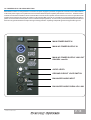
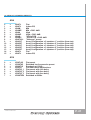
The KH4 or KS4 presents a 10k ohm balanced input impedance to a three-pin XLR connector with the following
connectors:
pin1 = Ground
pin2 = Signal +
pin3 = Signal -
CAUTION
!
Shorting an input connector pin to the case can form a ground loop
and cause hum.
Use standard audio cables with XLR connectors for balanced signal sources. Make sure that pin 1 (shield) is always connected on
both ends of the cable.
If abnormal noises such as hiss and popping are produced by the loudspeaker, disconnect
the audio cable from the
speaker. If the noise stops, then most likely the problem is not with the loudspeaker. Check the audio cable, source, and AC power
for the source of the problem.
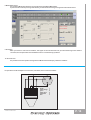
Audio signals can be easy-chained using the loop output connector on the user panel of the KH4 or KS4. A single source can drive
multiple KH4 or KS4 with a paralleled input loop, creating an unbuffered hard-wired loop connection. When driving multiple KH4 or
KS4 in an array, make certain that the source device can drive the total load impedance presented by the paralleled input circuit of the
array. The audio source must be capable of producing a minimum of not distorted 20 dBV (10-Vrms into 600 ohms). The maximum
peak SPL over the operating bandwidth of the loudspeaker is generated by +4dB input signal (1.230 V. RMS).
7. AMPLIFICATION AND PROTECTION CIRCUITRY
The KH4 or KS4 is powered by the K-array power amplifiers, a high-power eight-channel digital amplifiers (500 watts/ch. RMS) with a
total power of 4000 watts. All the specific functions for the KH4 or KS4 such as crossovers, frequency, phase response, and driver
protection are determined by a DSP processor installed inside the amplifier. All K-array loudspeakers are shipped with the drivers in
correct alignment. However, if a driver needs to be replaced, make sure the replacement is reinstalled with the correct polarity.
Incorrect driver polarity impairs the system performance and may damage the drivers.
USER'S MANUAL
P. 8