1
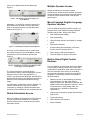
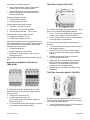
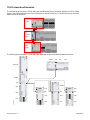
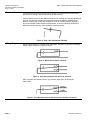
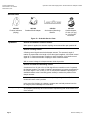
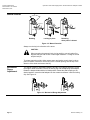
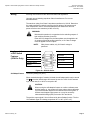
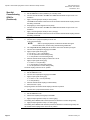
motors, more digital points can be added (see Figure 6). Figure 6. PXC Modular, TX-I/O Power Supply, and TX-I/O Modules. Alternately, if no local point control is required, the PXC Modular can be used to monitor and control Field Level Network devices using the Expansion Modules (see Figure 7). Figure 7. RS-485 Expansion Module and PXC Modular. Of course, the PXC Modular can be used for both direct point monitoring and control and as a system controller for Field Level Network devices (see Figure 8). Multiple Operator Access Multiple operators can access the network simultaneously. When using the Ethernet ALN option, multiple operators may access the controller through concurrent Telnet sessions and/or local operator terminal ports. Menu Prompted, English Language Operator Interface The PXC Modular field panel includes a simple, yet powerful menu driven English Language Operator Interface that provides, among other things: Point monitoring and display Point commanding Historical trend collection and display for multiple points Equipment scheduling Program editing and modification via Powers Process Control Language (PPCL) Alarm reporting and acknowledgment Continual display of dynamic information Built-in Direct Digital Control Routines Figure 8. RS-485 Expansion Module, PXC Modular, TX-I/O Power Supply, and TX-I/O Modules. The control program for each field panel is customized to exactly match the application. Proven Powers Process Control Language (PPCL), a “BASIC” type programming language, provides direct digital control and energy management sequences to precisely control equipment and optimize energy usage. The PXC Modular provides stand-alone Direct Digital Control (DDC) to deliver precise HVAC control and comprehensive information about system operation. It receives information from sensors in the building, processes the information, and directly controls the equipment. The following functions are available in the PXC Modular: Adaptive Control, an auto-adjusting closed loop control algorithm. Provides more efficient, adaptive, robust, fast, and stable control than the traditional PID control algorithm. Superior in terms of response time, holding steady state, and minimizing error, oscillations, and actuator repositioning. Closed Loop Proportional, Integral and Derivative (PID) control. Logical sequencing. Alarm detection and reporting. Reset schedules. In a stand-alone configuration, the PXC Modular can fulfill all requirements of a supervisory network coordinator by managing operation schedules and alarms and communicating for the connected devices. Global Information Access Each PXC Modular is equipped with an RS-232 port. This port supports the connection of a computer. Devices connected to the terminal port gain global information access. Siemens Industry, Inc. Page 3 of 6