1
LIST OF FIGURES
Fig. 1
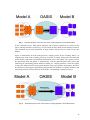
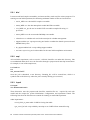
ACCESS/AusCOM Coupled Ocean and Sea Ice Model Framework and
Components..................................................................................................................5
Fig. 2
Bathymetry (m) for the AusCOM ocean and sea ice model. Grid lines indicate
each fourth row in the orthogonal curvilinear ‘zonal’ and ‘meridional’ directions.
Top: northern hemisphere projection showing the tripolar grid over the Arctic.
Bottom: southern hemisphere projection showing the Mercator meridional grid
over the Southern Ocean..............................................................................................7
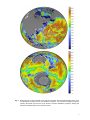
Fig. 3
AusCOM ocean and sea ice grid orthogonal curvilinear ‘zonal’ grid spacing dx
(top, km); orthogonal curvilinear ‘meridional’ grid spacing dy (middle, km); and
grid aspect ratio dx/dy (bottom, dimensionless). ..........................................................8
Fig. 4
AusCOM/ACCESS coupling approach--CICE acts as the “coupling media” .............17
Fig. 5
Schematic diagram of the mono-processor coupling algorithm in
AusCOM/ACCESS......................................................................................................19
Fig. 6
Schematic diagram of the multi-processor coupling algorithm in
AusCOM/ACCESS......................................................................................................19
LIST OF TABLES
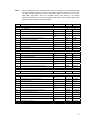
Table 1:
The 31 coupling fields of the AusCOM system occur in four classes: there are 10
fields passed from the atmosphere model to the sea ice model (a2i); seven fields
passed from ocean to sea ice (o2i); one field passed from sea ice to atmosphere
(i2a); and 13 from sea ice to ocean (i2o). Where appropriate, ‘zonal’ and
‘meridional’ denote local direction on the tripolar orthogonal curvilinear grid. The
source and target entries refer to actual variable names in the broadcasting and
receiving models, respectively...................................................................................... 13
iii