1
•
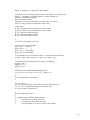
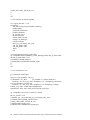
SCRIPR: interpolation transformation. OASIS3 also supports BLASOLD, INTERP,
MOZAIC, NOINTERP, and FILLING for different applications.
•
CHECKOUT: postprocessing, namely, calculating the field mean and extreme values
on the target grid and printing to cplout.
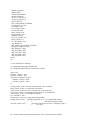
5. Line 5 configures the time transformation LOCTRANS:
•
INSTANT: the instantaneous field is transfered (i.e. no time transformation). The
supported time transformations include INSTANT, ACCUMUL, ACERAGE, T_MIN,
T_MAX, and ONCE. See Valcke (2006) for full descriptions. Note, for all the
AusCOM coupling fields, the only time transformation needed is time average, and it is
done in sub-models. Communication between a sub-model and OASIS3 only occurs at
actual coupling time points, avoiding “unnecessary” data exchanges and time
transformations in OASIS3 and therefore reduing its workload.
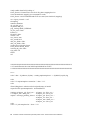
6. Line 6 configures the preprocessing transformation CHECKIN:
•
INT=0: 1 or 0, whether or not calculating and printing the source field integral.
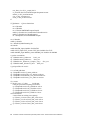
7. Line 7 configures the interpolation transformation SCRIPR: SCRIPR in PSMILe adopts
the LANL CSRIP1.4 interpolation software (Jones 1997) and offers the following types of
interpolation: DISIWGT, GAUSWGT, BILINEAR, BICUBIC, and CONSERV. Each of
them has advantages and disadvantages, and may be used for different circumstances. For
AusCOM, the CONSERV algorithm is chosen to perform interpolations for all fields,
although it is only necessary for those involving mass and energy fluxes.
•
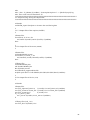
CONSERV: performs first or second order conservative remapping. The following
entries further configure this interpolation algorithm:
•
LR: the source grid type (Logically Rectangular).
•
SCALAR: field type.
•
LATLON: search restriction type.
•
10: number of restriction bins.
•
FRACNNEI: normalisation option for the SCRIPR CONSERV interpolation algorithm.
The other two alternative options are FRACAREA and DESTAREA. Extra caution
needs to be taken for choosing the proper one, otherwise the model might not behave
due to “abnormal” products of the interpolation. FRACNNEI is our choice for
AusCOM after numerious tests, mainly because it results in a reasonable flux value,
although local flux conservation is not guaranteed.
•
FIRST: the conservation order.
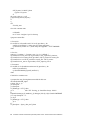
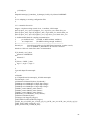
8. The last line configures the postprocessing transformation CHECKOUT:
•
30
INT=0: Specifies to not calculate or print the target field integral.
Australian Climate Ocean Model (AusCOM) Users Guide – Daohua Bi and Simon Marsland