1
Appendix A. Back Pressure
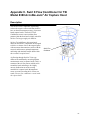
The quantity of air flowing through a supply diffuser or a return grille is reduced to some extent whenever
a capture hood is placed over the flow opening. The amount of flow reduction will vary depending on the
combined effects of the diffuser/grille resistance, the capture hood resistance, system pressure and the
flow rate.
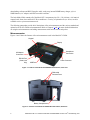
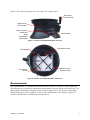
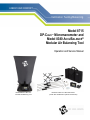
The Model 8380 capture hood features a built-in capability to make flow measurements which are
compensated for the effects of the capture hood-induced back pressure. This is accomplished by taking
two sequential flow measurements at a diffuser or grille, the first with the back pressure flap “OPEN” and
the second with the flap “CLOSED”. The resulting Backpressure Compensated Flow displayed by the
meter represents the air flow through the diffuser/grille in its original state, that is, without the presence of
the capture hood.
Verifying Flow Measurements
It is always the recommended practice to verify the flow measurements obtained with a capture hood by
performing appropriate* multi-point, in-duct velocity traverses using a Pitot-static tube or a thermal
anemometer.
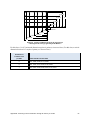
We recommend the use of the Log-linear method when traversing a round duct, and the Log-Tchebycheff
method when traversing a rectangular duct.
*We recommend that you refer to the most up-to-date copy of the duct traverse specification you require from an approved
regulatory or professional organization.
61