1
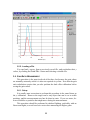
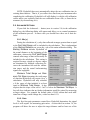
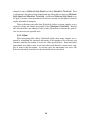
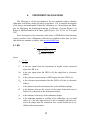
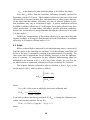
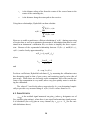
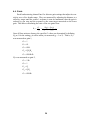
zmax is the distance beyond which the plaque is invisible to the sensor. Note that rL differs from the irradiance reflectance normally reported for Spectralon, which is 0.99 in air. The irradiance reflectivity is the ratio of the total reflected flux to the total incident flux, and cannot have a value greater than one. On the other hand the radiance reflectance, the ratio of reflected radiance to incident irradiance, may vary as a function of angle. A perfect Lambertian reflector would have radiance reflectivity of 1 at all angles, but realistic reflectors may have values greater than 1 at some angles, indicating a specular reflection component. In this case, conservation of energy demands that that the reflectivity be less than 1 at other angles. HOBI Labs’ measurements of Spectralon reflectivity in water show that with incident irradiance at 20 degrees from normal (as for the HydroScats), its radiance reflectivity at 20 degrees reflected angle is 1.10. 4.2. SIGMA Before scattered light is measured by the backscattering sensor, it must travel from the sensor to the scattering site and back. Over that distance some light will be lost to the water’s attenuation, resulting in an underestimate of scattering. For clear waters this is insignificant, but as turbidity increases so does the underestimate of scattering. To compensate for this, calibrated backscattering values are multiplied by the function (Kbb). (Kbb) has a value of unity for very clear water, and increases as attenuation, characterized by the coefficient Kbb, increases. The response function collected in order to calculate , that is, Sn(z), is also used to derive (Kbb), which is define as follows. ¥ ( K bb ) = òW (K bbw , z )dz 0 ¥ òW (K bb , z )dz 0 where Kbbw is Kbb of the water in which the sensor was calibrated, and W ( K bbw , z ) = S n ( z ) - S n ( z max ) cos(tan -1 ( H 2 z )) It can also be shown that having measured W (Kbbw, z) during the calibration procedure, one can then calculate, for any Kbb, W ( K bb , z ) = W ( K bbw , z ) exp(( K bbw - K bb )(rs + rr ) where 18