1
State-of-the-art solutions
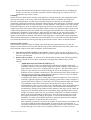
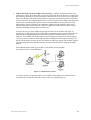
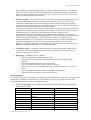
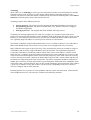
2.6.2 Wifi Protected Access (WPA)
WPA was created by the WiFi alliance in 2002 – in part out of impatience with the slow-moving
802.11i standard. WPA includes Temporal Key Integrity Protocol (TKIP) and 802.1x mechanisms.
The combination of these two mechanisms provides dynamic key encryption and mutual
authentication.
Unfortunately, the easiest way to use WPA actually makes it easier to crack than WEP. When 802.1X
authentication is not used in WPA, a simpler system called Pre-Shared Key (PSK) is. PSK offers a
long-lived password that everyone who wants to connect to the WLAN has to know.
With WPA-PSK, if you don't make your password long, you're susceptible to an offline dictionary
attack where an attacker grabs a few packets at the time a legitimate station joins the wireless network
and then can take those packets and recover the PSK used. Of course, this type of attack depends on
people choosing poor passwords.
In a home or Small Office/ Home Office (SOHO) environment, where there are no central
authentication servers or EAP framework, WiFi Protected Access runs in a special home mode. This
mode, also called Pre-Shared Key (WPA-PSK), only requires a single password entered into each
WLAN node (Access Points, Wireless Routers, client adapters, bridges). As long as the passwords
match, a client will be granted access to a WLAN.
As with WEP, wireless cracking tools exist that are specifically designed to recover the PSK from a
WPA-protected network.
WPA with 802.1x authentication - sometimes called WPA-Enterprise - yields a very tight network.
The intrinsic encryption and authentication schemes defined in WiFi Protected Access may also prove
useful for Wireless Internet Service Providers (WISPs) offering WiFi public access in “hot spots”
where secure transmission and authentication is particularly important to users unknown to each other.
The authentication capability defined in the specification enables a secure access control mechanism
for the service providers and for mobile users not utilizing VPN connections.
An issue that WPA does not fix yet is potential Denial of Service (DoS) attacks.
2.6.3 802.11i (WPA2)
The long-anticipated 802.11i specification was finally ratified by the IEEE in June 2004. The new
specification offers significant improvements over the old standard (WEP). It describes the encrypted
transmission of data between systems of 802.11a and 802.11b WLANs. It defines new encryption key
protocols including the Temporal Key Integrity Protocol (TKIP) and the Advanced Encryption
Standard (AES).further improvements are:
•
•
Authentication of management frames. This prevents simple session hijacking.
Authentication of EAP-success messages prevents simple MitM attacks
WPA2 is backwards compatible with WPA.
2.7 Summary
The new 802.11i standard described in the paragraphs above does solve almost all known weaknesses
in wireless implementations used today. The hardware used today doesn’t support this new standard
and should be updated or replaced to make use of it. Since WPA was designed to be compatible with
802.11i later on, it has been a good choice of a lot of companies to upgrade their systems to WPA.
- The wireless hacker project -
51