1
The Utwente policy and security measures
•
GUEST - This network is for guests or other user who cannot use the 802.1x authentication.
The use of encryption is disabled on this network and therefore it shouldn’t be used to send
confidential data. Usage of the network requires a permanent or temporary registered MACaddress. However as stated before a registered address is easily discovered by capturing the
(not encrypted) traffic of a legitimate user. This address can subsequently be used to access
the network. SSID broadcasting is disabled for this network.
The risks involved in using this network are well known and also indicated in the user manual
[UTG] available.
•
TI4GA, TI4GB and quadapt - These networks have encryption enabled and don’t have an
open authentication allowing us to join them. There is an acceptable change they where
installed by students or employees and therefore don’t use dynamic key rotation. Assuming
that this is the case, this could result in a successful key-break by the use of Airsnort,
WEPcrack, WEPlap or a similar tool. Investing this possibility might take several days
depending on the amount of traffic, and even if the keys can be broken, and the assumption is
proven to be true, this won’t give me much more information as I already have now. What is
important here is the fact that there are possibly so called ‘rogue access points’ plugged into
the network which can be a welcome less secure entrance for an outsider to enter the network
behind it.
3.3.3 Phase 2: Scanning
An outsider doesn’t have many options here. All the traffic is encrypted and the 802.1x technology
takes care of the authentication. The only thing an outsider can conclude here is that there are a lot of
access points and a lot of users. More information cannot be collected without an active attack on the
network. Of course I could check the whole
area for misconfigured access points and/or
rogue access points, but this would be a very
time-consuming job with little contribution to
the project.
On the other hand, the attacker that possesses
a valid account can find some more detailed
information here. A ping scan in the subnet
leads to a huge amount of clients, in the
130.89.13x.xxx range.
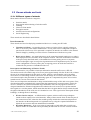
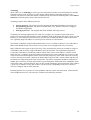
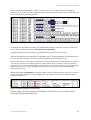
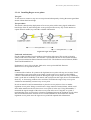
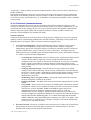
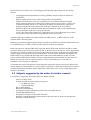
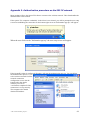
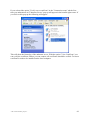
Further information can be derived from the
operating system as down here from the
windows XP.
Vulnerability scans of the wireless clients
belong in this part of the test as well. These
are discussed in the next paragraph in
combination with one of the actual attacks to
improve the readability of the document.
Figure 40: Network details from winXP
- The wireless hacker project -
62