1
DESIGN /
Summary of tools
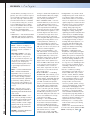
Corel XMetaL. Corel XMetaL is part of
a suite of XML applications. It is an advanced structured editor that is relatively
easy to use and highly customizable for
applications based on well-known DTDs.
It provides three views of an XML document: a plain-text view in which you can
view the underlying XML code; a tags-on
view in which elements are represented
as symbols in a formatted document;
and a normal view that displays the formatted document and hides the markup.
XMetaL supports use of cascading style
sheets (CSS) to control the formatted
view of the document on screen.
Unlike an HTML editor, such as
HoTMetaL, that works with a fixed tag
set, XMetaL is meant to be used with
any DTD and therefore requires customization. You will need a cascading
style sheet and in most cases a set of
macros for data entry for each new DTD.
XMetaL supports the Windows Scripting
Host, which means that you can write
scripts in JavaScript, VBScript, Perl or
Python to process XML documents or to
create custom data entry interfaces.
XMetaL is intended to be integrated as
a component of a broader XML solution,
such as a content management system.
The new Version 1.2 adds a built-in XSLT
transformation engine.
Open Source Tools
In addition to the commercial offerings
from vendors in the XML tools marketplace, there is a considerable body of
other tools that have been produced to
support SGML and XML content management by the academic and open source
communities.
NOTE: This section is more technically
TABLE 2 Summary of tools (refer to abbreviations, left of table)
Advantage
Documentation
Format conversion
LMS integration
Native XML
Online Help
Support available
Training available
Valid XML support
Well-formed XML
WYSIWYG
XML training
Disadvantage
Costly
Extensive prep required
Conversions required
Inefficient
Not an XML application
Steep learning curve
Training required
Uncertain future
Very technical
Primary output
Paper
Web
Other online
XML
Word
FM
ID/GL
DW
AT
✔
✔
✔
✔
✔
✔
✔
✔
✔
✔
✔
✔
✔
✔
✔
✔
✔
✔
✔
✔
✔
✔
✔
✔
✔
✔
✔
✔
OS
✔
✔
✔
✔
XM
✔
✔
✔
ID/GL
DW
✔
✔
✔
✔
✔
✔
✔
✔
✔
✔
✔
✔
✔
✔
✔
✔
✔
AT
XM
OS
✔
✔
✔
Word
FM
✔
✔
✔
✔
✔
✔
✔
✔
✔
✔
✔
✔
✔
AT
XM
OS
✔
✔
✔
✔
✔
✔
Word
✔
FM
ID/GL
DW
✔
✔
✔
✔
✔
✔
✔
13
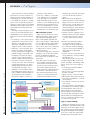
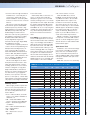
Table 2, right, provides a quick reference for some of the important tools
that have been discussed in this section. The following abbreviations are
used in Table 2:
• Word — Microsoft Word, current XP
version, some features available at
additional cost.
• FM — Adobe FrameMaker + FM
Server + Adobe Document Manager
• ID/GL — Adobe InDesign/GoLive
combination
• DW — Macromedia Dreamweaver
• AT — Arbortext Editor
• XM — XMetaL
• OS — Open Source tools, in
aggregate
for the same return.
Arbortext Epic Editor is the best of a
series of content editors that have
attempted to get the most out of XML
structure, allowing users to see a visual
representation of their output. Given that
the designer understands XML and the
learning content, Epic can out-perform
FrameMaker as a tool for importing and
creating new content. The Epic editor is
very often imitated by LCMS vendors
that work in structured document formats.
THE ELEARNING DEVELOPERS’ JOURNAL / FEBRUARY 2, 2004
• Content creation through client-based
installations for occasionally disconnected users, and through serverbased installations accessed by Web
browsers for users who are connected
full-time.
Out of the box, Arbortext Epic Editor
works with file systems and WebDAVenabled repositories, and has configurable adapters for Documentum, Oracle
CM SDK (formerly named iFS), and
FileNet Panagon Content Services.
Arbortext’s other repository partners provide adapters to Epic Editor, including
BroadVision One-To-One Enterprise,
empolis SigmaLink, Progressive
Information Technologies Target 2000,
and XyEnterprise Content.
Arbortext offers separate products for
content conversion and publishing. The
Enterprise E-Content Engine (E3) converts content from Microsoft Word,
Adobe FrameMaker and Interleaf documents to XML, and publishes dynamic
content to print or PDF, and Web or wireless. To publish to CD-ROM, Arbortext
offers the CD-ROM Composer.
This E-content Engine is an off-theshelf parser that can be used to automate many different kinds of legacy
chunking operations. It does not work
miracles: nothing will correctly parse
badly formatted Microsoft Word files.
That process requires human intervention and exercise of good judgment.
However, it does provide to the enterprise a tool the equal of, or better than,
many learning content parsers that typically require a much higher investment
strategies