1
Unsupported Protocol
ST EP
Concentrate DNA
12
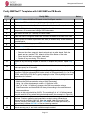
Remove the tube from the magnetic bead rack and allow beads to air-dry (with the
tube caps open) for 60 seconds.
13
Calculate appropriate volume of Elution Buffer.
ng X 0.5 / (
ng/μL) =
μL of Elution Buffer needed
The minimum DNA concentration required to proceed to the next step (End-Repair)
is 140 ng/μL with preferred m ass of at least 5 μg.
14
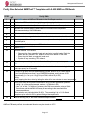
Add the Pacific Biosciences® Elution Buffer volume (calculated in step 13) to your
beads. Tap the tube with finger gently to mix. Do not pipet to mix.
– Elute the DNA by gentle letting the mix stand at room temperature for 2 minutes
– Spin the tube down to pellet beads, then place the tube back on the magnetic
bead rack.
– Perform concentration measurements. Verify your DNA concentration using a
Nanodrop® or Qubit® quantitation platform . If the DNA concentration is
estimated to be equal to or below 12 ng/μL, a Qubit system reading is
required. W hen performing a Qubit system reading, ensure that your sample
is within the range of the Qubit kit you are using. For proper concentration
calculations, incorporate the dilution factor (used when diluting your sample) to
be within range of the Qubit kit and the dilution factor when diluting your
sample with the working solution. The latter part of this dilution factor can be
calculated automatically by the Qubit system.
– Discard the beads.
15
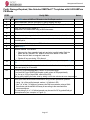
Perform concentration measurements.
– Measure the DNA concentration using a Qubit fluorometer.
– Using 1 μL of the eluted sample, make a 1:10 dilution in EB.
– Use 1 µL of this 1:10 dilution to measure the DNA concentration using a Qubit
fluorometer and the dsDNA HS Assay kit according to the manufacturer’s
recommendations.
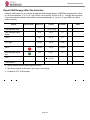
Yield up to this point should be 40-60%. The remaining 9 μL of 1:10 diluted sample
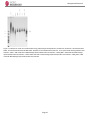
may be used for QC by pulsed field gel electrophoresis (see example in Figure 4).
16
The sheared DNA can be stored for up to 24 hours at 4°C or at -20°C for longer
duration.
17
Actual recovery per μL and total available sample material:
Page 6
Notes