1
2.1 Hardware
The camera used in this experiment was a Nikon D3200 digital single-lens reflex
(DSLR) camera with a 24.2 megapixel CMOS sensor. According to PhotoScan user
manual any camera with more than 5 megapixels is sufficient to provide photos to the
software. Secondly the D3200 is a low-cost consumer-grade DSLR available for
3500, - nok and fits in my philosophy of doing this project within a low-cost budget
without affecting the overall result.
A Nikon WU-1A Wireless Mobile Adapter was used for tethering the camera from an
Android device (A Samsung Galaxy Note 10.1 running Android 4.0 was used). On
the Galaxy Note, the application qDslrDashboard was used to control the DSLR
camera. The application allows for full integration and control with the camera, and
also allows for the Android device to be the “host” for the captured pictures. The
Galaxy Note tablet was equipped with a Samsung 32 GB micro SDHC EVO memory
card for image storage. The memory card has transfer speeds up to 48 MB/s.
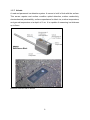
A parallel laser device was constructed and tested. It was a printed plastic block with
two holes each inserted with a small laser diode. It was designed so that the lasers
were parallel with 10 cm between the lights up to a distance of 1.5 m. Unfortunately,
one of the laser diodes died in between experiments, so this tool was not used in the
final sets of pictures.
A PC with an Intel i7 2600k CPU @ 4.4 GHz, and an NVidia GTX 660Ti graphics
card running Windows 7 and the following software: Agisoft PhotoScan Professional
Edition, Adobe Lightroom 4.4, Cloudcompare and MeshLab. The recommended
setup is minimum an Intel i7, and 12 Gb of RAM (Agisoft LLC, 2014). The machine
was bought second hand, and has a total cost of 3500,- nok, and is still classed as
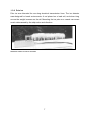
adequate for the task at hand. A Soehnle kitchen scale was used to measure the
weight of the ice, and a Vernier calliper for measuring size.
14