1
21
.
ANOTABLE ASSEMBLER LOADER
_ by D. Stevens, 4 Washington Sq. Village, #13R, N.Y., N.Y., USA, 10012
~nis routine allows one to assemble long object files without
using tape or disk; it can produce an object file with length a
RAM/3. I wrote it because I am tired of hand assembling my codes
and do not have a terminal or an assembler, just an ELF-II with
8 K RAM. The source (which is machine code + address instructions) is usually less than twice as long as the assembled object
file. The routine fits in 3 pages and runs slowly, needing for
instance 20 seconds to process its own source (5 pages) and
needing 200 seconds to process my operating system (source a 15
pages, object length = 08AO). It requires only 3 pages because it
keeps no tables. It will run much faster and can be used as a
loader if just the high address bytes are computed.
The source for the assembler has no mnemonics, only op codes
and address data. The address da.ta is given in strings of bytes
all beginning with 68. For example, the address of a particular
op code is given the name "AB" by preceeding the op code with
"68 61 AB", it is given the name "CD EF" by preceeding it with
"68 62 CD EF". In the source file, a short branch to these
locations would be "30 68 11 AB" and "30 68 12 CD EF". When the
assembler encounters a data form such as is in the left column
below it performs the action described in the right column. Now
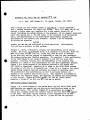
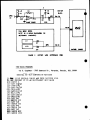
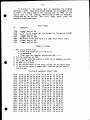
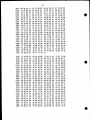
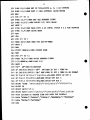
look at the source listing of the assembler. The first two bytes
tell the assembler to write the object code starting at 1000, the
68 03 01 00 tells the assembler that the load address of the
object code is 01 00.
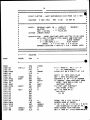
The next data up to 0417 is op codes,
compare with the object code listing.
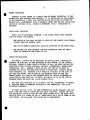
At 0418 is 68 22 01 26,
then more op codes.
At 0112 in the object listing the byte 03
occurs instead.
The name "01 26" is defined at 0823 (the
68 62 01 26) and the address of the following byte is 035D.
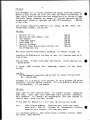
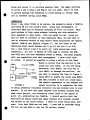
Da ta String
Compiler Action
68 00
A "68" will be inserted in the object code.
68 01 xx yy
The address of the next byte in the object
code will be the address of the last byte
in the object code plus xx yy. This is a
SKIP instruction to the compiler.
68 02 xx yy
The low byte of the address of the next byte
in the object code will be yy. The high byte
will be the high byte of the last byte plus xx.
68 03 xx yy
The address of the next byte in the object code
will be xx yy This is an ORG instruction to
to the compiler.