1
Chapter 5: Symbols
19
5 Symbols
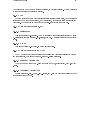
Symbols are a central concept: the programmer uses symbols to name things, the linker
uses symbols to link, and the debugger uses symbols to debug.
Warning: as does not place symbols in the object le in the same order they
were declared. This may break some debuggers.
5.1 Labels
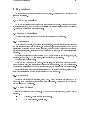
A label is written as a symbol immediately followed by a colon `:'. The symbol then
represents the current value of the active location counter, and is, for example, a suitable
instruction operand. You are warned if you use the same symbol to represent two dierent
locations: the rst denition overrides any other denitions.
5.2 Giving Symbols Other Values
A symbol can be given an arbitrary value by writing a symbol, followed by an equals
sign `=', followed by an expression (see Chapter 6 [Expressions], page 23). This is equivalent
to using the .set directive. See Section 7.44 [.set], page 32.
5.3 Symbol Names
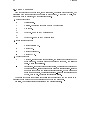
Symbol names begin with a letter or with one of `_.' (On most machines, you can also use
$ in symbol names; exceptions are noted in Chapter 8 [Machine Dependent], page 37.) That
character may be followed by any string of digits, letters, dollar signs (unless otherwise noted
in Chapter 8 [Machine Dependent], page 37), and underscores. Case of letters is signicant:
foo is a dierent symbol name than Foo.
For the AMD 29K family, `?' is also allowed in the body of a symbol name, though not
at its beginning.
Each symbol has exactly one name. Each name in an assembly language program refers
to exactly one symbol. You may use that symbol name any number of times in a program.
Local Symbol Names
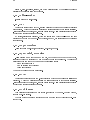
Local symbols help compilers and programmers use names temporarily. There are ten
local symbol names, which are re-used throughout the program. You may refer to them
using the names `0' `1' `9'. To dene a local symbol, write a label of the form `N:' (where
N represents any digit). To refer to the most recent previous denition of that symbol write
`Nb', using the same digit as when you dened the label. To refer to the next denition
of a local label, write `Nf'|where N gives you a choice of 10 forward references. The `b'
stands for \backwards" and the `f' stands for \forwards".
Local symbols are not emitted by the current GNU C compiler.
There is no restriction on how you can use these labels, but remember that at any point
in the assembly you can refer to at most 10 prior local labels and to at most 10 forward
local labels.
:::