1
Chapter 3: Maintenance and Troubleshooting
Troubleshooting (continued)
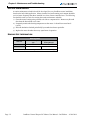
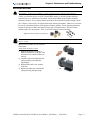
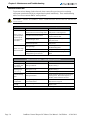
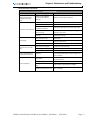
Electrical Problems
Problem
Possible Causes
Motor shaft rotates in wrong
Positive (+) and negative
direction (should rotate
(-) input power leads are
clockwise when facing
reversed.
shaft).
Motor fails to start off-load.
Jerky starting.
Motor will not run under
load.
Motor overspeeding and
hunting while under load.
Motor overheating.
Solutions
Switch the input power connections.
Break in the armature supply.
Check and repair connection.
Fuse is blown.
Replace fuse.
Controller damaged or
incorrectly connected.
Check starter for break in circuit and repair break.
Armature coils burned out or
short-circuiting.
Correct short circuit. This may require bringing the
motor to a repair shop.
Brushes not bearing down
correctly.
Check brush position and bearing pressure.
Replace worn brushes.
Break in starter circuit.
Repair break.
Armature short-circuit.
Correct short circuit. This may require bringing the
motor to a repair shop.
Commutator short-circuit.
Check commutator and repair short-circuit.
Short circuit in the supply.
Locate short circuit and repair.
Overloading.
Check current input and remedy overload.
Voltage drop.
Increase supply line cross section.
Controller.
Decrease IR compensation.
Check speed potentiometer wiring and signal, and
repair if needed.
Overloading.
Check voltage and current levels, and correct
overload condition.
Insufficient airflow.
Improve cooling conditions.
Cooling air temperature too
high.
If TEFC model, inspect the fan for damage.
Armature winding short-circuit.
Check windings and soldered connections. Repair
coils or windings.
IronHorse General Purpose DC Motors User Manual – 2nd Edition – 03/04/2014
Page 3–5