1
US 20020010574A1
(19) United States
(12) Patent Application Publication (10) Pub. N0.: US 2002/0010574 A1
(43) Pub. Date:
Tsourikov et al.
Jan. 24, 2002
Publication Classi?cation
(54) NATURAL LANGUAGE PROCESSING AND
QUERY DRIVEN INFORMATION
RETRIEVAL
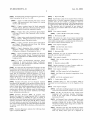
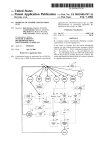
(51)
Int. c1.7 .
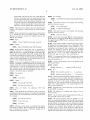
(52)
US. Cl. ...................................... .. 704/9; 704/1; 707/3
.............. .. G06F 17/27
(57)
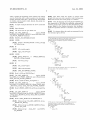
(76) Inventors: Valery Tsourikov, Boston, MA (US);
Igor Sovpel, Minsk (BY); Leonid
Batchilo, Belmont, MA (US)
ABSTRACT
In a digital computer, the method of processing a natural
language expression entered or downloaded to the computer
that includes (1) identifying in the expression expanded
subject, action, object components that includes at least four
Correspondence Address:
components, subject, action, object (SAO) components and
STANGER & DREYFUS
608 SHERWOOD PKWY
at least one additional component from the class of prepo
sition, indirect object, adjective, and adverbial eSAO com
ponents (2) extracting each of the at least four components
MOUNTAINSIDE, NJ 07092 (US)
(21) Appl. No.:
09/815,260
(22) Filed:
Mar. 22, 2001
for designation into a respective subject, action, object ?eld
and at least a preposition ?eld, indirect object ?eld, adjective
?eld, and adverbial ?eld, and (3) using the components in at
least certaincomponents
displaying
ones of said
to the
?elds
user,for(ii)at forming
least onea search
of
Related US. Application Data
pattern of a user request for information search of local or
(63) Non-provisional of provisional application No.
base. A constraint ?eld can also be provided to accept
on-line databases, and (iii) forming an eSAO knowledge
non-classi?ed components.
60/198,782, ?led on Apr. 20, 2000.
5
Sources of Documents to be
82
User Requests
processed
Query driven
information search 84 '7
7
b 88
W36
7
Semantic eSAO
Semantic eSAO
Processing
Processing
V
f_\ 90
eSAO Structures
Index of Source
Documents
V /\ 92
eSAO Search
Patterns of User
Requests
(including links to
documents)
v/\ 94
V
Comparative analysis of eSAO Search
Patterns of User Requests and
eSAO Structures of Source Documents
V
Relevant eSAO Structures of Source
Documents
96
Patent Application Publication
Jan. 24, 2002 Sheet 1 of 8
Digital Computer
US 2002/0010574 A1
User lgput
I\2
User request
H 47
Type of user request
recognition
/
67
User request eSAO analysis
Linguistic
KB
87
Search pattern generation
Output /‘10
search patterns
FIG. 1
Structural and Functional Scheme of the Semantic Processor for
User Request Analysis
Patent Application Publication
Jan. 24, 2002 Sheet 2 0f 8
US 2002/0010574 A1
User request
1 16 7
User request
classi?cation
18’)
Keywords
Linguistic
207
Bit sentence
KB
22 7
Statement
(command sentence)
247
Question sentence
257
Complex query
FIG. 2
Basic Types of the User Request
_.___,
34
/V
Patent Application Publication
Jan. 24, 2002 Sheet 3 of 8
US 2002/0010574 A1
26;
User request
(keywords)
12
v
28 7
Request parsing
3O
Parsed user request
FIG. 3
Structural and Functional Scheme of the User Request eSAO
Processor
(the case of “keywords”)
Patent Application Publication
Jan. 24, 2002 Sheet 4 of 8
US 2002/0010574 A1
h 34
User request
(bit, command, question or
complex sentencel
H
36 7
Part of speech tagging
ll
377
Recognition of introductory
Dart of the ouerv
H
Linguistic
38 7
Request parsing
KB
ll 407
Request converting
@
42,7
eSAO extraction
f” 44
eSAO - request
FIG. 4
Structural and Functional Scheme of the User Request eSAO Processor
(the case of “bit ”, “command”, “question” or “complex” query)
Patent Application Publication
Jan. 24, 2002 Sheet 5 of 8
US 2002/0010574 A1
48
Tagged request
507
Verb chains recognition
@527
Linguistic
Noun group recognition
KB
54 '7
Syntactical dependency tree
construction
56
Parsed request
FIG. 5
Structural and Functional Scheme of User
Request Parser
Patent Application Publication
Jan. 24, 2002 Sheet 6 of 8
US 2002/0010574 A1
("-60
Parsed request
62 7
12
2
Structure of “question’
9
sentence recognition
Linguistic —
64 F
Request converting
657
Question word
substitution
66/
Parsed converted
request
FIG. 6
Structural and Functional Scheme of User Request Convertor
Patent Application Publication
Jan. 24, 2002 Sheet 7 of 8
US 2002/0010574 A1
70
Parsed or parsed
converted request
727
Action recognition
747
127
Linguistic
KB
Subject
and object
recognition
767
Attributes recognition
u
Constraints recognition
ii
g78
eSAO- request
FIG. 7
Structural and Functional Scheme of User Request eSAO
extractor
Patent Application Publication
Jan. 24, 2002 Sheet 8 of 8
US 2002/0010574 A1
F82
Sources of Documents to be
User Requests
processed
Query driven
information search 84 '7
/\86
/——88
Semantic eSAO
Semantic eSAO
Processing
Processing
i
/\ 90
l b 92
eSAO Structures
Index of Source
eSAO Search
Patterns of User
Documents _
Requests
(lncludlng links to
documents)
i
r94
Comparative analysis of eSAO Search
Patterns of User Requests and
eSAO Structures of Source Documents
f‘ 96
Relevant eSAO Structures of Source
Documents
FIG. 8.
Query driven information search
US 2002/0010574 A1
NATURAL LANGUAGE PROCESSING AND
QUERY DRIVEN INFORMATION RETRIEVAL
RELATED APPLICATION
[0001] US. patent application Ser. No. 60/198,782, ?led
Apr. 20, 2000.
J an. 24, 2002
[0009] Thus, Semantic Processor for User Request Analy
sis according to the principles of the present invention aims
at analyZing and classifying different types of user requests
in order to create their formal representation (in the form of
a set of certain ?elds and relations betWeen them) Which
enables more effective and ef?cient ansWer search in local
[0002] The present invention relates to methods and appa
ratus for semantically processing natural language text in a
digital computer such that use of the processed data or
and remote databases, information netWorks, etc. Also, the
output search patterns can be used to search for matching
eSAO’s in eSAO Knowledge Base in the system With much
more accuracy and reliability than prior systems and meth
ods even for requests being in the form of questions. In
addition, the eSAO format enable greater accuracy in obtain
representation shall lead to more reliable and accurate
ing precise information of interest. One exemplary system
results than heretofore possible With conventional systems.
according to the present invention also forms an eSAO
knoWledge base or index of stored processed information
that can be managed by various rules related to the eSAO
components and ?elds.
BACKGROUND
[0003]
One example of such use includes processing user
queries into search, retrieval, veri?cation, and display
desired information.
[0004] Another example is to analyZe the content of
processed information or documents and use such informa
tion to create a detailed and indexed knoWledge base for user
access and interactive display of precise information.
[0005]
Reference is made to knoWn systems for extract
ing, processing, and using SAO (Subject-Action-Object)
DRAWINGS
[0010] Other and further objects and bene?ts shall become
apparent With the folloWing detailed description When taken
in vieW of the appended draWings in Which:
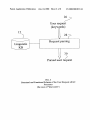
[0011]
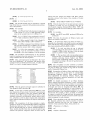
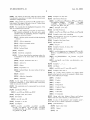
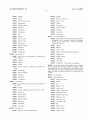
FIG. 1 shoWs a schematic vieW of one example of
data embodied in natural language text document in digital
(electronic) form. These prior systems process native lan
a digital computer system in accordance With the principles
of the present invention.
guage user requests and/or documents to extract and store
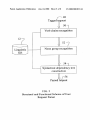
[0012] FIG. 2 is an example of a classi?cation routine for
classifying the type of user request usable in the system of
FIG. 1.
the SAO triplets existing throughout the document as Well as
the text segment associated With each SAO and link betWeen
each SAO and the Text segment. Links are also stored in
association With each text segment and the full source
document Which is accessible by user interaction and input.
[0006] Although SAO extraction, processing, and man
agement has advanced the science of arti?cial intelligence
both stand-alone computer and Web-based systems, there is
a need in the art for yet greater accuracy in computer
reliability in the semantic processing of user requests,
knoWledge base data, and information accessed and
obtained on the Web.
SUMMARY OF EXEMPLARY EMBODIMENT
OF INVENTION
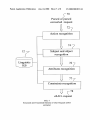
[0013] FIG. 3 is an example of a parsing routine for the
case of user request being key Words.
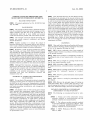
[0014] FIG. 4 is similar to FIG. 3 Where user request is a
bit (segment) sentence, command sentence or question sen
tence.
[0015]
FIG. 5 shoWs a parsing routine for the case of user
request being “bit”, “command”, “question” or “complex”
query.
[0016] FIG. 6 shoWs a parsed synonymic search pattern
expanding routine.
[0017]
FIG. 7 shoWs a routing for generating the eSAO
[0007] It is an object of the present invention to expand the
semantic processing poWer of computers to include not only
user request.
the SAO but to use a neW, more comprehensive, extended
eSAO Knowledge Base or Index (90) and using a user
Subject-Action-Object (eSAO) format as the foundation for
rule based processing, normaliZation, and management of
natural language.
[0008]
[0018]
natural language search query for relevant eSAO component
and source information display from the knoWledge base.
DETAILED DESCRIPTION OF EXEMPLARY
EMBODIMENT OF THE INVENTION
One skilled in this art Will note that prior systems
SAOs included three components, subject (S), action (A),
Object (O), the expanded SAO (hereafter “eSAO”) includes
a minimum of four components and ?elds and preferably
seven components and ?elds. These additional ?elds include
adjectives, prepositions, etc. more fully described beloW. In
one exemplary embodiment, an eighth ?eld is preferably
provided into Which all other components can be placed.
These other components and eighth ?eld are called con
straints. Where the knoWledge base or information in local
and remote databases are to be accessed in response to a user
request (or query) the system preferably uses the same rules
and number of ?elds to process the natural language user
request as to process candidate access or stored documents
for presentation to user.
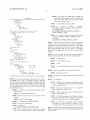
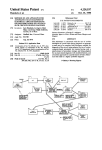
FIG. 8 shoWs the principal stages of forming as
[0019] The folloWing are incorporated herein by refer
ence:
0020
1. S y stem and on-line information service
presently available at WWW.cobrain.com and the
publicly available user manual therefor.
[0021] 2. The softWare product presently marketed
by Invention Machine Corporation of Boston, USA,
under it’s trademark KNOWLEDGIST® and the
publicly available user manual therefor.
[0022] 3. WIPO Publication 00/14651, Published
Mar. 16, 2000.
Jan. 24, 2002
US 2002/0010574 A1
[0023] 4. US. patent application Ser. No. 09/541,182
?led Apr. 3, 2000.
[0024]
-continued
Output:
5. IMC’s COBRAIN® server software mar
keted in the United States and manuals thereof.
[0025]
See references Nos. 3, 4, and 5 above for systems
and methods of using an SAO format for developing an SAO
extracted Knowledge Base.
[0026] The system and method according to the present
invention employs a new expanded S-A-O format for
semantic processing documents and generating a database of
expanded SAOs for expanded information search and man
3.
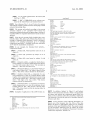
moon
keep
Object:
same face
Preposition:
Indirect object:
towards
Earth
Adjective:
—
Adverbial:
Input:
always
The dephasing waveguide is ?tted with a thin
dielectric semicircle at one end, and a guide cascaded
with the dephasing element completely suppresses
unwanted modes.
agement.
[0027]
Subject:
Action:
Output:
Subject: guide cascaded with the dephasing element
Note the prior systems SAOs included three com
Action: suppress
nents, subject (S), Action (A), Object (O), whereas one
example of expanded SAOs (hereafter “eSAO”) includes a
Object: unwanted mode
Preposition: —
minimum of 4 classi?ed components up to 7 classi?ed
Indirect Object: —
components (preferably 7 classi?ed ?elds) and, optionally,
Adjective: —
an
8th ?eld for unclassi?ed components.
4.
It was found that the maximum value of x is dependent
on the ionic radius of the lanthanide element.
[0028]
In one example, the Extended SAO (eSAO)—
components include:
[0029]
Adverbial: completely
Input:
Output:
Subject: maximum value of x
Action: be
1. Subject (S), which performs action A on an
object O;
Object: —
Preposition: on
IndirectObject: ionic radius of the lanthanide element
[0030] 2. Action (A), performed by subject S on an
Adjective: dependent
object O;
Adverbial: —
[0031] 3. Object (O), acted upon by subject S with
action A;
5.
Input:
This was true even though the RN interphase reacted
and vaporized because of water vapor in the atmosphere
at intermediate temperatures and glass formation
occurred at higher temperatures.
[0032] 4. Adjective (Adj .)—an adjective which charac
teriZes subject S or action Awhich follows the subject,
in a SAO with empty object O (ex: “The invention is
Output:
Subject: glass formation
ef?cient”, “The water becomes hot”);
Action: occur
Object: —
[0033] 5. Preposition (Prep.)—a preposition which gov
Preposition: at
erns Indirect Object (Ex: “The lamp is placed on the
IndirectObject: higher temperature
table”, “The device reduces friction by ultrasound”);
Adjective: —
[0034]
6. Indirect object (iO)—a component of a sen
tence manifested, as a rule, by a notional phrase, which
Adverbial: —
6.
Input:
The composites were in?ltrated under vacuum, cured
at 100 degree C, and precalcined in air at 700 degree
together with a preposition characteriZes action, being
C.
an adverbial modi?er. (Ex: “The lamp is placed on the
table”, “The light at the top is dim”, “The device
Output:
reduces friction by ultrasound”);
[0035]
7. Adverbial (Adv.)—a component of a sentence,
Subject: —
Action: in?ltrate
Object: composite
Preposition: under
IndirectObject: vacuum
which characteriZes, as a rule, the conditions of per
Adjective: —
forming action A. (Ex: “The process is slowly modi
Adverbial: —
?ed.”, “The driver must not turn the steering wheel in
such a manner.”)
[0036]
Examples of application of the eSAO format are:
[0037] In addition, Subject S, Object O and Indirect
Object iO have their inner structure, which is recogniZed by
the system and includes the components proper (Sm, Om,
iOm) and their attributes (Attr (Sm), Attr(Om), Attr(iOm)).
Input: Is the moon really blue during a blue moon?
Output:
Subject:
Action:
moon
be
Object:
—
Preposition:
during
Indirect Object:
blue moon
Adjective:
really blue
Adverbial:
—
Input: Does the moon always keep the same face towards
the Earth?
2.
The elements of each of the pairs are in semantic relation P
between each other.
[0038] If, for purposes of the following description, we
denote any of the elements Sm, Om, iOm as Om, then
Subject S, Object O and Indirect Object iO are predicate
elements of the type P(Attr(Om), Om). The system consid
ers and recogniZes following types of relation P: Feature
(Parameter, Color, etc.), Inclusion, Placement, Formation,
Connection, Separation, Transfer, etc.
Jan. 24, 2002
US 2002/0010574 A1
[0039] Examples (Only sentence fragments are given here,
Which correspond to the S or O or iO):
[0052] 1. Keywords (18)
[0053]
Keywords is a type of user request Where Words are
organiZed into a Boolean expression using predetermined
[0040] 1. Input: Ce-TZP materials With CeO2 content
Output: P=Formation/With Attr (Om)=CeO2 content
Om=Ce-TZP materials
grammar rules. In one example, it comprises 6 rules for
[0041] 2. Input: rotational speed of freely suspended
ets. The operators may be expressed in user request in
cylinder Output: P=Feature (Parameter)/of Attr (Om)=
rotational speed Om=freely suspended cylinder
different Ways, for instance AND can be Written as ‘AND’,
[0042] 3. Input: ruby color of Satsuma glassAOutput:
P=Feature (Color)/of Attr (Om)=ruby color Om=Sat
suma glass
in?x, pre?x and brackets operators. The folloWing operators
are implemented: AND, OR, XOR, NEAR, NOT and brack
‘&’, ‘&&’, ‘+’.
[0054] User request example:
[0055] “(‘laser’ NEAR ‘beam’) && ‘heating”’
[0056] 2. Bit sentence (20)
0043
4. InP ut: micro-cracks situated betWeen sintered
grains Output: P=PlaAcement/situated betWeen Attr
(Om)=sintered grains Om=micro-cracks
[0044] 5. Input: precursor derived from hydrocarbon
gas Output: P=Formation/derived from Attr (Om)=
hydrocarbon gas Om=precursor
[0057]
Bit sentence is a type of user request representing
a part of sentence or sentence segment (incomplete sen
tence) Which corresponds to a certain semantic element:pro
cess, object, function (action+object), etc.
[0058] User request examples:
[0059] (a) solid state laser system
0045
6. InP ut: dissiP ation driver couP led to P oWer
diAssipator Output: P=Oonnection/coupled to Attr
(Om)=poWer dissipator Om=dissipation driver
[0046] 7. Input: lymphoid cells isolated from blood of
AIDS infected people Output: P=Separation/isolated
from Attr (Om)=blood of AIDS infected people Om=
lymphoid cells
[0060] (b) decrease friction
[0061] 3. Statement (22)
[0062]
Statement is a type of request Which is a gram
matically correct imperative sentence.
[0063] User request example:
[0064]
[0047] 8. Input: one-dimensional hologram pattern
transferred to matrix electrode Output: P=Transfer/
transferred to Attr (Om)=matrix electrode Om=one
dimensional hologram pattern
[0048]
It is clear, that the components Om proper can also
be predicate elements (in the given above examples, it is, for
instance, Ex. No. 2: Om-freely suspended cylinder, Ex. No.
8: Om=one-dimensional hologram pattern). It should be
[0065] 4. Question sentence (24)
[0066]
Question sentence is a type of request Which is a
grammatically correct interrogative sentence.
[0067] User request examples:
[0068] (a) What causes fuel cell degradation?
[0069] (b) What is the chemical composition of the
noted that for information retrieval purposes it is more
important to recogniZe the structure of Subject, Object and
Indirect object, that is Attr (Om) and Om than the types of
relation P, because it is the basis of the algorithm of
transition to the less relevant search patterns.
Give me the number of employees in your
company.
ocean?
[0070] (c) Do the continents move?
[0071] 5. Comlex query (25)
[0049] Semantic Processor for User Request Analysis
[0072]
according to the principles of the present invention aims at
analyZing and classifying different types of user requests in
order to create their formal representation (in the form of a
set of certain ?elds and relations betWeen them) Which
expressed, by several sentences, ie by the fragment of the
enables more effective and ef?cient search for information
or documents in local and remote databases, knoWledge
bases, information netWorks, etc.
[0050] Semantic Processor (FIG. 1) receives User
Request 2 as input data. Using Linguistic KB 12, Semantic
Processor identi?es or classi?es the type of request as
described beloW (Unit 4) and performs eSAO analysis of the
request in accordance With its type (Unit 6). Then, a number
of search patterns is generated corresponding to the input
user request Which represent its formal description designed
for ansWer search (Unit 10) in databases, information net
Works, etc.
Complex query is a type of request, Which is
text.
[0073] User request example:
[0074] (a) Is there anything I can give my one-month
old son to relieve gas pain? I think he may have colic.
[0075] (b) My 15-year-old son has recently been
diagnosed With recurrent shoulder dislocation.
Lately he got Worse. HoW is recurrent shoulder
dislocation treated?
[0076] (c) Because I have a chronic stuffed nose and
no sense of taste, I have been taking a prescribed
medicine (Claritin D). Is there a time limit after
Which this medicine Will no longer have an effect? If
so, What else can I take?
[0077]
(d) Three years ago, after months of extreme
[0051] Semantic Processor analyZes the folloWing basic
fatigue, general aches and pains and stomach prob
types of requests (FIG. 2).
lems, my family doctor gave me a diagnosis of
Jan. 24, 2002
US 2002/0010574 A1
Epstein-Barr. He said my titers Were 5100. Recently
I Went to an internist, Who ran numerous blood tests
and said she thinks that I have ?bromyalgia. She
doesn’t believe in the Epstein-Barr diagnosis. I am
noW being referred to a rheumatologist. Is there such
a thing as Chronic Epstein-Barr? And What is the
difference betWeen Epstein-Barr and ?bromyalgia?
[0078] After the type of request has been classi?ed, the
[0098] For example:
[0099] a) <PP BE (interested|Wondering) (if|Whether)
a
[0100] This pattern removes, for example, the folloWing
part from the user’s query:
[0101]
I am Wondering if . . .
(Unit 6).
[0102] b) <MD PP VB PP [,]>
[0103] This pattern removes, for example, the folloWing
[0079] If the request has been recognized as “Keywords”,
part from the user’s query:
request is forwarded to eSAO module for further analysis
i.e. it satis?es the rules of Boolean grammar, Semantic
Processor converts the request into standard notation. See
FIG. 3. For example:
[0080] Input
[0081] “(‘laser’ NEAR ‘beam’) && ‘heating’”
Could you tell me . . .
[0105] At the step of parsing, FIG. 4, verbal sequences
(Unit 50) and noun phrases (Unit 52) are recogniZed from
the tagged request (FIG. 5) and a syntactical parse tree is
built (Unit 54).
[0106] This module includes stored Recognizing Linguis
[0082] Output
tic Models for Syntactic Phrase Tree Construction. They
[0083] ((laser) NEAR (beam)) AND (heating)
[0084]
[0104]
If the request is of the type “bit” or “command” or
describe rules for structuriZation of the sentence, i.e. for
correlating part-of-speech tags, syntactic and semantic
classes, etc. Which are used by Text parsing and SAO
“question sentence” or “complex query”, eSAO Processor
extraction for building Syntactic and Functional phrases (see
(FIG. 4) performs its tagging (Unit 36), recogniZing intro
ductory part of the request (Unit 37), parsing (Unit 38),
Reference No. 4 (i.e. US. Patent application Ser. No.
conversion (Unit 40). If the request type is “question sen
tence”, semantic analysis (e-SAO extraction) (Unit 42), and
outputs formal representation of the original request in the
form of a set of predetermined ?elds.
[0085] At the step of tagging (Unit 36), each Word of the
request is assigned a Part-Of-Speech tag (its lexical-gram
matical class). The analysis used here (see above identi?ed
references Nos. 3 and 4) is supplemented With statistical
data, obtained on the specially collected question corpus.
This provides highly correct POS-tagging. In case of “bit
sentence” several variants are possible.
[0086] For instance:
[0087] Input
[0088] clean Water
[0089] Output
[0090] (a) clean_JJ Water_NN
[0091] (b) clean_VB Water_NN
[0092] where
J]
stands for adjective, VB—verb,
09/541,182), page 36, section “Tree Construction”).
[0107]
The Syntactical Phrase Tree Construction is based
on context-sensitive rules to create syntactic groups, or
nodes in the parse tree.
[0108]
A core context-sensitive rule can be de?ned by the
folloWing formula:
[0109] UNITE
[0110]
[elementil . .
[0111] IF
[0112]
left context=L_contexti1 . . . L_context_n
[0113]
right_context=R_contexti1 . . . R_context_n
[0114] Which means that the string in brackets (elementil
. element_n) must be united and further regarded as a
syntactic group of a particular kind, Group_X in this case, if
elements to the left of the string conform to the string
de?ned by the left_context expression, and elements to the
right of the string conform to the string de?ned by the
right_context expression.
[0115]
Elements here can be POS-tags or groups formed
NN—noun
by the UNITE command.
[0093] Then, (Unit 37) the introductory part of the query
[0116]
is recogniZed, Which is a sequence of Words in the beginning
of the query, none of Which is a keyWord for the given query.
more elements.
For example:
[0094]
a) Could you tell me . . .
[0095]
b) Is it true, that . . .
[0096]
c) I Want . . .
[0097]
. element_n] AS Group_X
All sequences of elements can consist of one or
[0117] One or both of context strings de?ned by left_con
text and right_context may be empty.
[0118] The context-sensitive rules are applied to a sen
tence in a backWard scanning, from the end of the sentence
to beginning, element by element, position by position. If the
present element or elements are the ones de?ned in brackets
in one of the context-sensitive rules, and context restricting
This part of the query is excluded from further
conditions are satis?ed, these elements are united as a
processing or analysis. The recognition of the introductory
syntactic group, or node, in the parse tree. After that the
scanning process returns to the last position of the sentence,
and the scan begins again. The scanning process is over only
part is performed by means of patterns, making use of
separate lexical units and tags.
US 2002/0010574 A1
J an. 24, 2002
When it reaches the beginning of the sentence not starting
any rule. Preferably, after a context-sensitive rule has imple
mented, elements united into a group become inaccessible
for further context-sensitive rules, instead, this group rep
resents these elements.
[0119] A simple example illustrates the above mentioned
stages.
[0120] Input Sentence
[0121]
The device has an open distal end.
[0146]
HAS-verb and one more noun group as a sentence.
[0147] Thus, the ?rst stage in parsing deals With POS-tags,
then sequencies of POS-tags are gradually substituted by
syntactic groups, these groups are then substituted by other
groups, higher in the sentence hierarchy, thus building a
multi-level syntactic structure of sentence in the form of a
tree.
[0148]
[0122] The_DEF_ARTICLE
device_NOUN
has_HAVE_s an_INDEF_ARTICLE open_ADJ distal_ADJ
NoW there eXists tWo nodes, or groups—noun
groups. Only one more rule is needed to unite a noun group,
For instance (?rst, the results are presented for the
four sentences given above):
end_NOUN._PERIOD Grammar:
[0123] BEGIN13BACKWARD_STAGE
1) The dephasing Wave guide is ?tted With a thin dielectric
semicircle at one end, and a guide cascaded With the
[0124] UNITE
[0125] [(ADJ or NOUN) (NOUN or Noun_Group)]
AS Noun_Group
dephasing element completely suppresses unwanted modes.
WiSentence
WiNiXX
WiNN
aiAT
guideiNN
[0126] IF
WiVBNiXX
cascadediVBN
WiINiN
[0127] left_conteXt=empty
[0128] right_conteXt=empty
WithiIN
WiNN
theiATI
WiNN
[0129] UNITE
[0130] [(DEF_ARTICLE or
(NOUN or Noun_Group)]
dephasing_NN
INDEF_ARTICLE)
elementiNN
WiVBZiXX
WiVBZ
completelyiRB
[0131] AS Noun_Group
suppressesiVBZ
WiNNS
unWantediJJ
modesiNNS
[0132] IF
[0133] left_conteXt=empty
[0134] right_conteXt=empty
[0135] END_BACKWARD_STAGE
2) It Was found that the maximum value of X is dependent on
the ionic radius of the lanthanide element.
WiSentence
WiNN
WiNN
[0136] Rule 1 (ADJ and NOUN):Pass 1
[0137] The_DEF_ARTICLE
theiATI
WiNN
maXimumiJJ
valueiNN
device_NOUN
has_HAVE_s an INDEF ARTICLE open (Noun_Group:
ofiIN
distal_ADJ end_NOUN)._PERIOD
[0138] Rule 1 (ADJ and Noun_Group):Pass 2
[0139] The_DEF_ARTICLE
device_NOUN
XiNP
WiBEXiXX
isiBEZ
WiJJiXX
dependentiJJ
has_HAVE_s an_INDEF_ARTICLE (Noun_Group: open
WiINiN
oniTN
WiNN
WiNN
theiAT I
WiNN
_ADJ (Noun_Group: distal_ADJ end_NOUN))._PERIOD
[0140] Rule 2 (INDEF_ART1CLE and Noun_Group):Pass
3
[0141] The_DEF_ARTICLE
device_NOUN
has_HAVE_s (Noun_Group: an_INDEF_ARTICLE (Noun
_Group: open_ADJ (Noun_Group: distal_ADJ end_NOUN
)))._PERIOD
ioniciJJ
radiusiNN
ofiIN
WiNN
theiAT I
WiNN
lanthanideiNN
[0142] Rule 1 (DEF_ARTICLE and NOUN):Pass 4
[0143] (Noun_Group: The_DEF_ARTICLE device
_NOUN) has_HAVE_s
[0144] (Noun_Group: an_INDEF_ART1CLE(Noun
_Group: open_ADJ
[0145] (Noun_Group: distal_ADJ end_NOUN
)))._PERIOD
elementiNN
3) This Was true even though the BN interphase reacted and
vaporized because of Water vapor in the atmosphere at
intermediate temperatures and glass formation occurred at
higher temperatures.
WiSentence
WiNN
glassiNN
Jan. 24, 2002
US 2002/0010574 A1
[0158] b) enc_WP, enc_WRB and enc_WDT tags
cover all possible question Words: hoW long, hoW
-continued
much, hoW many, When, Why, hoW, Where, Which,
Who, Whom, Whose, What.
formationiNN
WiVEDiXX
occurrediVBD
WiINiN
atiIN
WiNNS
hi gheriJJ R
[0159]
temperaturesiNNS
4) The composites Were in?ltrated under vacuum, cured at
100 degree C, and precalcined in air at 700 degree C.
WiSentence
WiNNS
TheiAT I
compositesiNNS
WiBEXiXX
WereiBED
WiVENiXX
in?ltratediVBN
[0162]
WiINiN
underiIN
vacuumiNN
Kennedy?”, because the Word order in these questions is
direct (statement-like) and does not need to be changed.
Besides, the remaining part of the question We mark as TL
5) “bit sentence” type
Input:
clean Water
Output:
(“tail”).
a) <WiNN>
<cleaniJJ> cleaniJJ
<WateriNN> WateriNN
[0163] In one example of the converting step 40, the
elements in the right side of formula 1 are enumerated:
b) <WiVPiXX>
<cleaniVB> cleaniVP
<WateriNN> WateriNN
[0164] 1. <Wh-group>
6) “question sentence” type
Input:
[0165] 2. <First Verbal Group>
What causes fuel cell degradation?
Output:
<WiqiSentence>
[0166] 3. NG
<WhatiWDT>
<WiVBZiXX>
<causesiVBZ>
<WiNN>
<fueliNN>
<WiNN>
<celliNN>
WhatiWDT
<7f7>
fueliNN
celliNN
‘If?
At the stage of question transformation or conver
sion (FIG. 6), in case of “question sentence” question
structure is ?rst recognized according to its general descrip
tion (Unit 62). This formal description concerns only that
introductory part of the query or the Whole query, Which Will
be transformed later on, and it is given in the folloWing
Backus-Naur notation:
[0150] 1. <Question>::=[<Wh-group>]<First Verbal
Group>NG
[0151] [<Second Verbal Group >]
[0152]
Notes: a)
[0167]
causesiVBZ
<degradationiNN> degradationiNN
[0149]
It should be noted, that above-described grammar
is build so as not to process posed to syntactic subjects—
“What food can reduce cholesterol in blood?”, “Who killed
means, that X element may be
absent;
[0153] b) NG—noun group;
[0154] 2. <Wh-group>::=[Pr]<Wh>[NG]
[0155] Notes: Pr—preposition;
4. <Second Verbal Group>and TL is marked
as 5
[0168]
Then, the formula of the query itself Will be:
[0169] request=(1,2,3,4,5)
[0170] In some cases certain elements of the formula may
be absent.
[0171] For example:
[0172] a) What is the chemical composition of the
oceanilQl (What) 2 (is) 3 (the chemical composition
of the ocean) 4( ) 5( )?
[0173] b) Do the continents moveilQl ( ) 2 (Do) 3
(the continents) 4 (move) 5 ( )?
[0174] c) HoW much did it help?—>1 (HoW much) 2
(did) 3 (it) 4 (help) 5 ( )?
[0175] d) 1 (What company) 2 (is) 3 (John) 4 (Work
ing) 5 (at the moment for)—>3 (John) 2 (is) 4 (Work
ing) 5 (at the moment for) 1 (What company)
[0176] e) 1 (For What company) 2 (is) 3 (John) 4
(Working) 5 (at the moment)%3 (John) 2 (is) 4
(Working) 1 (for What company) 5 (at the moment)
[0177] After the structural formula of the request has been
[0157] Notes: a) enc|X means represents a lexical
unit With a terminal symbol X, being its POS-tag;
de?ned, the question is converted (Unit 64) according to the
folloWing rule:
US 2002/0010574 A1
J an. 24, 2002
[0178] (1 2 3 4 5)4(3 2 4 1 5)
[0179]
or
extract from the parsed text eSAOs with ?nite actions,
non-?nite actions, verbal nouns. One example of Action
extraction is:
[0180] (1 2 3 4 5)4(3 2 4 5 1)
[0181] The second formula may be regarded as a special
type of the ?rst one, connected with grammatical peculiari
ties of the question.
[0194] This rule means that “if an input sentence contains
a sequence of words w1, w2, w3 which at the step of
part-of-speech tagging obtained HVZ, BEN, VBN tags
respectively, then the word with VBN tag in this sequence is
in Action”.
[0182] For example:
[0183] a) 1 (What) 2 (is) 3 (the chemical composition
of the ocean) 4 ( ) 5 ( )?—>3 (the chemical compo
sition of the ocean) 2 (is) 4
1 (What) 5 ( )
[0184] b) 1 ( ) 2 (Do) 3 (the continents) 4 (move) 5
( )?—>3 (the continents) 2 (Do) 4 (move) 1 ( ) 5 ( )
[0185] c) 1 (How much) 2 (did) 3 (it) 4 (help) 5 (
)?—>3 (it) 2 (did) 4 (help) 1 (How much) 5 ( )
[0186] d) 1 (What company) 2 (is) 3 (John) 4 (work
ing) 5 (at the moment for)—>3 (John) 2 (is) 4 (work
ing) 5 (at the moment for) 1 (what company)
[0187] e) 1 (For what company) 2 (is) 3 (John) 4
(working) 5 (at the moment)%3 (John) 2 (is) 4
(working) 1 (for what company) 5 (at the moment)
[0195] For example,
[0196] has_HVZ been_BEN produced_VBN=>(A=
produced)
[0197]
The rules for extraction of Subject, Action and
Object are formed as follows:
[0198]
1. To extract the Action, tag chains are built, e.g.,
manually, for all possible verb forms in active and passive
voice with the help of the Classi?er (block 3). For example,
have been produced=<HVZ><BEN><VBN>.
[0199] 2. In each tag chain the tag is indicated
corresponding to the main notion verb (in the above
example-<VBN>). Also, the type of the tag chain
(active or passive voice) is indicated.
[0188] The described transformations of the questions
[0200] 3. The tag chains with corresponding indexes
enable to transform them into narrative form, which can be
formed at steps 1-2 constitute the basis for linguistic
easily translated into the search pattern.
modules extracting Action, Subject and Object.
[0189] Then, converted request is subjected to the “ques
Noun groups constituting Subject and Object are
determined according to the type of tag chain (active
or passive voice).
tion word substitution”. In accordance with special rules,
question words are substituted with certain, so-called “null
words” so as not to corrupt sentence structure:
[0201] The recognition of such elements as Indirect
Object, Adjective and Adverbial is implemented in the same
way, that is taking into account the tags and the structure
itself of Syntactical Phrase Tree.
What
Somethingl
Which
How
Who
Some
Somehow
Someonel
[0202] Recognition of Subject, Object and Indirect Object
How long
Sometime
RecogniZing Linguistic Models. These models describe
Whom
Someone2
How much
How many
Something2
Something3
rules (algorithms) for detecting subjects, objects, their
attributes (placement, inclusion, parameter, etc.) and their
Where
When
Somewhere
Time clause
Why
Reason clause
Whose
Somebody’s
attributes is carried out on the basis of corresponding
meanings in syntactic tree.
[0203] To identify parameters of an Object (Indirect
Object, Subject) Parameter Dictionary is used. A standard
dictionary de?nes whether a noun is an object or a parameter
of an object. Thus, a list of such attributes can easily be
[0190] Then the parsed converted request is submitted to
User Request eSAO extraction 44.
[0191] At the stage of eSAO extraction (FIG. 7), in the
user request (in all cases except “keywords” case) semantic
elements are recogniZed of the type S-subject (Unit 74),
A-action (Unit 72), O-object (Unit 74) as well as their
attributes expressed via preposition, indirect object, adjec
tive, adverbial, as well as inner structure (the components
proper and the attributes) of Subject S, Object O and Indirect
Object iO.
[0192] The recognition of all these elements is imple
mented by means of corresponding Recognizing Linguistic
Models (see Reference No. 4 (i.e. US. patent application
Ser. No. 09/541,182) page 41, section “SAO Recognition”).
These models describe rules that use part-of-speech tags,
lexemes and syntactic categories which are then used to
developed and stored in Linguistic KB (Block 80). For
example, temperature (=parameter) of water (=object). To
identify attributes such as placement, inclusion etc., Lin
guistic KB includes a list of attribute identi?ers, i.e. certain
lexical units. For example, to place, to install, to comprise,
to contain, to include etc. Using such lists, the system may
automatically mark the eSAOs extracted by eSAO extractor
which correspond to said attributes.
[0204] These algorithms work with noun groups and act
like linguistic patterns that control extraction of above
mentioned relations from the text. For example, for the
relations of type parameter-object, basic patterns are
[0205] <Parameter> of <Object>
[0206] and
[0207] <Object> <Parameter>
Jan. 24, 2002
US 2002/0010574 A1
[0208] The relation is valid only When the lexeme Which
corresponds to <parameter> is found in the list of parameters
included in Linguistic KB.
[0209] These models are used by Unit 76 of eSAO extrac
tion module. The output of the unit is a set of 7 ?elds, Where
some of the ?elds may be empty.
[0210] For example (for the highlighted fragments of the
?rst tWo sentences given above):
[0211]
1) The dephasing Waveguide is ?tted With a
thin dielectric semicircle at one end, and a guide
cascaded With the dephasing element completely
suppresses unWanted modes.
[0212] Subject: guide cascaded With the dephasing
element
[0213] Action: suppresses
[0214] Object: unWanted modes
[0215] Preposition
[0216] IndirectObject
[0217] Adjective
[0218] Adverbial: completely
[0219] 2) It Was found that the maximum value of X
is dependent on the ionic radius of the lanthanide
element.
[0220] Subject: maximum value of x
[0221] Action: be
[0222] Object
[0223] Preposition: on
[0224] IndirectObject: the ionic radius of the lan
thanide
[0225] element
[0226] Adjective: dependent
[0227] Adverbial
[0228] At the stage 77 User Request eSAO Extractor
recogniZes constraints, i.e., those lexical units of the query,
Which are not parts of eSAO.
[0229] The constraints can be represented by any lexical
unit except:
[0230] (a) Question Words
[0231] enc_WP, enc_WRB, enc_WDT
[0232] Example: What, hoW, Where
[0233] (b) Articles
[0234] enc_AT, enc_ATI
[0238] Example: do, did, does
[0239] (d) Personal Pronouns
[0240] enc_PPusd,enc_PPusd2,enc_PP1A,enc_PP1AS,
enc_PP10,enc_PP1OS,
enc_PP2,
enc_PP3,
enc_PP3A, enc_PP3AS, enc_PP30, enc_PP3OS,
enc_PPL, enc_PPLS, enc_PP
[0241] Example: I, We, they
[0242] (e) Other Pronouns
[0243] enc_PN, enc_PNq2, enc_PNusd, enc_PNusdq2
[0244] Example: same, each, something
[0245]
Determiners enc_DT, enc_DTusd, enc_DTI,
enc_DTS, enc_DTX, enc_EX
[0246] Example: this, those, these
[0247] (g) Because, If
[0248] enc_CS
[0249] Example: because, if, since, after
[0250] (h) Punctuation:
[0251] enc_Exclamatory, enc_AmpersandFW, enc_RL
Bracket, enc_RRBracket,enc_LeftQuote, enc_Right
Quote,
[0252] enc_MultipleMinus, enc_Comma, enc_Full
Stop,
[0253] enc_Spot3, enc_Colon, enc_Semicolon, enc
_Question
[0254]
[0255]
Example: “, ’, ?, !, . . .
Others:
[0256] enc_UH, enc_CC, enc_OD, enc_CD
[0257] Example: Oh!, and, or
[0258] As a result, eSAO extractor 42 outputs eSAO
request in the form of a set of, for example, 8 ?elds Where
some of the ?elds may be empty:
[0259] 1. Subject
[0260] 2. Action
[0261]
[0262]
[0263]
[0264]
3. Object
4. Preposition
5. Indirect Object
6. Adjective
[0265] 7. Adverbial
[0266] 8. Constraints
[0267] Along With that, Subject, Object and Indirect
Object each have inner structure, as described above.
[0268]
In case of “bit sentence” and “complex query”,
[0235] Example: a, an, the
more than one set of ?elds is possible. For instance:
[0236] (c) Helpers:
[0237] enc_DO, enc_DOD, enc_DOZ, enc_MD,
enc_IN, enc_XNOT, enc_TO,enc_HV, enc_HVZ,
enc_HVD,enc_BE, enc_BEZ, enc_BER, enc_BED,
enc_BEDZ, enc_BEM
[0269] (“Bit Sentence”)
[0270] Input: clean Water
[0271] Output:
[0272] (a)
US 2002/0010574 A1
Jan. 24, 2002
9
[0273] Subject:
[0314] Output:
[0274] Action:
[0315] Subject: continents
[0275]
[0316] Action: move
Object: clean Water
[0276] Preposition:
[0277] Indirect Object:
[0278] Adjective:
[0279] Adverbial:
[0317] Object:
[0318] Preposition:
[0319] Indirect Object:
[0320] Adjective:
[0280] Constraints:
[0321] Adverbial:
[0281] (b)
[0322] Constraints:
[0282] Subject:
[0283] Action: clean
[02841
[0285]
Preposition:
[0323] (“Complex Query”)
[0324] Input: My 15-year-old son has recently been
31:35:22
$012232;iiloriisim?izz?ss:
dislocation treated?
[0286] Indirect Object:
[0325] Output:
[0287] Adjective:
[0326] Subject:
[0288] Adverbial:
[0289] Constraints:
[0327] Action: treat
[0328] Object: recurrent shoulder dislocation
[0290] (“Statement”)
[0329] Preposition:
[0291] Input: Give me the number of employees in
IMC Company
[0330] Indirect object:
[0331] Adjective:
[0292] Output:
[0332] Adverbial:
[0293] Subject:
[0333] Constraints: 15-year-old, son, diagnose
[0294] Action:
[0334] At the ?nal stage of processing the user request
[0295] Object: number of employees in IMC company
Semantic Processor forms Search Patterns Which are Bool
ean expressions in case of “keywords”, and eSAOs in other
[02961
2:3;‘tiiiziingiifsszizz?issrsanzix?
[0297] Indirect Object:
[0298] Adjective:
request.
[0335] For eXample:
[0299] Adverbial:
[0336] (“Bit Sentence”)
[0300] Constraints:
[0301] (“Question”)
[0337] Input: clean Water
[0338] Output:
[0302] Input: What is the chemical composition of
the Ocean?
[0303] Output:
[0339] (a)
[0340] Subject: any
[0304] Subject: chemical composition of the ocean
[0342]
[0305] Action: is
[0306] Object? What
[0343] Preposition: any
[0344] Indirect Object: any
[0307] preposition?
[0345] Adjective: any
[0308] Indirect Object?
[0309] Adjective:
[0346] Adverbial: any
[0347] Constraints :any
[0310] Adverbial:
[0348] (b)
[0311] Constraints:
[0312] (“Question”)
[0313] Input: Do the continents move?
[0341] Action: any
Object: Clean Water
[0349] Subject: any
[0350] Action: clean
[0351] Object: Water
Jan. 24, 2002
US 2002/0010574 A1
10
[0352] Preposition: any
[0353] Indirect Object: any
[0390] (“Complex Query”)
[0391] Input: My 15-year-old son has recently been
diagnosed With recurrent shoulder dislocation.
Lately he got Worse. HoW is recurrent shoulder
dislocation treated?
[0354] Adjective: any
[0355] Adverbial: any
[0356]
Constraints: any
[0357] (“Statement”)
[0358]
Input: Give me the number of employees in
IMC company.
[0359] Output:
[0360] Subject: Something1
[0361] Action: any
[0362]
Object: number of employees in IMC com
Pany
[0363] Preposition: any
Indirect Object: any
[0364]
[0365] Adjective: any
[0366] Adverbial: any
[0367] Constraints: any
[0368] (“Question”)
[0369] Input: What is the chemical composition of
the ocean?
[0370] Output:
[0371] Subject: chemical composition of the ocean
[0372] Action: be
[0392] Output:
[0393] Subject: somethingl
[0394] Action: treat
[0395]
Object: recurrent shoulder dislocation
[0396]
[0397]
[0398]
[0399]
[0400]
Preposition: any
Indirect object: any
Adjective: any
Adverbial: any
Constraints: 15-year-old, son, diagnose
[0401] If no eSAO ?eld contains the “?” sign, that means
the question is general. Absence of an element in a ?eld
(“any”) means that this ?eld can contain anything.
[0402] Functionality of all modules of the Semantic Pro
cessor is maintained by Linguistic Knowledge Base 12
Which includes Database (dictionaries, classi?ers, statistical
data, etc.) and Database of Recognizing Linguistic Models
(for teXt-to-Words splitting, recognition of noun phrases,
verb phrases, subject, object, action, attribute, “type-of
sentence” recognition, etc). See References Nos. 3, 4, and 5
above.
[0403] Thus, the output search patterns at 10 in FIG. 1 can
be used to search for matching eSAO’s in eSAO Knowledge
Base in the system With much more accuracy and reliability
than prior systems and methods even for requests being in
the form of questions. In addition, the eSAO format enables
[0373] Object: ?
greater accuracy in obtaining precise information of interest.
[0374] Preposition: any
[0404] Simultaneously, the user is offered the opportunity
to receive possibly less relevant information, oWing to the
strategy of less strict identity betWeen the corresponding
?elds in search patterns and in documents processed during
[0375] Indirect Object: any
[0376] Adjective: any
[0377] Adverbial: any
[0378]
Constraints: any
[0379] (“Question”)
[0380] Input: Do the continents move?
[0381] Output:
[0382] Subject: continents
[0383]
Action: move
[0384] Object: any
[0385] Preposition: any
[0386] Indirect Object: any
[0387] Adjective: any
[0388] Adverbial: any
[0389] Constraints: any
the search. Thus, for eXample, in the case of the last
eXample:
[0405] Subject: something
[0406] Action: treat
[0407]
Object: recurrent shoulder dislocation
[0408] Preposition: any
[0409] Indirect object: any
[0410] Adjective: any
[0411] Adverbial: any
[0412] Constraints: 15-year-old, son, diagnose
[0413]
Semantic Processor additionally can form a set of
less relevant search patterns, by means of gradual refusal of
“Constraints” ?eld elements and further—of recogniZed
“Object” attributes, oWing to:
[0414] recurrent=Attr (shoulder dislocation)
[0415] shoulder=Attr (dislocation)
US 2002/0010574 A1
J an. 24, 2002
11
[0416] Thus, the less relevant search pattern will be:
forming a search pattern of a user request for informa
[0418] Action: treat
tion search of local or on-line databases, and (iii)
forming an eSAO knowledge base.
2. In the method of claim 1 wherein,
[0419] Object: dislocation
the expression comprises a user request for information
[0417] Subject: something
[0420] Preposition: any
[0421] Indirect object: any
[0422] Adjective: any
[0423] Adverbial: any
[0424] Constraints: any
[0425]
Note the constraint has been removed, which can
be in response to a user-entered command.
[0426] With reference to FIG. 8, the query driven infor
mation search 84 includes a semantic eSAO processing 86,
88 for creating eSAO structures index or Knowledge Base
(including links to documents) 90 of source documents 80
and eSAO search patterns 92 of user requests 82. See
search, said method further comprising classifying the
expression into at least one category from the class that
includes bit sentence, statement sentence, question sen
tence, and complex query, and
simplifying the user request search pattern by applying
rules in accordance with the respective expression
category.
3. In the method of claim 2 wherein,
the rules include transforming a question sentence rules
according to
12345—>32415
or
12345Q32451
references nos. 2 and 4 for further details on creating one
example of a Knowledge Base. The present Knowledge
wherein
Base, however, can have up to 8 ?elds for the eSAO
structures and constraints as described above. The search
module 84 further includes comparative analysis 92 of
eSAO search patterns 92 of user requests and eSAO struc
tures index 90 of source documents. The comparative analy
sis 92 identi?es the eSAO structures 96 of source docu
ments, which are most relevant for eSAO search patterns of
given user requests. These structures can be displayed to the
<First Verbal Group>
NG (Noun Group)
<Second Verbal Group>
TL (tail)
user in order of relevance and the full source sentence of
user selected structure and link to the full document can be
4. The method of claim 1 wherein,
displayed. User selection of the document link shall access
the full source document for display of the paragraph or
the expression comprises a sentence of a document down
load to the computer and wherein said process com
paragraph segment that includes the eSAO components
which can be highlighted for quick recognition. This docu
ment display is scrollable through the entire document, see
references nos. 2, 4, and 5 for further details of these
functions.
[0427]
It will be understood that various modi?cation and
improvements can be made to the herein disclosed exem
plary embodiments without departing from the spirit and
prises using the components for forming an indexed
eSAO knowledge base entry, and
selecting the eSAO entry for display of the eSAO com
ponents, or of the source expression that includes the
eSAO components, in response to a user request that
includes at least a subset of the expression eSAO
components.
5. The method of claim 1 wherein,
scope of the present invention.
the expression includes constraint components that
We claim:
1. In a digital computer, the method of processing a
natural language expression entered or downloaded to the
computer comprising:
identifying in the expression expanded subject, action,
object (eSAO) components comprising at least four
components including subject, action, object compo
nents and at least one additional component from the
includes components that are not classi?ed in any other
component type,
said extracting step, further includes extracting constraint
components for designation into a constraint ?eld, and
said using step further includes using the components in
component
at least certain
display
ones to
of said
the user,
?elds(ii)
for forming
at least one
a search
of
class of preposition component, indirect object com
ponent, adjective component, and adverbial compo
pattern of a user request for information search of local
nent, and
edge base.
extracting each of said at least four components for
designation into a respective subject, action, object
?eld and at least one respective ?eld from the class of
preposition ?eld, indirect object ?eld, adjective ?eld,
and adverbial ?eld, and
using the components in at least certain ones of said ?elds
for at least one of component display to the user, (ii)
or on-line databases, and (iii) forming an eSAO knowl
6. The method of claim 5 wherein,
the object ?eld includes an object component ?eld seg
ment and an attribute ?eld segment.
7. The method of claim 6 said method further comprising
forming a less relevant user request search pattern by
deleting one or more components from the constraint
?eld or one or more attributes from the object ?eld.