1
AV-MUX
Rev. 9
3 Limitations
3.1 Power
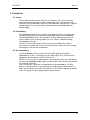
The AV-MUX cards consume about 1A of 5V power. This means that they
need some breathing space in order to keep cool. The cards should always
have free slots on both sides and must not be placed in slot position 1 without
forced cooling. This ‘waste of space’ also prevents the overloading of the
power supply.
3.2 Embedding
The embedder processors only work in one mode at a time so that they do
not detect the presence of incorrectly embedded audio when embedding.
The embedding processors will not detect existing audio groups with the
same number in the incoming video. This may result in audio becoming
irretrievable or corrupt.
The AES Channel status and user bits are only transferred if the audio is
synchronous to video. This means that asynchronous audio with, for example,
pre-emphasis will lose that information.
3.3 De-embedding
The de-embedders will only work well with audio data that has been
embedded at 48 kHz, synchronous to the video signal. They will work with
equipment conforming to SMPTE S272M A or C.
The AES Channel status is regenerated in the card and no bits are carried from
the received embedded audio signal. The AV-DMUX card will correctly decode
the Channel Status bits.
The Full Field CRC words are not updated when de-embedding. The EDH
packet in the SDI output is still valid after the audio group is removed but a
flag is set to indicate an invalid Full Field CRC. If the audio is allowed to remain
in the SDI signal, the EDH output packet will be correct.
9