1
approach can be easily incorporated in other Prolog systems that are also based
on the WAM execution model.
The remainder of the paper is organized as follows. First, we briefly describe the cut semantics of Prolog and the problem arising from its use to prune
external predicates. Next, we present the C language interface of Yap and its
implementation details. Then we describe the needed extension of the interface
architecture in order to deal with pruning for external predicates. At the end
we discuss some experimental results on the specific case of relational database
interfaces and outline some conclusions.
2
Pruning External Predicates
Cut is a system built-in predicate that is represented by the symbol ’!’. Its execution results in pruning all the branches to the right of the cut scope branch.
The cut scope branch starts at the current node and finishes at the node corresponding to the predicate containing the cut.
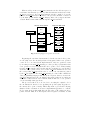
Figure 1 gives a general overview of cut semantics by illustrating the left to
right execution of an example with cuts. The query goal a(X) leads the computation to the first alternative of predicate a/1, where !(a) means a cut with
scope node a. If !(a) gets executed, all the right branches until the node corresponding to predicate a, inclusively, should be pruned. Predicate b(X) is then
called and suppose that it succeeds with its first alternative. Next, !(a) gets
executed and all the remaining alternatives for predicates a and b are pruned.
As a consequence, the nodes for a and b can be removed.
a(X) :- b(X), !, c(Y).
a(X) :- ...
a(X) :- ...
b(X) :- ...
b(X) :- ...
c(Y) :- ...
?- a(X).
root
a(X).
root
root
a
a
b(X),!(a),c(Y).
b
!(a),c(Y).
Fig. 1. Cut semantics
root
c(Y).