1
RETScreen® Passive Solar Heating Project Model
1.13 of the IPCC Reference Manual. CH4 and N2O emission factors for a number of fuels are
included on pages 1.35 and 1.36 of the IPCC Reference Manual.
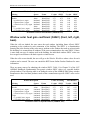
The default values provided by the model are given in the Default Emission Factors and
Conversion Efficiencies table.
Fuel conversion efficiency
The base case heating and cooling system fuel conversion efficiencies are entered by the user in
the Energy Model worksheet and are transferred to the GHG Analysis worksheet. The fuel
conversion efficiency represents the annual average efficiency of energy conversion from primary
heat potential to actual heating, or cooling, energy output. This value is used to calculate, for each
fuel type, the aggregate GHG emission factor and therefore is only relevant for fuel types which
actually produce greenhouse gases (i.e. with non-zero CO2, CH4 and N2O emission factors).
Units are given as a percentage of actual space heating and cooling energy output (gigajoules of
heating/cooling energy) to primary heat potential (gigajoules of heat or electricity).
GHG emission factor
The model calculates the GHG emission factor for the base case heating and cooling system.
Values are calculated based on the individual emission factors and the fuel conversion efficiency.
Units are given in tonnes equivalent of CO2 emission per megawatt-hour of end-use space heating
and cooling energy delivered (tCO2/MWh).
Proposed Case Heating and Cooling System (Passive Solar
Heating Project)
The proposed case heating and cooling system, or mitigation system, is the proposed project. It is
defined in terms of its fuel types, its emissions of GHG and its conversion efficiencies.
The proposed case system is normally referred to as the mitigation option in standard economic
analysis.
Fuel type
The fuel type of the passive solar heating system is assumed to be solar for both heating and
cooling.
Fuel mix
The fuel mix of the passive solar heating system is assumed to come from a single source, i.e.
solar, and is thus set to 100%.
PSH.69