1
AN001 MD5
5.10 Formatting the Input Stream
interface node receives octets from a neighbor
counting the bits 8 at a time
a negative sign says end of stream
a is set to 0 which contains 0 so future reads
will result in padding with zeroes after a one
time padding with 80
a 32 bit count is maintained in addresses
1 and 2
after the message has been passed in
the digest is passed back out
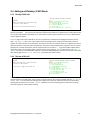
1046 list
- 109 octet feeder 0 org 0 , 0 , 0 ,
add 03 n-n @ . + dup FFFF and !+ ;
count 06 1 a! 8 add 2* -if
drop 1 add then drop ;
get 0F @ -if dup or a! 80 ; then
a if count then a! ;
octets 16 n for get !b next ;
ablk 1A n 55 octets
a if drop 7 octets ; then drop
@+ drop a for
@+ dup FF and !b 7 for 2/ unext
FF and !b next
0 dup dup or a! 3 for @ !b unext pop drop ;
start 30 east b! inward a!
begin @p !b .. lows .. ablk end
digest 38 east b! @p .. pass .. !b inward a!
7 for @b ! unext 40/3 ;
40
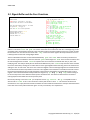
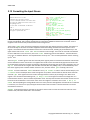
Node 109 has the job of receiving message octets delimited by a negative number. It counts the message bits and in
the last message block, after receiving the delimiter, the message is padded and the bit count is inserted. As far as
neighbor 110 is concerned 109 just sends blocks of 64 message octets.
The first word add is part of counting message bits. It fetches the value pointed to by the A register, then adds it to
what was already on the stack. The result is clipped to 16 bits before being stored back to where A points. The A
register is incremented for the next addition and the sum is left on the stack, including any accumulated carry in the
upper two bits. Here's how count uses add to count bits in the message. Two words are reserved and initialized
to zero at addresses 1 and 2 in memory. The word count adds 8 to the low word at address 1. If bit 16 indicates a
32
carry, then 1 is added to address 2. This implementation counts up to 2 bits. The md5 specification calls for counting
64
up to 2 bits.
The word get is used to get the next octet. Normally the A register points inward toward the interface node and the
octet is fetched from there. If the octet is not negative then the bit count is incremented by eight and the octet is left
on the data stack. However if the octet was negative, indicating end of message, the top of stack is changed to zero via
dup or and stored into the A register and a hex 80 is returned. 80 is the padding octet, a one bit followed by zeros.
Now the A register points to address 0 which contains a zero, so further calls to get will simply return zero.
octets is a factor used within ablk that allows us to say 55 octets in order to read in the first 56 bytes, and
7 octets for the next 8 bytes when end of message has not yet been received. After the first 56 octets have been
read with get the A register will tell us if end of message has been received, by containing a zero. When the A
register is zero we execute the following code, @+ drop a for. The A register contains zero to begin with. It is
incremented to contain 1, which is fetched as parameter to for. This loop then executes twice to fetch and send on the
bit count stored at addresses 1 and 2 as four octets. Then the A register is set back to zero so that 3 for @ !b
unext will finish padding the message block with zeros. At this point the md5 algorithm is finished as far as node 109
is concerned, so it returns to its up (inward) port where it awaits new instructions. The final md5 hash can now be
extracted from node 111.
digest is executed remotely by node 209 at the end of a hash in order to move the result from node 111 to the
interface node, 209. More about that in the next block.
14
Copyright© 2010-2013 GreenArrays, Inc. 10/23/14