1
The currently available beam splitters and gratings have been optimized for the Galactic
Archaeology Survey case. Alternatives might be purchased later in order to cover other science
domains.
2.3
Spectrograph Focus
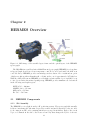
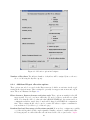
The HERMES spectrograph is focused by moving the CCDs. Each CCD is mounted on a
moveable stage within the dewar which provides three degrees of freedom: overall piston, a tilt
along the spatial axis, and a tilt along the spectral axis. Only the piston and spectral tilt focus
mechanisms are motorized. The spatial tilt is fixed at the nominal best position such that all
fibres fall within the boundary of the detector. The spatial tilt should only be moved manually
by technical staff.
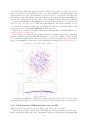
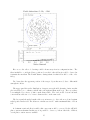
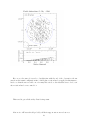
The spectrograph is typically focused each afternoon. The best focus values can differ between the two HERMES slits, hence the focus should be set independently on both slits. Once
the best focus values are set, it usually changes minimally day to day.
Note HERMES is sensitive to temperature changes in the spectrograph room, such that if
there have been heavy daytime activities in the room or the room door was accidentally left
open, the spectrograph focus should be checked prior to starting the science observations. Good
focus minimises cross talk between spectra on the detector, and ensures the fibre tramlines can
be accurately identified in the data reduction process.
2.4
References
• “Integrating the HERMES spectrograph for the AAT” : Heijmans et al. 2012 SPIE 8446
17 s
• “HERMES: revisions in the design for a high-resolution multi-element spectrograph for
the AAT” : Barden et al. 2010 SPIE 7735 19
23