1
Code Wire Tagging Protocol at Caswell State Park
I. Introduction
The following protocol describes the procedure for coded wire tagging operations on the Stanislaus River at Caswell
State Park including set up and equipment operation and maintenance, determining tag depth and placement, tagging, fish handling, release, and mortality/tag retention studies. Refer to the Detailed Study Plan for Coded Wire
Tagging for additional information about the project.
II. References
Refer to the T4 Detector User’s Manual, Mark IV Instruction Manual and Coded Wire Tag Project Manual for
additional information from Northwest Marine Technology (NMT) regarding use and setup of equipment. These
manuals can be found on the NMT website: http://www.nmt.us/support/manual.htm.
III. Setup
When the trailer is used at a remote site (i.e., away from a hatchery or other
facility providing electricity and security), it will be necessary to set up power
(generator), water (pump from the river), marking equipment, fish holding
tanks, etc., on a daily basis. At the end of the day, equipment will need to be
put away and secured. Note: Generator, water pump, hose connections and
T4 Detector will all be stored within the tagging trailer when not in use.
A. Water and Power Setup
1. Position generator. Generator should be positioned several meters away
from the T4 Detector as a magnetic field created by generator may cause
false positives by T4 Detector. Take care to insure generator exhaust does
not enter the trailer, and generator is clear from all potential fire hazards
like dry grass or brush. Connect red extension cord between trailer
service panel and generator.
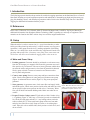
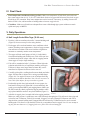
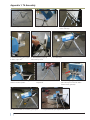
Figure 1. Water pump setup.
2. Connect water pump. Remove water pump and hose connections from
trailer. Check water tightness of water pump cord. Station water pump
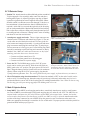
(Figure 1) and attach hoses to trailer (Figure 2). Plug water pump into
generator.
3. Start generator. As generator starts, check water flow and supply inside
and outside trailer. Check water pressure inside trailer and make sure sinks
do not overfill. Adjust water pressure at sink valves, if necessary. Water
flow will fill inside and outside holding tanks. Make sure tanks do not
overfill.
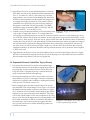
Figure 2. Hose attachments to CWT
trailer. Blue hose delivers water from
pump; green hose delivers internal
freshwater overflow back to river.
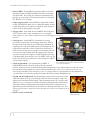
4. Prepare Tricaine-S (dope) water. Fill red tank to within 2 inches of top
(~15 gallons) (Figure 3). Add 1 tsp. of Tricaine-S powder to red tank and
stir. Check pH with paper and add 1–1½ tsp. baking soda as needed to
achieve neutral pH (7). Prime small water pump with water from tank
and plug into outlet above sink. Pump will start, re-circulating dope
water. Open sink valves and fill sinks; check pressure at sink valves, and
do not overfill.
Figure 3. Red (Tricaine-S water) tank.
1