1
Visual Programming
Related work
2 Related work
The idea to this assignment is based on an earlier bachelor degree, “En studie av Visuell
robotprogrammering” [27]. A free translation is “A study of Visual robot programming”,
and it was intended to investigate the possibility to extend the textual programming phase
with graphics and images.
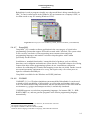
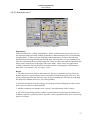
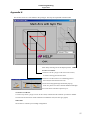
A prototype was developed during this project as well. It uses a flowchart model to create
arc welding programs, and a combination of buttons, icons and textual input in a
windows-like environment to let the user set up necessary parameters.
2.1 Basic categories of programming languages
Virtually all robots are programmed with some kind of robot programming language.
These programming languages are used to command the robot to move to certain
locations, signal outputs, and read inputs. The programming language is what gives
robots flexibility. When learning any programming language, be it a robot language or a
computer language, one of the most difficult tasks is learning what the commands are and
how to use them.
To get an overview of different types of robot programming languages, it is appropriate
to put them in three basic categories:
1. Specialized robot languages. These languages have been developed specifically for
robots. The commands found in these languages are mostly motion commands with
minimal logic statements available. Most of the early robot languages were of this
type, although many still exist today. VAL1 is an example of such a robot language.
2. Robot library for a new general-purpose language. First creating a new generalpurpose programming language and then adding robot-specific commands to it
created these languages. They are generally more capable than a specialized language,
since they tend to have better logic testing capabilities. KAREL2 is an example of this
type.
3. Robot library for an existing computer language. These languages are developed
by creating extensions to already existing popular computer programming languages.
Consequently, the robot languages resemble traditional computer programming
languages, providing the same power as these widely used languages. RobotScript3 is
an example of this type of language.
1
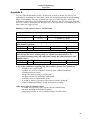
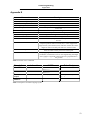
See [Appendix E - Table 1] for code example
KAREL is a robot programming language from Fanuc Robotics, see [Appendix E - Table 2] for code example
3
See [Appendix E - Table 3] for code example
2
3