1
@DefineScope(name="EPM",parent="PEH")
class EnterPM implements Runnable {
@RunsIn("EPM")
public void run() {...}
}
Figure 1.9: A Runnable class for enterPrivateMemory().
@DefineScope(name="EPM",parent="PEH")
class ExecIA implements Runnable {
@RunsIn("OneMission")
public void run() {...}
}
Figure 1.10: Runnable class for executeInArea().
Fig. 1.10 shows a class implementing the Runnable interface that can be used for the
executeInArea() method calls.
Using an instance of a ManagedMemory/MemoryArea: ManagedMemory class
instances must be annotated to :
1. define where the instance object is allocated (using @Scope), and
2. define which scope it represents (using @DefineScope).
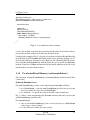
Therefore, each declaration of a ManagedMemory field or variable must have two annotations — @Scope and @DefineScope. The example in Fig. 1.11 shows properly
annotated instances of the ManagedMemory class.
1.3.5
Default Annotations
To reduce the annotation burden for programmers, annotations that have default values can be omitted from the program source.
Default annotation values and its meaning:
1. Class: @Scope(CALLER)— this means that when annotations are omitted
classes can be allocated in any context (and thus are not tied to a particular
scope).
2. Local variables and arguments: @Scope(CALLER).
3. Fields: — we assume by default that they infer to the same scope as the object
that holds them, i.e. their default is @Scope(THIS).
4. Instance methods: @RunsIn(THIS)— this means that the class can be invoked from a scope that is the same as the scope of the receiver.
12
Version
Confidentiality: Distribution