1
public class PEH extends PeriodicEventHandler {
@SCJRestricted(INITIALIZATION)
PEH(PriorityParameters p, PeriodicParameters r, StorageParameters s) {
super(...);
}
@Override
@SCJAllowed(SUPPORT)
public void handleAsyncEvent() {}
}
@Override
@SCJRestricted(CLEANUP)
@SCJAllowed(SUPPORT)
public void cleanUp() {}
}
Figure 1.5: @SCJAllowed and @SCJRestricted annotations example — Handler.
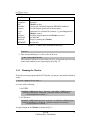
Annotation
@DefineScope
Where
Any
Class
Arguments
Name
Name
CALLER
Name
Field
UNKNOWN
THIS
Name
@Scope
Method
UNKNOWN
CALLER
THIS
Name
Variable
UNKNOWN
CALLER
THIS
Name
@RunsIn
Method
CALLER
THIS
Description
Define a new scope.
Instances are in named scope.
Can be instantiated anywhere.
Object allocated in named scope.
Allocated in unknown scope.
Allocated enclosing class’ scope.
Returns object in named scoped.
Returns object in unknown scope.
Returns object in caller’s scope.
Returns object in receiver’s scope.
Object allocated in named scope.
Object in an unknown scope.
Object in caller’s scope.
Object in receiver’s scope.
Method runs in named scope.
Runs in caller’s scope.
Runs in receiver’s scope.
Table 1.1: Annotation summary. Default values in bold.
Checker Requirement: To allow verification of the memory-safety annotations, all
the source-code included by the application code must be provided.
Version
Confidentiality: Distribution
7