1
Manufacturing and processing
is invoked many times, compiling the program piece by piece
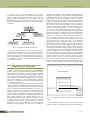
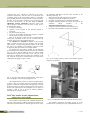
[11]. Generally, the most compilers consist of four components
(Fig. 9):
x the input stream handler, lexical analysis, token generator
or the “reader”, which handles the strings entered by the user
using the keyboard or the other input devices and divides it
into smaller parts: semantic units (tokens); at this stage it does
not matter what is entered, but how to handle the entered
characters - in the simple words it divides strings into
meaningful substrings; this step is often presented as a part of
parsing in general and not shown as a separate process,
x the parser is a part of compiler, where substrings given by the
previous step were analyzed and compared to the syntactic
rules of the language; also the semantic analysis is done,
x the code generator does the translation work; the parsed code
is replaced with appropriate instructions of the target
language,
x the runtime libraries contain a part of code, which is needed
to execute the generated code (error and input/output
handling, cooperation with the operating system etc.) - they
are not required at the compilation phase.
Data
Data stream
stream
2.5.
Using
the
robot
2.5. Using
the the
LogoLogo
as the as
robot
programming
programming
language
interpreter language
interpreter
Most of the modern robots’ controllers use the programming
languages, which are compliant with structural programming
model. As it was mentioned earlier, these languages are difficult
to process by the interpreter. The flat (imperative) model of
programming is more common for older constructions and in this
case building the interpreter for these languages is less errorprone process. As the subject of further consideration, the
Mitsubishi RV-M1 robot has been selected. Its programming
language, called Movemaster Commands, is very simply and in
some aspects very similar to regular BASIC programming
language [16]. The syntax of sample line of code is shown in
Figure 10.
10 DW 10,20,30
Optional line
number
Parameters
Command
Fig. 10. The syntax of the example program line in Movemaster
Commands robot programming language
Lexical
Lexical analysis
analysis
Parsing
Parsing
Compiled
Compiled code
code
RTM
RTM libraries
libraries
The line of program in the Movemaster Command language
can be preceded by an optional line number. Presence of the line
number is interpreted by the control system as “check and store
the line for later use”. In this manner, a program is written. When
there is no line number, then the command is executed
immediately. The program code is separated from the positions
memory, which is stored in the similar manner - every definition
of the position has its own number and parameters. A position can
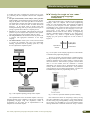
be defined using teachbox or programming (see Fig. 11).
++
Code
Code execution
execution
Fig. 9. The simplified operating principle of the compiler
The implementation of the incremental compiler in the Logo
language depends on the complexity of the project. Usually the
programming languages using flat (imperative) model of
programming are the easiest one for implementation as the
interpreter or incremental compiler.
Fig. 11. The two, equivalent methods of positions defining
First method is the easiest one. Everything is done by moving
the robot’s manipulator, using jog keys, to the desired position,
and then storing it by pressing P.S key, entering position number
and accepting it by the ENT key. The second method requires
entering Movemaster Commands instructions using a terminal.
The robot programming language interpreter written in the Logo language
199