1
RFC 2728
IPVBI
November 1999
reports, and the like--are typically sent repeatedly to individual
clients rather than being broadcast to the large number of users who
want to receive such data.
Today, IP is quickly becoming the preferred method of distributing
one-to-many data on intranets and the Internet. The coming
availability of low cost PC hardware for receiving television signals
accompanied by broadcast data streams makes a defined standard for
the transmission of data over traditional broadcast networks
imperative. A lack of standards in this area as well as the expense
of hardware has prevented traditional broadcast networks from
becoming effective deliverers of data to the home and office.
This document describes the transmission of IP using the North
American Basic Teletext Standard (NABTS), a recognized and industrysupported method of transporting data on the VBI. NABTS is
traditionally used on 525-line television systems such as NTSC.
Another byte structure, WST, is traditionally used on 625-line
systems such as PAL and SECAM. These generalizations have
exceptions, and countries should be treated on an individual basis.
These existing television system standards will enable the television
and Internet communities to provide inexpensive broadcast data
services. A set of existing protocols will be layered above the
specific FEC for NABTS including a serial stream framing protocol
similar to SLIP (RFC 1055 [Romkey 1988]) and a compression technique
for unidirectional UDP/IP headers.
The protocols described in this document are intended for the
unidirectional delivery of IP datagrams using the VBI. That is, no
return channel is described, or for that matter possible, in the VBI.
The key words "MUST", "MUST NOT", "REQUIRED", "SHALL", "SHALL NOT",
"SHOULD", "SHOULD NOT", "RECOMMENDED", "MAY", and "OPTIONAL" in this
document are to be interpreted as described in RFC 2119.
3. Proposed protocol stack
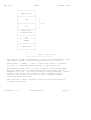
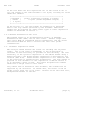
The following protocol stack demonstrates the layers used in the
transmission of VBI data. Each layer has no knowledge of the data it
encapsulates, and is therefore abstracted from the other layers. At
the link layer, the NABTS protocol defines the modulation scheme used
to transport data on the VBI. At the network layer, IP handles the
movement of data to the appropriate clients. In the transport layer,
UDP determines the flow of data to the appropriate processes and
applications.
Panabaker, et al.
Standards Track
[Page 2]