1
RFC 2728
IPVBI
November 1999
The same expression as above can be used on the columns of the table
with the suffix now represented by the bytes at the base of the
columns in rows 15 and 16. With NABTS headers on each of these rows,
we now have a bundle of 16 NABTS packets ready for sequential
modulation onto lines of the television signal.
At the receiver, these formulae can be used to verify the validity of
the data with very high accuracy. If single bit errors, double bit
errors, single-byte errors or single- and double-byte erasures are
found in any row or column (including an entire packet lost) they can
be corrected using the algorithms found in the appendix. The success
at correcting errors will depend on the particular implementation
used on the receiver.
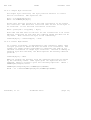
3.4. Framing
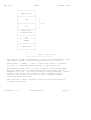
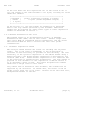
A framing protocol identical to SLIP is proposed for encapsulating
the packets described in the following section, thus abstracting this
data from the lower protocol layers. This protocol uses two special
characters: END (0xc0) and ESC (0xdb). To send a packet, the host
will send the packet followed by the END character. If a data byte
in the packet is the same code as END character, a two-byte sequence
of ESC (0xdb) and 0xdc is sent instead. If a data byte is the same
code as ESC character, a two-byte sequence of ESC (0xdb) and 0xdd is
sent instead. SLIP implementations are widely available; see RFC
1055 [Romkey 1988] for more detail.
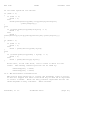
+--------------+--+------------+--+--+---------+--+
|
packet
|c0|
packet |db|dd|
|c0|
+--------------+--+------------+--+--+---------+--+
END
ESC
END
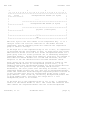
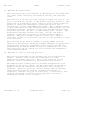
The packet framed in this manner shall be formatted according to its
schema type identified by the schema field, which shall start every
packet:
+-----------+---------------------------------------------+
| schema
|
packet (formatted according to schema)
|
| 1 byte
|
?? bytes (schema dependant length)
|
+-----------+---------------------------------------------+
Panabaker, et al.
Standards Track
[Page 7]