1
RFC 2728
IPVBI
November 1999
method of modulating data onto the VBI, usually of an NTSC signal.
This section describes the NABTS packet format as it is used for the
transport of IP.
It should be noted that only a subset of the NABTS standard is used,
as is common practice in NABTS implementations. Further information
concerning the NABTS standard and its implementation can be found in
EIA-516.
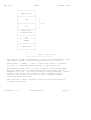
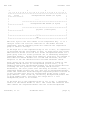
The NABTS packet is a 36-byte structure encoded onto one horizontal
scan line of a television signal having the following structure:
0
1
2
3
0 1 2 3 4 5 6 7 8 9 0 1 2 3 4 5 6 7 8 9 0 1 2 3 4 5 6 7 8 9 0 1
+-+-+-+-+-+-+-+-+-+-+-+-+-+-+-+-+-+-+-+-+-+-+-+-+-+-+-+-+-+-+-+-+
|
clock sync
|
byte sync
| packet addr. |
+-+-+-+-+-+-+-+-+-+-+-+-+-+-+-+-+-+-+-+-+-+-+-+-+-+-+-+-+-+-+-+-+
| packet address (cont.)
| cont. index |PcktStructFlags|
+-+-+-+-+-+-+-+-+-+-+-+-+-+-+-+-+-+-+-+-+-+-+-+-+-+-+-+-+-+-+-+-+
|
user data (26 bytes)
|
:
:
:
+-+-+-+-+-+-+-+-+-+-+-+-+-+-+-+-|
|
|
FEC
|
+-+-+-+-+-+-+-+-+-+-+-+-+-+-+-+-+-+-+-+-+-+-+-+-+-+-+-+-+-+-+-+-+
The two-byte Clock Synchronization and one-byte Byte Synchronization
are located at the beginning of every scan line containing a NABTS
packet and are used to synchronize the decoding sampling rate and
byte timing.
The three-byte Packet Address field is Hamming encoded (as specified
in EIA-516), provides 4 data bits per byte, and thus provides 4096
possible packet addresses. These addresses are used to distinguish
related services originating from the same source. This is necessary
for the receiver to determine which packets are related, and part of
the same service. NABTS packet addresses therefore distinguish
different data services, possibly inserted at different points of the
transmission system, and most likely totally unrelated. Section 4 of
this document discusses Packet Addresses in detail.
The one-byte Continuity Index field is a Hamming encoded byte, which
is incremented by one for each subsequent packet of a given Packet
Address. The value or number of the Continuity Index sequences from
0 to 15. It increments by one each time a data packet is transmitted.
This allows the decoder to determine if packets were lost during
transmission.
Panabaker, et al.
Standards Track
[Page 5]