1
ribbons of noise
(a)
noise cloud
pipeline
pipeline
(b)
pipeline
pipeline
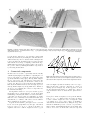
Figure 2. Pipeline spanning a valley surrounded by a lot of structural noise. (a) Pictures showing the same area from three different angles
with a dot for each input point. (The distortion of the pipeline in the horizontal direction is likely the result of a failure to compensate for the
motion of the scanner.) (b) TIN visualization of a cleaned version of the same data.
Data source: StatoilHydro.
1.4
Our results
sumption that any horizontal line intersects at most M edges
of the graph. In practice this assumption means that we
can handle graphs with O(M 2 ) edges,
√ as one would expect
a horizontal line to hit at most O( N ) edges. Thus the
assumption certainly holds for practically realistic memory
sizes and datasets. We believe that this algorithm is of independent interest since it only requires a sorting step followed
by two scans over the graph. Using the practical algorithm
of Agarwal et al. [2] instead of our new connected component
algorithm would result in a cleaning algorithm without the
assumption but using O(sort(N ) log2 (N/M )) I/Os. Using
the algorithm by Munagala and Ranade [18] we would obtain
an O(sort(N ) log log B) algorithm. However, as discussed,
this algorithm is not practical.
Overall we have obtained a theoretically and practically
efficient algorithm for cleaning massive sonar point clouds
that seems to work very well in practice. In fact, a version of the algorithm has been incorporated in a commercial
product called SCAN (SCALGO Combinatorial Anti Noise)
by EIVA and SCALGO [13].
In this paper we describe a new algorithm for automatic
cleaning of massive sonar data, which avoids the problems
of local-neighbourhood based algorithms while still allowing
an efficient implementation.
In Section 2 we first characterize the different types of
noise we found in real datasets provided by the companies
StatoilHydro, EIVA and others, and discuss why existing
local-neighbourhood based algorithms perform poorly for
some of these types. Then we describe our new algorithm,
and finally we discuss how it performs very well on various
real datasets containing all the different noise types. In particular, we show that (unlike existing local-neighbourhood
methods) our algorithm is capable of identifying large clusters of noisy points — even clusters with large extent — while
for example distinguishing them from points on top of pipes
on (or more importantly, above) the seabed.
In Section 2 we also describe how our cleaning algorithm
can be implemented in O(sort(N )) I/Os under a practically realistic assumption about the input data. The main
ingredients in the algorithm are sorting of N elements, triangulation of a set of N points in the plane, and computation of the connected components of a graph of size N
embedded in the plane. As discussed, the two first problems can be solved in O(sort(N )) I/Os with algorithms
that are practically efficient. To obtain a practically efficient O(sort(N ))-I/O cleaning algorithm, we in Section 3
describe a new simple and practical algorithm for computing the connected components of a graph embedded in the
plane. The algorithm uses O(sort(N )) I/Os under the as-
2
Cleaning sonar point clouds
In this section we describe our new theoretically and practically efficient algorithm for cleaning massive sonar point
datasets. In Section 2.1 we first try to characterize the different types of noise we have experienced in real-life datasets
and discuss why existing methods perform poorly for some
of these types. Then in Section 2.2 we describe our new
algorithm, and finally in Section 2.3 we discuss how the al3