1
What T-LAB does and what it enables us to do
(Excerpt from the User’s Manual)
T-LAB software is an all-in-one set of linguistic, statistical and graphical tools for text analysis
which can be used in research fields like Content Analysis, Sentiment Analysis, Semantic Analysis,
Thematic Analysis, Text Mining, Perceptual Mapping, Discourse Analysis, Network Text Analysis,
Document Clustering, Text Summarization.
In fact T-LAB tools allow the user to easily manage tasks like the following:
•
•
•
•
•
•
•
•
•
•
•
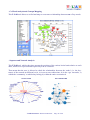
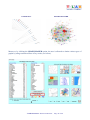
measure, explore and map the co-occurrence relationships between key-terms;
perform either unsupervised or supervised clustering of textual units and documents, i.e.
perform a bottom-up clustering which highlights emerging themes or a perform top-down
classification which uses a set of predefined categories;
check the lexical units (i.e. words or lemmas), context units (i.e. sentences or paragraphs) and
themes which are typical of specific text subsets (e.g. newspaper articles from specific time
periods, interviews with people belonging to the same category);
apply categories for sentiment analysis;
perform various types of correspondence analysis and cluster analysis;
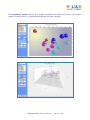
create semantic maps that represent dynamic aspects of the discourse (i.e. sequential
relationships between words or themes);
represent and explore any text as a network;
customize and apply various types of dictionaries for both lexical and content analysis;
perform concordance searches;
analyse all the corpus or its subsets (e.g. groups of documents) by using various key-term lists;
create, explore and export numerous contingency tables and co-occurrences matrices.
T-LAB Plus 2019 - Quick Introduction - Pag. 2 of 29