1
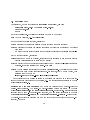
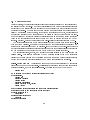
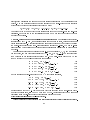
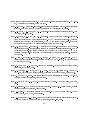
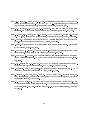
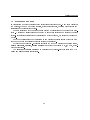
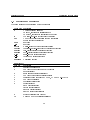
this assumption because the vector-vector operations used { vector accumulations, assignments
and copies { are disjoint element-wise. The other operations used involving matrices and vectors
which may require knowledge of the individual indices of vectors, are the responsibility of the
user.
PIM requires that the elements of vectors must be stored locally starting from position
1; thus the user has a local numbering of the variables which can be translated to a global
numbering if required. For example, if a vector of 8 elements is partitioned in wrap-around
fashion among 2 processors, using blocks of length 1, then the rst processor stores elements
1, 3, 5 and 7 in the rst four positions of an array; the second processor then stores elements
2, 4, 6 and 8 in positions 1 to 4 on its array. We stress that for most of the commonly used
partitioning schemes data may be retrieved with very little overhead.
3.4 Increasing the parallel scalability of iterative methods
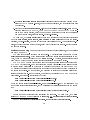
One of the main causes for the poor scalability of implementations of iterative methods
on
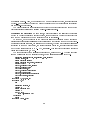
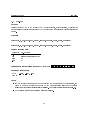
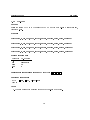
Pn
T
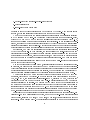
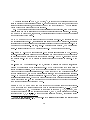
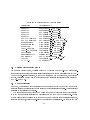
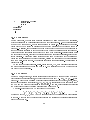
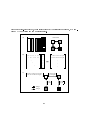
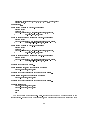
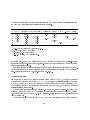
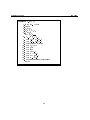
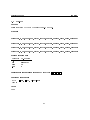
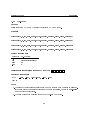
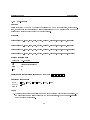
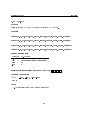
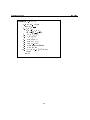
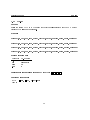
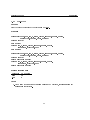
distributed-memory computers is the need to compute inner-products, = u v = i=1 ui vi ,
where u and v are vectors distributed across p processors (without loss of generality assume
that each processor holds n=p elements of each vector). This computation can be divided in
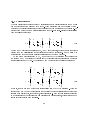
three parts
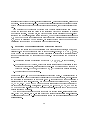
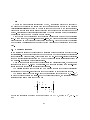
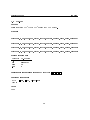
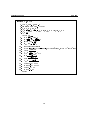
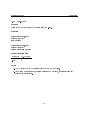
1. The local computation of partial sums of the form j = Pn=p
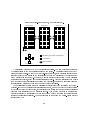
i=1 ui vi , on each processor,
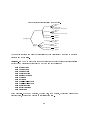
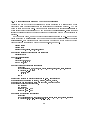
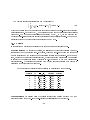
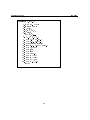
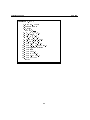
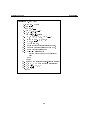
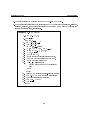
2. The reduction of the j values, where these values travel across the processors in some
ecient way (for instance, as if traversing a binary-tree
up to its root) and are summed
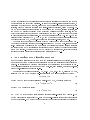
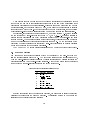
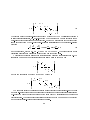
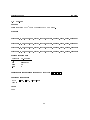
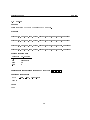
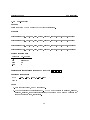
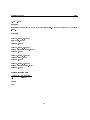
P
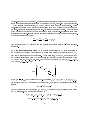
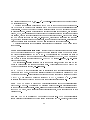
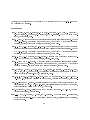
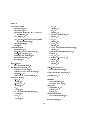
during the process. At the end, the value of = pj=1 j is stored in a single processor,
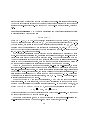
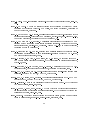
3. The broadcast of to all processors.
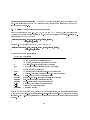
During parts 2. and 3. a number of processors are idle for some time. A possible strategy to
reduce this idle time and thus increase the scalability of the implementation, is to re-arrange
the operations in the algorithm so that parts 2. and 3. accumulate a number of partial sums
corresponding to some inner-products. Some of the algorithms available in PIM, including
CG, CGEV, Bi-CG, CGNR and CGNE have been rewritten using the approach suggested by
D'Azevedo and Romine [15]. Others, like Bi-CGSTAB, RBi-CGSTAB, RGCR, RGMRES and
QMR have not been re-arranged but some or all of their inner-products can be computed with
a single global sum operation.
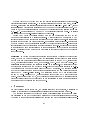
The computation of the last two parts depends on the actual message-passing library being
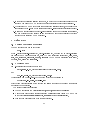
used. With MPI, parts 2. and 3. are also oered as a single operation called MPI ALLREDUCE.
Applications using the PVM 3.3.6 Fortran interface should however call PVMFREDUCE and then
PVMFBROADCAST.
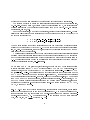
15