1
Lentivector Expression Systems:
Guide to Packaging and Transduction of Target Cells
Cat. #s LV100A-1 – LV601B-1,
& LV900A-1
D. Transduction of the Packaged Lentivector Expression Construct
General considerations:
•
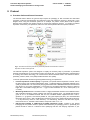
The transduction efficiency of the expression construct varies significantly for different cells and
experimental conditions, including virus concentration, exposure time to virus, and growth area of cells. In
order to optimize transduction conditions, we recommend that you use either a titered pseudoviral stock
containing the positive control copGFP construct or your packaged expression construct mixed with the
copGFP construct (for details, see Section A). To determine the concentration of pseudoviral particles
required to provide the desired multiplicity of infection (MOI) for your target cells, you should do several
transductions with different concentrations of packaged pseudoviral particles containing the control plasmid.
Results of these test transductions should be used to determine an optimal concentration that yields the
optimal percentage of infected cells based on copGFP fluorescence. Note that some cell types, e.g. some
suspension cultures, may be rather resistant to infection (see Section I.E).
•
Expression of the lentiviral construct can be measured directly at about 48 – 72 hours after transduction
(“transient transduction”). Selecting stably transduced cells requires additional time after transduction. For
example, puromycin selection usually requires an additional two weeks. The decision to use “transiently
transduced” cells or selected cells depends on the nature of your target cells, biological assay, etc. Some
infected, actively dividing cells (e.g., 293, HT1080, HeLa, etc) may express the construct in 100% of cells at
an MOI of 1. For these “easy-to-transduce” cells, most biological assays can be performed at 48 – 72 hours
after transduction. However, some cells may only express the construct in 10 – 50% of cells, even when
transduced with a high concentration of infection-competent pseudoviral particles. For these “difficult-totransduce” cells, it is probably desirable to select the clones stably expressing the Lentivector construct for
experimental assays.
•
SBI’s Expression Lentivectors contain a deletion in the 3’LTR which leads to self-inactivation of the
lentiviral vector after reverse transcription and integration into genomic DNA. Although more than one copy
of a lentiviral construct may be integrated into the genome of a single cell, the lentiviral construct cannot
produce infectious viral particles. However, in spite of these safety features, please remember that you are
working with transducible pseudoviral particles. Although the particles are replication-incompetent, they are
infection-competent, so the expression cassette which they carry will infect, integrate, and express in any
mammalian cells. Please follow the recommended guidelines for working with BSL-2 safety class (see
Section I.F for more details).
The following protocol provides a general recommendation for transduction of your lentivector expression
construct packaged in pseudotyped viral particles into target cells. Use these guidelines as a starting point for
determining optimal conditions for your cells and experiments.
Day 1.
1.
5
Plate target cells in a 24-well plate at a density of 0.5 × 10 cells per well 24 hours prior to viral infection.
Add 0.5 ml of complete optimal medium (with serum and antibiotics) and incubate cells at 37°C with 5% CO2
overnight.
Note: It is possible to use other plate formats for transduction as well. In this case, the amount of cells
should be adjusted depending on the growth area of the well or plate.
Day 2.
2.
Prepare a mixture of complete medium with Polybrene at a final concentration of 5 μg/ml. Remove media
from plate wells and replace with 0.5 ml of this Polybrene/media mixture per well (for 24-well plate).
Note: Note: Mix the virus with the medium gently by rotation or inversion. Do not vortex.
Note: Polybrene® is a polycation that neutralizes charge interactions to increase binding between the
pseudoviral capsid and the cellular membrane. The optimal concentration of Polybrene depends on cell type
and may need to be empirically determined (usually in the range of 2 – 10 μg/ml). Excessive exposure to
Polybrene (>12 hr) can be toxic to some cells.
888-266-5066 (Toll Free)
650-968-2200 (outside US)
Page 13