1
1
Introduction
This document describes an on-going project aimed for a ROSE [10]-based endto-end empirical tuning (also called autotuning) system. It is part of an SciDAC
PERI [1] project to enable performance portability of DOE applications through
an empirical tuning system. Our goal is to incorporate a set of external tools
interacting with ROSE-based components to support the entire life-cycle of
automated empirical optimization. We strive to keep this document up-to-date
for better communication among project participants. This document is not
meant to reflect the final design or implementation choices.
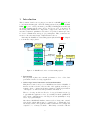
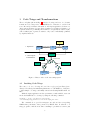
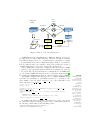
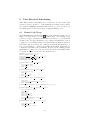
Currently, the ROSE-based autotuning system (shown in Fig. 1) is designed
to work in three major phases.
Application
Performance
Tool
Performance
Info.
Search Space
Tool
Interface
ROSE-based
Components
Code Triage
Transformation
Kernel
Extraction
Kernels
Search
Engine
g
Parameterized
Translation
Checkpointing
Restarting
g
Kernels
l
Variants
Figure 1: A ROSE-based end-to-end autotuning system
1. Preparation
The preparation phase uses external performance tools to collect basic
performance metrics of a target application.
2. Code triage, kernel extraction and transformations
This phase is carried out by a set of ROSE-based modules. A ROSE tool
interface module reads in both source files of the application and the performance data to construct an abstract syntax tree (AST) representation
of the input code annotated with performance information.
Then a code triage module is followed to locate problematic targets (e.g
loops) within the application. A set of potentially beneficial optimizations
and/or their configurations for each target is chosen (manually for now)
based on program analysis.
After that, a ROSE AST Outliner extracts a selected target into a standalone kernel, which will in turn be compiled into a dynamically loadable library routine. The application will be transformed accordingly and
compiled to be a binary executable. This binary executable calls the
3