1
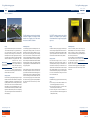
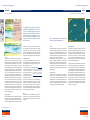
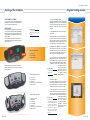
The CogniPlus training programs VIG The CogniPlus training programs Attention: Vigilance Attention: Selective Walter Sturm © SCHUHFRIED GmbH The VIG training program trains the attention dimension of vigilance – the ability to sustain attention over a lengthy period of time under monotonous stimulus conditions. Theory Long-term alertness tasks require the client’s attention “to be focused continuously for long periods of time on one or more sources of information, in order to detect and respond to small changes in the information presented” (Davies et al. 1984). Vigilance represents a special variant of long-term attention. Vigilance tasks make demands on attention over a long period of time – often a number of hours – and the relevant stimuli typically occur Worth knowing VIG can also be used with patients with at very irregular intervals and at a very low frequency among impaired field of vision. a large number of irrelevant stimuli. Vigilance training cannot be effective unless a training session lasts for more than 30 minutes at the minimum. Setting and task The client is driving along a straight highway. At irregular intervals other vehicles come towards him on the opposite carriageway or overtake him. The client’s task is to react by pressing a button when an overtaking vehicle suddenly brakes in front of him. Once he has reacted the vehicle’s brake lights go out and it accelerates away from him. If the client fails to react within the permitted time, the brake lights start to flash. Eventually there is a loud squealing noise, which is designed to draw the client’s attention to what is happening. Corresponding test in the SELECT Walter Sturm © SCHUHFRIED GmbH The SELECT training program trains selective attention – the ability to respond quickly to relevant stimuli and to suppress inappropriate responses. Difficulty structure Theory Difficulty structure The VIG training program has 30 difficulty levels. A decreasing stimulus frequency makes it more and more difficult for the client to sustain his attention: he is overtaken by other cars increasingly rarely, the surroundings become more monotonous as darkness falls and the number of sudden braking manoeuvres from overtaking vehicles decreases. In addition, the intensity of the feedback on delayed and omitted reactions becomes weaker as the difficulty level increases. The challenge therefore changes gradually from a sustained attention task to one requiring real vigilance. An attention selectivity training program should help the client to distinguish rapidly between relevant and irrelevant aspects of a task. Most selective attention tasks require a quick decision within a set of stimuli in which the relevant and irrelevant items are clearly defined. There are 15 difficulty levels for each training form. SELECT adapts to the client’s ability level in two ways. Firstly, the number of relevant or irrelevant stimuli increases or decreases. Secondly, at each difficulty level the maximum permitted reaction time adapts to the speed Worth knowing of the client’s reactions. Thus SELECT can also be used with patients for a skilled client the wagon with impaired field of vision. gets faster after the first few responses. This ensures that from the outset the training program is optimally adapted to the client’s skill and is never either too easy or too difficult for him. At each difficulty level the maximum permitted reaction time adapts to the speed of the client’s reactions. Taking the client’s first valid reactions as a starting point, an individual reaction time limit is determined and used as a basis for measuring all further reactions made in the course of the training program. This ensures that from the outset the training program is optimally adapted to the client’s skill and is never either too easy or too difficult for him. Setting and task The client travels through a tunnel in a mine car. Relevant and irrelevant stimuli (optical, acoustic or crossmodal) suddenly emerge from the darkness. The client’s task is to respond only to relevant stimuli. If he responds late to a relevant stimulus or fails to respond at all, negative feedback is given in the form of a crash of thunder and a flash of lightning. If the client responds in error to an irrelevant stimulus, the figure or the sound source is illuminated in red. Training forms The SELECT training program consists of three training forms. The S1 training form trains selective attention in the visual modality (figures appear in the tunnel). S2 is the acoustic training form, in which the client’s task is to respond to relevant sounds. In the S3 training form the client is instructed to respond to specific stimulus combinations (figures that make particular noises). Corresponding test in the Vienna Test system Vienna Test system WAFV WAFS 8 . COGNIPLUS COGNIPLUS .9