1
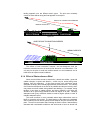
If flight was continued, entrapment in a line of squalls and cumulonimbus
clouds could occur. It may be disastrous to fly beneath these clouds; impossible,
in a small plane, to fly above them. At low altitudes, there are not safe passages
through them. Usually there is no possibility of flying around them because they
often extend in a line for 300 to 500 miles.
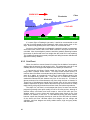
6.3.5 Occluded Front
One other form of front with which the pilot should become familiar is the
“exclusion” or “occluded front.” This is a condition in which an air mass is trapped
between two colder air masses and forced aloft to higher and higher levels until it
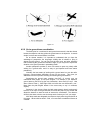
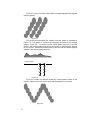
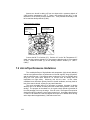
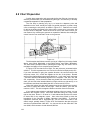
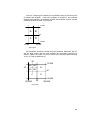
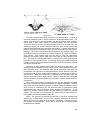
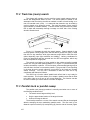
finally spreads out and loses its identity. An occluded front appears on weather
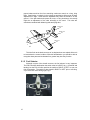
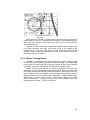
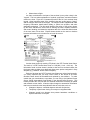
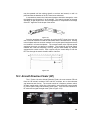
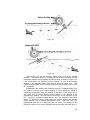
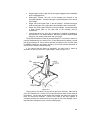
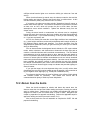
maps as shown in Figure 6-4.
Occluded Front
Cold Front
Warm Front
Figure 6-4
Meteorologists subdivide occlusions into two types, but so far as the pilot is
concerned, the weather in any occlusion is a combination of warm front and cold
front conditions. As the occlusion approaches, the usual warm front indications
prevail - lowering ceilings, lowering visibility, and precipitation. Generally the cold
front type, with squalls, turbulence, and thunderstorms, then follows the warm
front weather almost immediately.
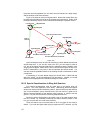
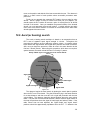
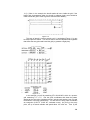
The first stage represents a boundary between two air masses, the cold and
warm air moving in opposite directions along a front. Soon, however, the cooler
air, being more aggressive, thrusts a wedge under the warm air, breaking the
continuity of the boundary. Once begun, the process continues rapidly to the
complete occlusion. As the warmer air is forced aloft, it cools quickly and its
moisture condenses, often causing heavy precipitation. The air becomes
extremely turbulent, with sudden changes in pressure and temperature.
6.4 Reduced Visibility
According to FAA regulations, under almost all circumstances flight using
visual flight rules can only be conducted with at least three miles of visibility
(CAPR 60-1 states the minimum flight visibility for VFR flight in Class G airspace
101