1
Turn in any equipment that you may have been issued (make sure the person
you give the equipment or supplies to marks the items as turned in). Make sure
that you have settled all outstanding fuel, food and lodging bills. Ensure that you
have all the records that you may need for local or personal reasons, such as fuel
tickets (for the CAPF 108) and copies of your CAPF 104s (front & back).
The pilot will plan the trip home and file a FAA Flight Plan. You must
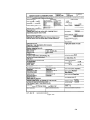
complete an "Outbound" CAPF 104 and obtain a CAP flight release, either from
the mission staff and/or your local FRO.
When you leave mission base it is important to maintain crew discipline. You
may be tempted to "let your guard down" now that the mission is over, but this is a
mistake. Crew duties should still be assigned and understood, and the sterile
cockpit rules should still be enforced where appropriate.
When you arrive at home base, secure and fuel the aircraft, close your FAA
Flight Plan, call your FRO (if appropriate), and complete the outbound CAPF 104.
Make sure that you have removed all personal items from the aircraft. You should
clean the aircraft (especially the windows) so that it will be ready for the next flight.
The only thing left to complete is the CAPF 108. Before dismissing the crew,
the person responsible for filing for reimbursement must make sure they have all
the information and paperwork they need.
Remember that the mission isn't over until all crewmembers have arrived at
their own homes safely! Normally, the pilot is responsible for calling mission base
with the time (Hobbs) from the outbound CAPF 104; this should not be done until
he knows that everyone is home.
Finally, the crew should brief their squadron on the lessons learned from the
mission at the next opportunity. This provides valuable information to your fellow
aircrew members and is an excellent opportunity to get in some quality "hangar
talk."
13.13 Conduct Local Drills and Exercises
As you have learned during this course, your ability to perform at a high level
depends upon knowledge, skill and proficiency. Therefore, you must practice and
then practice some more.
CAP wings put on several practice exercises each year, but any individual
can usually only attend one or two of these. So what do you do to get your initial
task and 'exercise participation' signatures on your 101T? What can you do to
maintain and improve your mission skills?
One answer is to stage un-funded drills and exercises at the squadron (or
group) level. These can range in scope from a simple "table-top" exercise to a
coordinated exercise involving two or three aircraft, a couple of ground teams,
radio operators and a basic mission staff.
"Un-funded? No funding? You mean I pay?" Yeah, but let's take a look at
this. The cost of local area training for ground teams and mission base personnel
is very small (primarily gas, oil, coffee and donuts). As for aircrews, most people
think this training is expensive; but a closer look shows that this is not the case.
Assume a C172 burning 8 gallons/hour, 100LL costing $2.75 per gallon, and a
maintenance rate (what you pay to wing) of $22.00 per hour: this works out to a
'wet' rate of $44.00 per hour (many squadron aircraft costs are lower). With three
crewmembers splitting the cost, this comes to $14.66 for one hour's training in the
244