1
GDA Developer Guide, Release 8.24
• name
• inputNames
• extraNames
• outputFormat
• currentPosition
The fields ‘inputNames’, ‘outputNames’, and ‘outputFormat’ together define what numbers this Scannable represents,
what they are called, and the format for printing their values out to file or console.
The ‘’‘inputNames’‘’ array defines the size of the array that this Scannable’s rawAsynchronousMoveTo expects. Each
element of the inputNames array is a label for that element which is used in file headers etc. Note that this array can
be empty (size 0) if required.
The ‘’‘extraNames’‘’ array is used in a similar manner to the inputNames array, but lists additional elements in the
array returned by the Scannable’s rawGetPosition() method, i.e. the array returned by getRawPosition() may be
larger than the array required by rawAsynchronousMoveTo(). This allows for the possibility that a Scannable may
hold and return more information than it needs in order to move pr perform whatever operation it does inside its
rawAsynchronousMoveTo() method. This array is normally empty (size 0).
The ‘’‘outputFormat’‘’ array lists the formatting strings for the elements of both the inputNames and extraNames
arrays. It is used when printing the output from the rawGetPosition() method to the console and logfiles.
Note: It is an absolute requirement that the length of the outputFormat array is the sum of the lengths of the inputNames and outputNames arrays for the Scannable to work properly.’‘’
4.4 Add a new device to the server
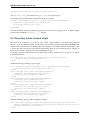
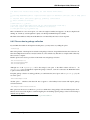
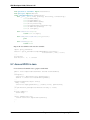
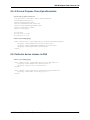
The new device is added to the server by defining it as a bean in a Spring beans configuration file. In the distribution,
this file is ‘server_beans.xml’ in the ‘xml’ directory. This file can be consulted for the syntax used to define new object
instances as beans in the Spring beans configuration file. The beans defined in this file are loaded into the object server
at server startup, and can be accessed and manipulated by the GDA client.
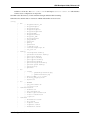
Both getter and constructor dependency injection can be used. Each object on the server must have a ‘name’ property,
which is its unique identifier in the server object namespace. As an example, we define several instances of the
ScannableGaussian class using different bean definitions:
• scannableGaussian0 — all properties set in the bean definition
• scannableGaussian1 — only the properties of the Gaussian are set in the bean. Other properties such as input
and extra names, and output formats are set to defaults in the Java constructor
• scannableGaussian2 — the scannable is defined using a constructor argument which is a test Gaussian bean
defijned in the Spring configuration file. This demonstrates constructor dependency injection by Spring
• scannableGaussian3 — no properties or constructor arguments are defined in the bean. The scannable is constructed using the default no argument constructor. All necessary properties are set to defaults in the Java class.
Similar examples are provided by several instances of the scannableSine class in the Spring configuration file:
• scannableSine0 — the name and properties of the sine are set in the bean definition. Default values for other
properties, such as input and extra names, and output formats, are defined in the Java class.
• scannableSine1 — the properties of the sine are assigned to the object by a test sine bean defined in the bean
configuration file (‘testSineWave’ bean)
4.4. Add a new device to the server
17