1
COUNT_VALUE
LOAD
PULL_PIN
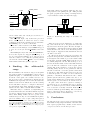
them with a fixed page address defined by the operating system before pulling the pin. This prevents
the guest program from reading or writing memory
or I/O addresses outside the authorised page.
BOOM
FIRE
IS_FIZZING
CLOCK
TOPMOST
BITS
RESET
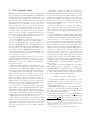
Figure 1: External interface of the grenade timer.
MEMORY
CPU
ADDRESS BUS
a new counter value, but only in protected mode, i.e.
when IS FIZZING = 0.
The PULL PIN input only works from protected
mode. When raised, it causes the device to start
counting down from the currently loaded count value;
IS FIZZING goes to 1 as the count starts.
When the counter reaches 0, the BOOM output (to
be connected to the main processor’s RESET line) goes
to 1 for one clock cycle and IS FIZZING comes back
to 0.
The FIRE input only works5 while IS FIZZING is 1;
it forces the explosion to happen (BOOM will go to 1
for one cycle) and the fizzing to stop, but it does not
reset the counter to 0, so that the operating system
can read the current COUNT VALUE to see how many
ticks remained when the grenade exploded.
4
Limiting
range
the
Figure 2: Restricting the range of accessible addresses.
There are however some subtleties to do with passing control from the OS to the guest and with calling OS services from the guest. We have thought of
mechanisms to deal with those issues, which we shall
briefly sketch below, but we don’t find them particularly elegant, so suggestions and criticisms from readers will be welcomed.
To call the OS from the guest, the program pokes
a system call request into a well-known memory location designated as a mailbox, protects it with a CRC
for integrity, and raises FIRE. This resets the processor, which jumps into the OS. The start-up code of
the OS checks the mailbox and, if the CRC matches,
proceeds with the evaluation of the request (other
criteria will decide whether to honour the request,
including sanity checks on the parameters and the
amount of ticks left over in the grenade timer when
it was shot). The CRC is then deleted by the OS,
so that the presence of a valid one can be taken as a
guarantee of freshness; this allows the OS to distinguish a system call from a genuine reset due to external causes. Finally, the grenade timer is restarted
and the guest code is reentered, as described below.
To pass control from OS to guest we envisage a
special section of code spanning the page boundary.
The code starts in protected mode, raises PULL PIN
as it crosses the boundary and then finds itself in
real mode with the grenade fizzing. The obvious limitation of the fixed entry point may be overcome by
using another mailbox in a similar way.
addressable
The mechanism so far described only protects agains
the guest program not relinquishing control, but not
against integrity or confidentiality violations. This
is serious: if the guest can overwrite the OS code,
any protection can be circumvented. Placing the OS
in ROM, as is frequently done in embedded systems,
makes it safe from modifications; but the working
area would still be subject to corruption. Besides, in
an environment supporting dynamic updates to the
system, the OS could be held in Flash or RAM.
This issue may be addressed by augmenting the
grenade timer with some extra lines that intercept the
processor’s address bus (see figure 2). The grenade
timer, while fizzing, masks out the top bits of the
address bus (even only one bit is sufficient in principle if one wishes to save on pin count) and replaces
5
5 Since FIRE is unresponsive when PULL PIN works and
vice versa, an attempt to minimise pin count might combine
PULL PIN and FIRE into a single input line whose function would
depend on the state of IS FIZZING. Here, for clarity, we prefer
to keep the two signals distinct.
Conclusions
We introduced the grenade timer as an inexpensive
mechanism for imposing a hard limit of the CPU time
that a guest program may consume, in the absence
of a protected mode for the host processor.
4