1
IV. MORE ABOUT CHUNKING
The IF Side of Chunks
The process that decides what goes on the IF side of the chunk is called backtracing. The
Soar Users Manual provides a lot of detail on how backtracing works. For the most part,
its operation is just this: A chunkÕs IF side will test for the conditions that caused
subgoaling (an operator tie, for example), and it will test for any other facts that are
ÒtouchedÓ during the problem-solving that produces the chunk. In other words, if any
production fires in the subgoal that leads to chunking, and if the results of that production
are used in deciding what to return to the state above, then the tests from the IF side of that
production will show up on the LHS of the chunk.
But there are some exceptions. One is that things created during the problem solving, then
destroyed when the result is known, arenÕt tested in the chunk. So, if a Soar program is
doing multiple-column addition, it might produce a chunk that said:
IF adding 12 and 37 THEN the result is 49.
But it probably would not produce:
IF adding 12 and 37 and the partial sums are 4 and 9
THEN the result is 49.
Another tricky area to watch out for is negation. Chunks and productions can include
negative conditions: IF itÕs not thursday THEN ... But the backtracing mechanism can
only trace through productions that fired and produced things, not through productions that
removed things and allowed negative conditions to hold.
A third area thatÕs less-than-obvious involves variables versus constants. See the section on
Knowledge Representation, below, for more on that.
The THEN Side of Chunks
In the office-worker example, the chunk coming out of the subgoal was used to decide
between two operators. ThatÕs called a ÒcontrolÓ chunk. In general, the different reasons
for impasses will lead to different kinds of chunks being learned, where the ÒkindÓ of
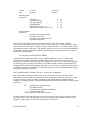
chunk is defined by itÕs THEN side. HereÕs a summary of common chunk types:
Cause of Impasse
Kind of Chunk Learned
Operator conflict or tie
Control
State no-change (no operator)
Operator proposal
Operator no-change
Operator application
(operator but no action)
or
Operator termination
or
State elaboration
The last chunk, state elaboration, takes care of the situation where an operator is in slot and
operator application chunks exist, but the facts needed to trigger those chunks havenÕt been
recognized yet. For example, maybe the exercise operator is in slot, and thereÕs a
production that says, ÒIf you can afford it, and the operator is exercise, then go to the
Soar Introduction
21