1
In a Soar program, all knowledge about the world and what to do there is encoded as
productions. TheyÕre written in the Soar language instead of English, but the difference
doesnÕt matter for this discussion. When a Soar program runs under the Soar system, the
THEN side of each production is acted on whenever the IF side matches the current state of
the world. With the right productions, a Soar model can solve any problem or perform any
mental task that a human could Ñ at least, thatÕs the theory.
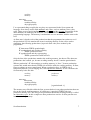
The first two productions above have a special status in Soar. They represent Òoperators.Ó
Operators cause things to happen, either in the real world or in the imagination. Deciding
on operators (i.e., ÒNow IÕll consider the weatherÓ) and applying them (ÒOK, it will be
June, so I think it will be warm, but there might be rain...Ó) is a fundamental part of the
Soar theory. But itÕs all done with productions.
HereÕs how a robot office worker might work, entirely programmed with productions. The
robot arrives at the office in the morning and there are items in its in-box. A production
says, IF there are documents in the in-box THEN pick up the first one. Another production
says IF youÕre holding a document THEN read it. Just those two productions get the robot
started. Now, if it has enough additional productions, it can also deal with each document.
One production might be, IF this is an advertisement THEN throw it away. The robot can
even have productions that say things like, IF you donÕt know how to deal with a
document THEN ask your supervisor what to do.
Notice that all these productions can be Òin the robotÕs head,Ó ready to use, at all times.
Only the ones that match the current state of the world will be applied. So, unlike more
traditional computer programs, a production system doesnÕt have sequences of instructions
that are followed, step by step, in a predetermined order.
Subgoaling: SoarÕs Special Approach to ÒConflict ResolutionÓ
Here are some productions that would help the office-worker model decide what to do at
lunch time:
IF itÕs noon THEN itÕs lunchtime
IF itÕs lunchtime and itÕs Friday
THEN skip lunch and exercise
IF itÕs lunchtime and itÕs payday
THEN eat a big steak at FredÕs Diner
Now, how should the office worker behave if payday falls on a Friday? The model would
have whatÕs technically called a Òconflict resolutionÓ problem. Two productions match the
current conditions, but they suggest conflicting actions: skip lunch and exercise versus eat
steak at FredÕs. There are lots of ways this might be handled, most of which were tried in
production systems before Soar. For example, the model might pick the production that
was used least recently, or it might pick at random, or it might pick the production that had
been most useful in the past.
Soar (the system and the theory) takes a unique and important approach to this situation. It
considers the THEN side of all productions that could be applied under the current
conditions. If thereÕs an unresolved conflict over what to do, it suspends work on its
current problem (which it canÕt continue with because of the question) and applies itself to
resolving that conflict.
In the robot office-workerÕs example, the current problem is to control its behavior as the
day at the office progresses. But that problem has produced a ÒtieÓ between two suggested
Soar Introduction
3