1
DIET User’s Manual
declare a given set of services, and then, depending on parameters, or external events,
one could want to modify this set of services. An example of such usage is to spawn
a service that is in charge of cleaning temporary files when they won’t be needed nor
by this SeD, nor by any other SeD or clients, and when this service is called, it cleans
whatever needs to be cleaned, and then this service is removed from the service table.
Adding a service has already been introduced in Chapter 5: using diet_service_table_add(...)
you can easily add a new service (be it before running the SeD or within a service). Well,
removing a service is as easy, you only need to call one of these methods:
int diet_service_table_remove(const diet_profile_t* const profile);
int diet_service_table_remove_desc(const diet_profile_desc_t* const profile);
So basically, when you want to remove the service that is called, you only need to pass
the diet_profile_t you receive in the solve function to diet_service_table_remove.
If you want to remove another service, you need to build its profile description (just as if
you wanted to create a new service), and pass it to diet_service_table_remove_desc.
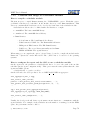
16.2.2
Example
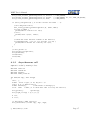
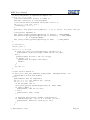
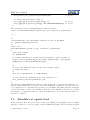
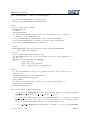
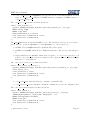
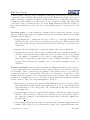
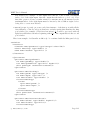
The following example (present in src/examples/dyn add rem) initially declares one
service. This service receives an integer n as parameter. It creates n services, and
removes the service that has just been called. Hence a service can only be called once,
but it spawns n new services.
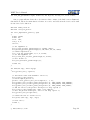
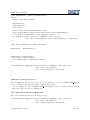
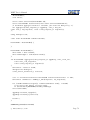
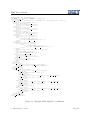
#include <iostream>
#include <sstream>
#include <cstring>
#include "DIET_server.h"
#include "DIET_Dagda.h"
/* begin function prototypes*/
int service(diet_profile_t *pb);
int add_service(const char* service_name);
/* end function prototypes*/
static unsigned int NB = 1;
template <typename T>
std::string toString( T t ) {
std::ostringstream oss;
oss << t;
return oss.str();
}
/* Solve Function */
int
service(diet_profile_t* pb) {
int *nb;
c INRIA, ENS-Lyon, UCBL
Page 143