1
Percent feasible workloads
100.0
'
80.0
60.0
((
40.0
20.0
%
0.0
50.0
%
((
Sporadics=2, l=2ms
Sporadics=2, l=4ms
Sporadics=6, l=2ms
Sporadics=6, l=4ms
60.0
% & %
70.0
80.0
Utilization (%)
%
90.0
%
100.0
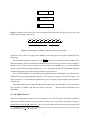
Figure 4: Impact of changing on MTS schedulability.
Since message IDs are based on deadlines, they must be periodically updated. We presented a protocol
to perform this update without any priority inversion. This protocol consumes about 5–6% of CPU time,
but considering the large improvements in network schedulability that MTS displays over DM, this extra
overhead is justified.
We also presented a scheme to implement MTS on the TouCAN network adapter which is representative
of modern CAN network adapters. The biggest challenge in implementing CAN scheduling (be it MTS
or DM) is controlling priority inversion within the network adapter. We showed that because of CAN’s
characteristics (short message size), preemption of a message in the adapter by a newly-arrived, higherpriority outgoing message is an effective method for avoiding priority inversion.
A future avenue of research can be to study message reception issues for CAN to try to reduce the
average per-message reception overhead. Unlike message transmission, message reception does not depend
on which network scheduling policy (DM or MTS) is used. Message reception overheads can be reduced
by optimizing interrupt handling, using polling (instead of interrupts) to detect message arrival, or using a
combination of interrupts and polling.
References
[1] K. M. Zuberi and K. G. Shin, “Non-preemptive scheduling of messages on Controller Area Network
for real-time control applications,” in Proc. Real-Time Technology and Applications Symposium, pp.
240–249, May 1995.
[2] K. M. Zuberi and K. G. Shin, “Scheduling messages on Controller Area Network for real-time CIM
applications,” IEEE Trans. Robotics and Automation, vol. 13, no. 2, pp. 310–314, April 1997.
[3] R. S. Raji, “Smart networks for control,” IEEE Spectrum, vol. 31, no. 6, pp. 49–55, June 1994.
[4] Manufacturing Automation Protocol (MAP) 3.0 Implementation Release, MAP/TOP Users Group,
1987.
13











![1] n T169](http://vs1.manualzilla.com/store/data/005696581_1-b5b272b0c99ea5fca956b563015d9b67-150x150.png)