1
What you need to know
Your new home warranty
Your home is a unique product - hand
built from a wide variety of traditional and
modern materials. It is possible that
following occupation you may encounter
minor problems as the building dries out
and settles down.
Pre-occupation
Before you take ownership of your new
home, your developer should arrange for
you to walk around the property and
identify any last minute snags which will
require rectification. At this stage, anything you jointly agree needs attention
shall remain the developer’s responsibility
to complete - please retain a dialogue
with the developer to deal with these
matters.
Legal completion
Your new home has the benefit of a 10
year warranty which has been arranged
by your developer with one of the
recognised warranty providers. The
warranty policy belongs to you and your
solicitor or conveyancer should hand the
policy to you when you complete. It is
advisable that you spend a little time
reading this as there is a lot of useful
information that will help you obtain the
maximum enjoyment from your new
home. During the first 2 years of this
warranty the developer remains
responsible to manage any defects that
may occur. In this instance After Build has
been engaged to manage the developer’s
obligations - this is known as the Builder’s
Liability period.
What is a defect?
A ‘Defect’ is a breach of any mandatory
warranty requirement by the developer.
Those items generally not included in the
definition of ‘Home’ would be fence,
temporary structure, swimming pool, lift,
electrical or electronic items (whether
built in or not) excluding fixed wiring,
lighting system, heating system, air
conditioning, smoke alarms, waste
disposal units or water softening
equipment installed at the date of the
insurance certificate.
The developer is not responsible for the
general maintenance of your property as the homeowner you are.
How to report a defect
Before you report a defect please refer
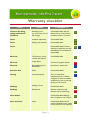
to our ‘Warranty Checklist’ (pages11-16)
this explains what is covered and what is
not. In the first instance (except in
emergencies) you will need to report
your defect in writing (unless otherwise
specified by your developer - see page 6).
Page 4