1
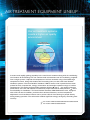
AIR TREATMENT EQUIPMENT LINEUP
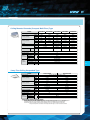
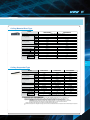
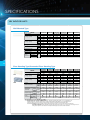
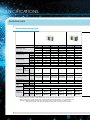
HEAT RECLAIM VENTILATOR - VAM SERIES
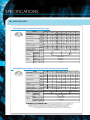
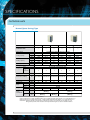
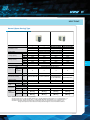
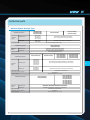
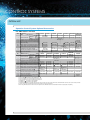
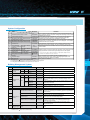
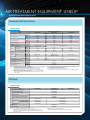
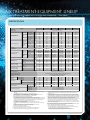
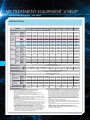
SPECIFICATIONS
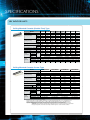
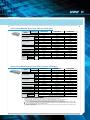
VAM150GJVE VAM250GJVE VAM350GJVE VAM500GJVE VAM650GJVE VAM800GJVE VAM1000GJVE VAM1500GJVE VAM2000GJVE
MODEL
Power Supply
Temp. Exchange
Efficiency
(50/60 Hz)
Enthalpy
Exchange
Efficiency
(50/60 Hz)
Power
Consumption
(50/60 Hz)
1-phase, 220-240 V/ 220 V, 50 Hz
79/79
75/75
79/79
74/74
75/75
72/72
78/78
72/72
77/77
79/79
75/75
79/79
74/74
75/75
72/72
78/78
72/72
77/77
Low
84/85
79/79
82/82
80/80.5
77/77.5
74/74.5
80.5/81
75.5/76
79/81
Ultra-High
72/72
71/72
70/70
67/67
67.5/67.5
65/65
70/70
65/65
72/72
Ultra-High
High
For Heating High
%
72/72
71/71
70/70
67/67
67.5/67.5
65/65
70/70
65/65
72/72
Low
76/76.5
74/74
77/77
74/74.5
71.5/72
67.5/68
72.5/73
67/67.5
76/76
Ultra-High
66/66
63/63
66/66
55/55
61/61
61/61
64/64
61/61
62/62
66/66
63/63
66/66
55/55
61/61
61/61
64/64
61/61
62/62
Low
70/70.5
66/66
70/70
59/59.5
64/64.5
64/64.5
68.5/69
64/64.5
66/67
Ultra-High
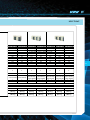
125/134
137/141
200/226
248/270
342/398
599/680
635/760
1,145/1,300
1,289/1,542
111/117
120/125
182/211
225/217
300/332
517/597
567/648
991/1,144
1,151/1,315
57/58
60/59
122/120
128/136
196/207
435/483
476/512
835/927
966/1,039
125/134
137/141
200/226
248/270
342/398
599/680
635/760
1,145/1,300
1,289/1,542
111/117
120/125
182/211
225/217
300/332
517/597
567/648
991/1,144
1,151/1,315
57/58
60/59
122/120
128/136
196/207
435/483
476/512
835/927
966/1,039
27-29/29
31.5-33/33
33-35.5/34
34-36/36
26-27.5/28
30-31.5/30
31.5-34/32
33-34.5/34
21-22/21
23-25/23
25-28.5/24
27.5-29.5/28
35-37.5/34
35-37.5/34.5
35-37.5/36
36-39/39
35-37.5/37.5
40.5-42/41
40.5-42.5/40.5
41-43/42.5
43-45.5/44
High dB(A) 27.5-28.5/28.5 27.5-29/29.5 31.5-33/31.5 33-34.5/33.5 33-35.5/35.5
38.5-40/39
38.5-40.5/38.5 39.5-41/41.5
For Cooling High
Heat
Exchange High
Mode
Low
%
%
W
Ultra-High
Bypass
Mode
High
W
Low
Sound Level
(50/60 Hz)
Ultra-High
27-28.5/28.5
Heat
Exchange High dB(A) 26-27.5/27.5
Mode
Low
20.5-21.5/21
Ultra-High
Bypass
Mode
78
28.5-29.5/29.5 28.5-30.5/30.5 33-34.5/34.5 34.5-36/35.5
Low
40.5-45/42
Self-extinguishable polyurethane foam
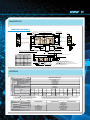
Dimensions (HXWXD)
Machine Weigh
mm
278X810X551
306X879X800
338X973X832
kg
24
32
45
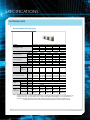
Heat Exchange System
387X1,111X832 387X1,111X1,214 785X1,619X832 785X1,619X1,214
55
67
129
157
Air to air cross flow total heat (Sensible heat + latent heat) exchange
Heat Exchange Element Material
Specially processed nonflammable paper
Air Filter
Multidirectional fibrous fleeces
Type
Sirocco fan
Ultra-High
External Static
Pressure
(50/60 Hz)
39-43/40
Galvanised steel plate
Insulation Material
Fan
37-39.5/37.5 37.5-39.5/37.5 37.5-39.5/39.5
22.5-23.5/22 22.5-23/22.5 24.5-26.5/24.5 25.5-28.5/25.5 27.5-30.5/29.5 36-38.5/35.5 36-38.5/35.5 36.5-38/37.5 37.5-39.5/41
Casing
Airflow Rate
(50/60 Hz)
39-40.5/39.5 39.5-41.5/39.5 39.5-41.5/41.5 41.5-43.5/42
150/150
250/250
350/350
500/500
650/650
800/800
1,000/1,000
1,500/1,500
2,000/2,000
High m3/h
150/150
250/250
350/350
500/500
650/650
800/800
1,000/1,000
1,500/1,500
2,000/2,000
Low
100/95
155/155
230/230
320/295
500/470
700/670
860/840
1,320/1,260
1,720/1,580
Ultra-High
120/154
70/96
169/222
105/150
85/125
133/170
168/192
112/150
116/140
106/131
54/65
141/145
66/52
53/67
92/85
110/86
73/72
58/32
56/60
24/20
67/30
32/18
35/38
72/61
85/60
56/50
High
Pa
Low
Motor Output
kW
Connection Duct Diameter
mm
0.030X2
100
0.090X2
150
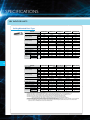
Unit ambient condition
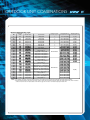
Notes: 1. Sound level is measured at 1.5m below the centre of the body.
2. Airflow rate can be changed over to Low mode or High mode.
3. Sound level is measured in an anechoic chamber.
Sound level generally becomes greater than this value depending on the
operating conditions, reflected sound, and peripheral noise.
4. The sound level at the air discharge port is about 8 dB(A) higher than the unit's
sound level.
5. The specifications, designs and information given here are subject to change
without notice.
6. Temperature Exchange Efficiency is the mean value between cooling and heating.
7. Efficiency is measured under the following conditions:
Ratio of rated external static pressure has been maintained as follows; outdoor
side to indoor side = 7 to 1.
8. In conformance with JIS standards (JIS B 8628), operating sound level is based on the
value when one unit is operated, with the value converted for an anechoic chamber.
This is transmission sound from the main unit, and does not include sound from
the discharge grille. Thus it is normal for the sound to be louder than the
indicated value when the unit is actually installed.
9. Sound level from the discharge port causes the value to be approximately 8
dB(A) (models with the airflow rate of less than 150 to 500m3/h) to approximately
11 dB(A) (models with the airflow rate of 650m3/h or more) greater than the
indicated value. Furthermore, fan rotation and noise from the discharge grille
may increase depending on the on-site duct resistance conditions. Please
consider noise countermeasures when installing the unit.
0.140X2
200
0.280X2
250
45/45
0.280X4
350
-15°C–50°CDB, 80%RH or less
10. With large models in particular (1500 and 2000m3/h models), if the supply air
(SA) grille is installed near the main unit, the noise of the main unit may be heard
from the discharge grille via the duct, and this will result in a marked increase in
noise. In such cases, if peripheral effects are included (such as reverberation of
the floor and walls, combination with other equipment, and background noise),
sound level may be as much as 15 dB(A) higher than the indicated value. When
installing a large model, please provide as much separation as possible between
the main unit and the discharge grille. If the equipment and discharge grille are
near each other, please consider countermeasures such as the following:
• Use a sound-muffling box, flexible duct and sound-muffling air supply/discharge
grilles
• Decentralised installation of discharge grilles
11. When installing in a location with particularly low background noise such as a
classroom, please consider the following measures to avoid transmission sound
from the main unit:
• Use of ceiling materials with high sound insulating properties (high transmission
loss)
• Methods of blocking sound transmission, for example, by adding sound
insulating materials around the bottom of the sound source.
Alternatively, consider supplementary methods such as installing the equipment
in a different location (corridor, etc.)