1
PC2000
1.0 INTRODUCTION
The model PC-2000 is a float switch based dual pump controller intended primarily for
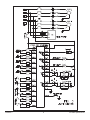
wastewater lift stations and other pump down applications. It has inputs for five normally
open float switches and sensor inputs for the seal fail and temperature fail sensors
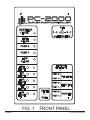
normally found in submersible pumps. The controller has indicator lamps and test
push button switches on each of the float inputs as well as an indicator which illuminates
if the floats do not close in the correct order. The controller has built in alternation and
a three position switch to select automatic alternation or to select between pump 1
and pump 2 if alternation is off. The controller has disable inputs for each of the pumps.
The controller has built in support for an alarm horn with inputs for an external mute
button and also a mute button on the controller front panel. There are two alarm outputs.
One for the high alarm and one for the low alarm. These output relays can be
setup to cycle on and off during an alarm to support a blinking panel alarm light. The
controller has five output relays. Two are for the two pumps, one each for the high and
low level alarms, and one to drive the horn. The controller has indicator lights and external
relay drivers for the following conditions ( floats out of sequence, seal fail for pumps 1
and 2, temperature fail for pumps 1 and 2, pump disabled for pumps 1 and 2).
2.0 OPERATION
The PC-2000 uses five normally open float switches for level sensing. When the tank is
empty all of the floats are open. The lowest float is the low alarm float. If it is not used
the low float input should be shorted with a jumper. When the tank is empty the controller
will be in the low alarm condition. On rising water when the level is high enough
to close the low float switch then the low alarm will turn off. As the level rises the off
float will close and then the lead float will close. When this happens the pump controller
will call for the lead pump. Which pump is the lead, will be determined by the alternator.
If the alternator is set for pump 1 then pump 1 will be called. If the alternator is
set for pump 2 then it will be called. If the alternator is set in the on position then each
pump cycle the lead pump will change. If one of the pumps has and existing leak failure
then the other pump will be called as the lead. If any pump has existing temperature
failure or is disabled then that pump will not be called. If the lead pump lowers the water
level far enough to open both the lead and off floats then the lead pump will be turned
off and the lead pump changed if alternation is on. If the water level continues to rise
and closes the lag float then the lag pump will be called. If the level drops enough to
open the lag, lead, and off floats then the two pumps will be turned off. When both pumps
are turned off there is a 4 second delay between the first and second pump turning off.
If the water level continues to rise and closes the high alarm float then the high alarm
condition will be set. This will cause the high alarm relay and light to come on. This alarm
condition will clear when the level is low enough to open the high float. Any time a pump
is started an internal timer is started which will prevent the other pump from starting
for a period of time which is selected by one of the option switches on the bottom of
the controller. This time can be either 6 or 12 seconds.
The controller has three pairs of inputs for setting pump related alarms or faults.
PRIMEX™
2
PC-2000 Specifications